What are B2B ecommerce portal solutions?
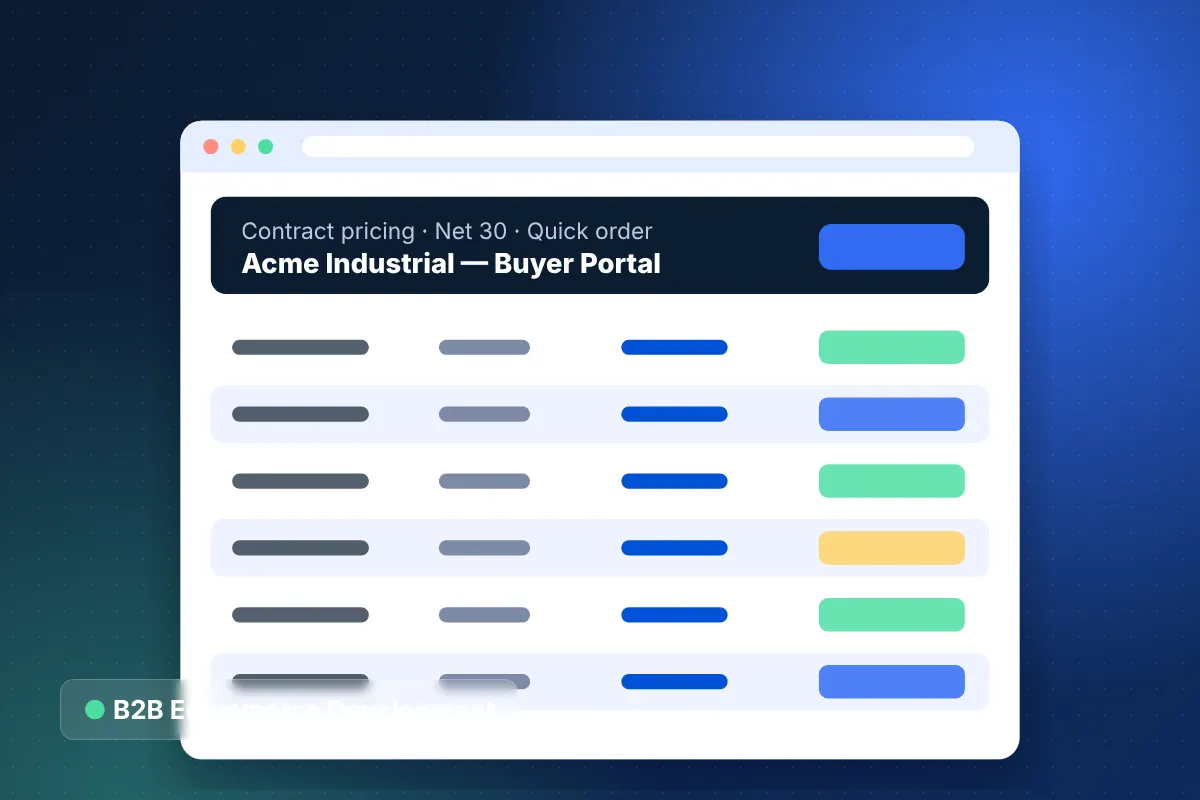
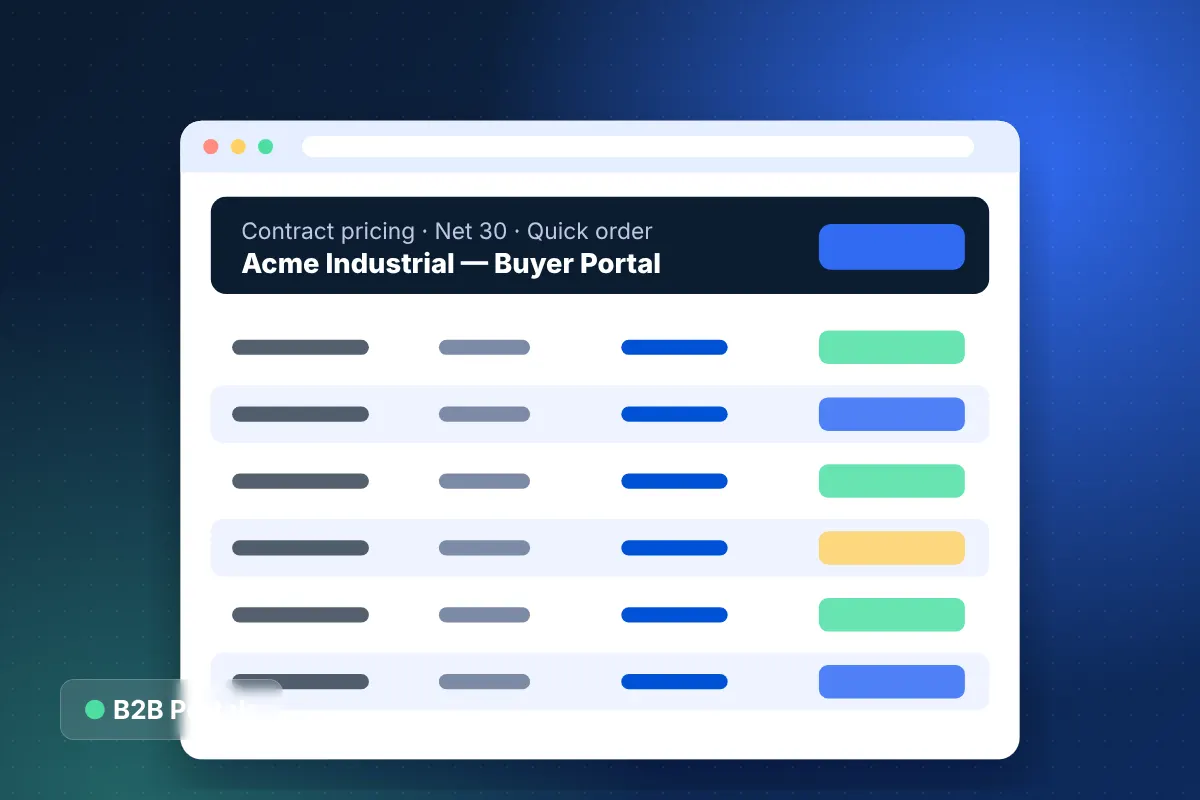
B2B ecommerce portal solutions are private, logged-in storefronts where your business customers place orders, check stock and pay invoices without calling a sales rep. Unlike a consumer store, every account sees its own catalog, its own prices and its own payment options.
Most manufacturers and distributors we meet still take orders by phone, email and spreadsheet. Reps re-key those orders into the ERP, mistakes creep in, and buyers wait hours for a simple price or availability answer. A portal moves that routine work online so your sales team can focus on growing accounts instead of typing.
We design and build B2B ecommerce portal solutions on Shopify Plus, Adobe Commerce, BigCommerce B2B Edition or a fully custom stack, depending on catalog size, pricing complexity and the systems you already run. The business model drives the build, not the other way around.
Which features does a B2B ecommerce portal need?
A B2B portal needs account-specific pricing, flexible payment terms and fast reordering before anything else. The features below are the ones buyers use every day and the ones that remove the most manual work from your team.
Pricing, terms and credit
- Customer-specific and contract pricing by account, customer group, volume tier or price list.
- Net terms and credit limits (Net 30, Net 60) with purchase order checkout and invoice payment.
- Quotes and RFQs for large or custom orders, converted to orders in one click.
Company accounts and approvals
- Multiple buyers per company with roles such as requester, approver and admin.
- Spending limits and approval workflows that mirror the buyer's internal policy.
- Multiple ship-to addresses, cost centers and tax-exemption certificates per account.
Fast ordering for repeat buyers
Professional buyers know their part numbers. Give them quick order by SKU, CSV upload, saved requisition lists and one-click reorder from order history. For large procurement departments, punchout (cXML or OCI) lets them shop your catalog from inside SAP Ariba, Coupa or their own procurement system.
How does ERP integration work in a B2B portal?
ERP integration keeps prices, inventory, customers and orders identical in the portal and your back office, usually through middleware or direct APIs. Without it, a B2B portal becomes another system someone has to update by hand.
We connect portals to SAP, NetSuite, Microsoft Dynamics 365, Acumatica and other ERPs through our ecommerce ERP integration practice. Typical data flows look like this:
- ERP to portal: customer accounts, price lists, contract pricing, stock by warehouse, invoices and shipment tracking.
- Portal to ERP: new orders, quote requests, account applications and payments.
- Both ways: order status updates, credit holds and address changes.
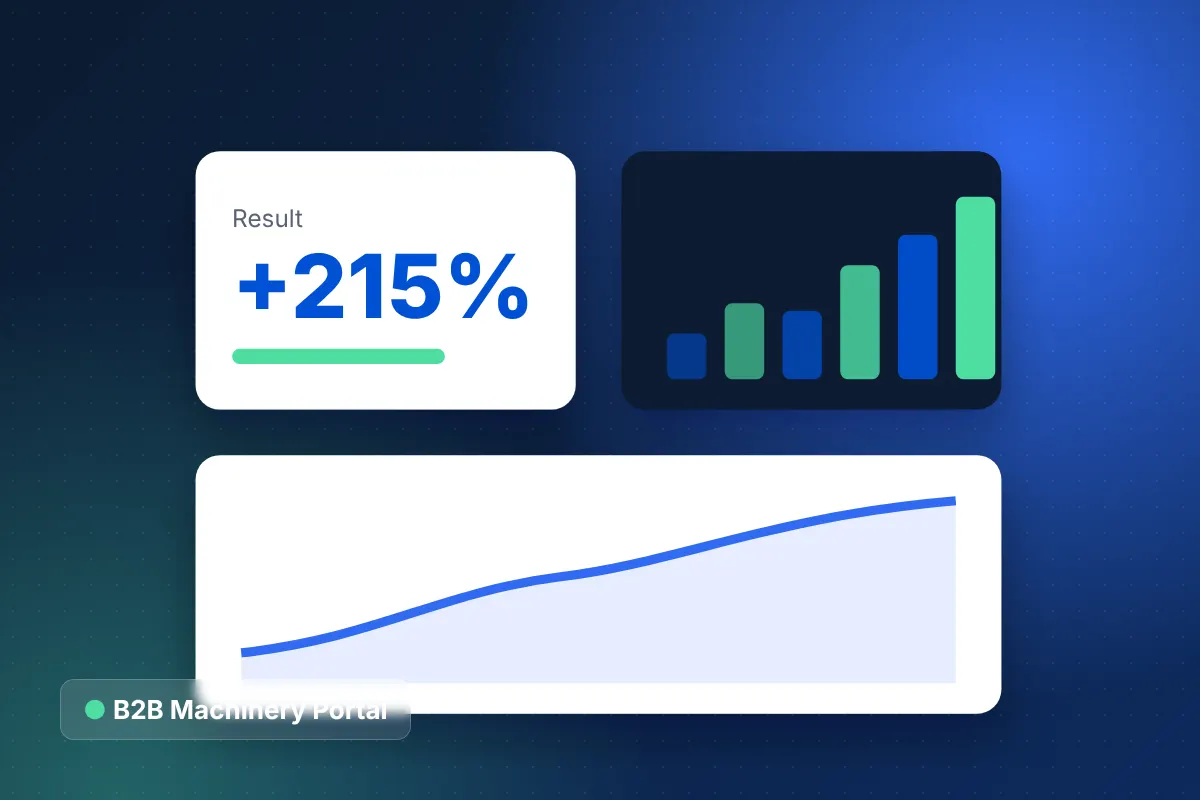
For an industrial OEM with more than 120,000 SKUs, a bidirectional SAP S/4HANA connection was the core of the project. Our B2B ecommerce case study shows how that portal grew digital order volume by 215% and saved the team 40 hours a week of manual admin.
Which platform is best for a B2B ecommerce portal?
The best platform for B2B ecommerce portal solutions depends on catalog size, pricing logic and how much customization your buyers need. Native B2B features have improved on every major platform, but each has a different ceiling.
| Platform | Best fit | Watch-outs |
|---|---|---|
| Shopify Plus (B2B) | Brands running DTC and wholesale from one admin | Very complex pricing rules may need custom apps |
| Adobe Commerce (Magento) | Large catalogs, deep customization, native company accounts and quotes | Higher hosting and maintenance effort |
| BigCommerce B2B Edition | Mid-market distributors wanting strong B2B out of the box | Advanced workflows rely on the B2B Edition layer |
| Custom or headless build | Unique quoting, configurators or punchout-heavy procurement | Larger upfront investment |
For a deeper side-by-side, read our guide to the best B2B ecommerce platform options. If you already know the platform, our B2B ecommerce development team handles the build end to end.
How much do B2B ecommerce portal solutions cost?
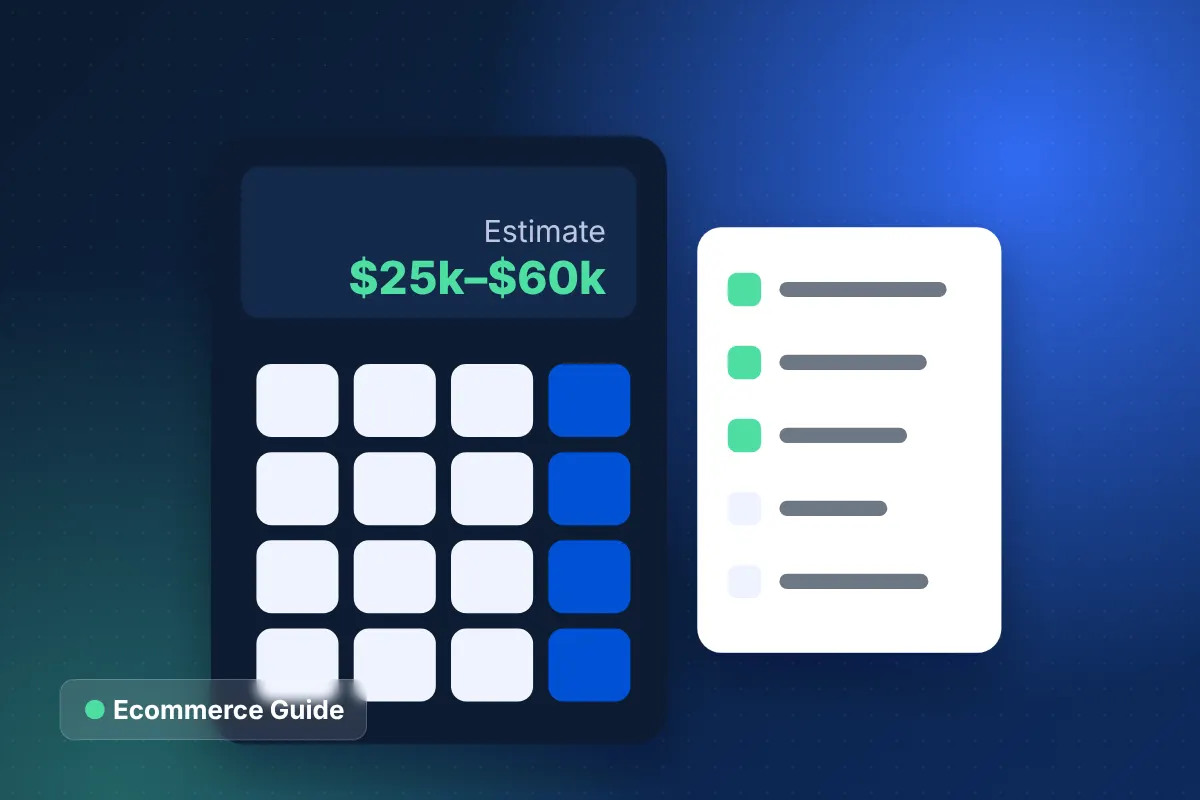
Most B2B ecommerce portal solutions fall between $25,000 and $60,000 for a specialized build, and $60,000 to $150,000+ for multi-region or heavily integrated enterprise portals. The smallest focused engagements start around $15,000.
The biggest cost drivers are:
- Number and complexity of ERP, CRM and PIM integrations.
- Pricing logic: simple tiers versus thousands of contract price lists.
- Catalog size and data quality.
- Punchout, quoting and approval workflow requirements.
- Whether you also run a consumer storefront on the same platform.
We work on fixed-price milestone contracts, and the exact number comes out of discovery.
How we deliver a B2B ecommerce portal in 8–16 weeks
A typical portal launches in 8 to 16 weeks using our six-phase process, the same one behind all our B2B ecommerce portal solutions. Discovery and UX take weeks 1–4, development runs through week 12, and QA and launch close out weeks 13–16.
- Discovery and strategy: map buyer journeys, pricing rules, ERP data and approval policies.
- Conversion UX/UI design: design quick order, account dashboards and checkout for professional buyers.
- Architecture and API engineering: define the integration layer, data ownership and sync frequency.
- Custom development: build the storefront, account logic and integrations.
- Testing and optimization: test real accounts, real price lists and real orders against the ERP.
- Zero-downtime launch: onboard buyers in waves with clear login and ordering instructions.
Why work with a B2B portal team that understands distribution?
B2B projects fail when the team treats them like a consumer store with a login. We have delivered 350+ ecommerce projects across 24+ verticals, and our Houston, Texas office works with industrial, energy and distribution companies that sell to other businesses every day.
You own 100% of the code and IP, we sign a mutual NDA on request, and after launch our support SLAs include 24/7 monitoring and a 15-minute response for critical issues. That matters when a portal processes your largest accounts' orders.
We also plan for adoption, not just launch. The best B2B ecommerce portal solutions include buyer onboarding emails, short how-to guides for quick order and approvals, and a sales-team playbook for moving key accounts online. Portals that skip this step often sit unused while reps keep taking orders by phone.
Get a free B2B ecommerce portal estimate
If your team is still re-keying orders, the right B2B ecommerce portal solutions pay back quickly in saved hours and fewer errors. Bring your price lists, ERP details and buyer requirements to a free 30-minute strategy call and we will outline scope, platform fit and timeline. Want a quick range first? Try the ecommerce website cost calculator.