What are ecommerce SEO services?
Ecommerce SEO services are the technical, content and structural work that gets your category and product pages ranking for the searches buyers actually type. For an online store, that means controlling crawl waste, organizing collections around demand and making each product page the most useful answer for its query.
Our ecommerce SEO services are run by engineers working alongside SEO strategists. Most ranking problems we find in stores are code problems: faceted navigation generating thousands of duplicate URLs, JavaScript-rendered product grids that crawlers struggle to read, slow templates and broken canonical tags after a theme update. We fix those in the codebase first, then build content and internal linking on a clean foundation.
What's included in our ecommerce SEO services
Every engagement covers technical SEO, category and product page optimization, structured data and revenue-focused reporting. The exact mix depends on your platform and where your store is losing the most organic traffic today.
Technical ecommerce SEO
- Crawl and index control: rules for faceted filters, sort parameters, pagination and internal search so crawlers spend their time on pages that sell.
- Canonical and hreflang logic: correct canonicals for product variants and hreflang for multi-region or multi-language storefronts.
- Rendering checks: confirming product names, prices and links appear in server-rendered HTML, which matters for headless builds and script-heavy themes.
- Core Web Vitals: template-level work toward Google's thresholds of LCP ≤ 2.5s, INP ≤ 200ms and CLS ≤ 0.1.
- Structured data: Product, Offer, AggregateRating, BreadcrumbList and Organization schema generated from your catalog, not pasted by hand.
- XML sitemaps: segmented product, category and content sitemaps with accurate last-modified dates.
Category page and product page SEO
Category pages usually target the highest-volume commercial keywords, so we map one primary query to each collection, add helpful intro and buying-guide copy, and tighten titles, headings and filters. For product page SEO, we rework templates so specs, attributes, reviews and FAQs appear in crawlable HTML, then rewrite thin or manufacturer-duplicated descriptions in priority order.
Internal linking and site architecture
We restructure navigation, breadcrumbs and related-product modules so authority flows toward the pages that earn revenue. A flatter, logical hierarchy helps shoppers and crawlers reach deep catalog pages in fewer clicks.
Content for search and AI answer engines
Search results increasingly include AI-generated summaries, so our ecommerce SEO services structure category guides and product FAQs with clear, direct answers and consistent entity data. The same structure that helps a shopper skim a page helps answer engines understand and cite it.
Shopify SEO vs Magento and WooCommerce SEO: what changes by platform?
The fundamentals stay the same, but each platform has its own SEO traps. Knowing them up front saves months of trial and error.
| Platform | Common SEO issue | How we fix it |
|---|---|---|
| Shopify / Shopify Plus | Collection-scoped product URLs, fixed URL prefixes, app-injected scripts | Theme edits to link canonical product URLs, app audit, Liquid-level schema |
| Magento / Adobe Commerce | Layered navigation creating near-infinite filter URLs, slow uncached pages | Filter indexing rules, full-page cache tuning, canonical configuration |
| WooCommerce | Plugin bloat, thin tag and attribute archives, slow shared hosting | Plugin consolidation, noindex rules for low-value archives, hosting upgrade |
| BigCommerce | Faceted search parameters, theme heading structure | Facet crawl rules, Stencil template heading fixes |
| Headless (Next.js) | Client-side rendering hiding content, missing route metadata | Server rendering or static generation, route-level metadata and sitemaps |
For stores on Shopify, our Shopify development services team implements theme-level SEO changes directly, so recommendations don't sit in a spreadsheet waiting for a developer.
How our ecommerce SEO process works
Our ecommerce SEO services start with a full technical audit, then move into prioritized sprints ranked by likely revenue impact. You see what we plan to change and why before anything ships.
- Audit (weeks 1–3): full catalog crawl, Search Console and log-file analysis, Core Web Vitals field data, schema validation and a competitor gap review.
- Keyword and URL mapping: each commercial query is assigned to one target URL so your own pages stop competing with each other.
- Technical fixes: shipped as code through your deployment pipeline, tested on staging first.
- Content and on-page work: category copy, product template upgrades, buying guides and FAQ blocks.
- Measure and iterate: monthly reporting on rankings, organic sessions and organic revenue in GA4.
Can you protect SEO during a redesign or replatforming?
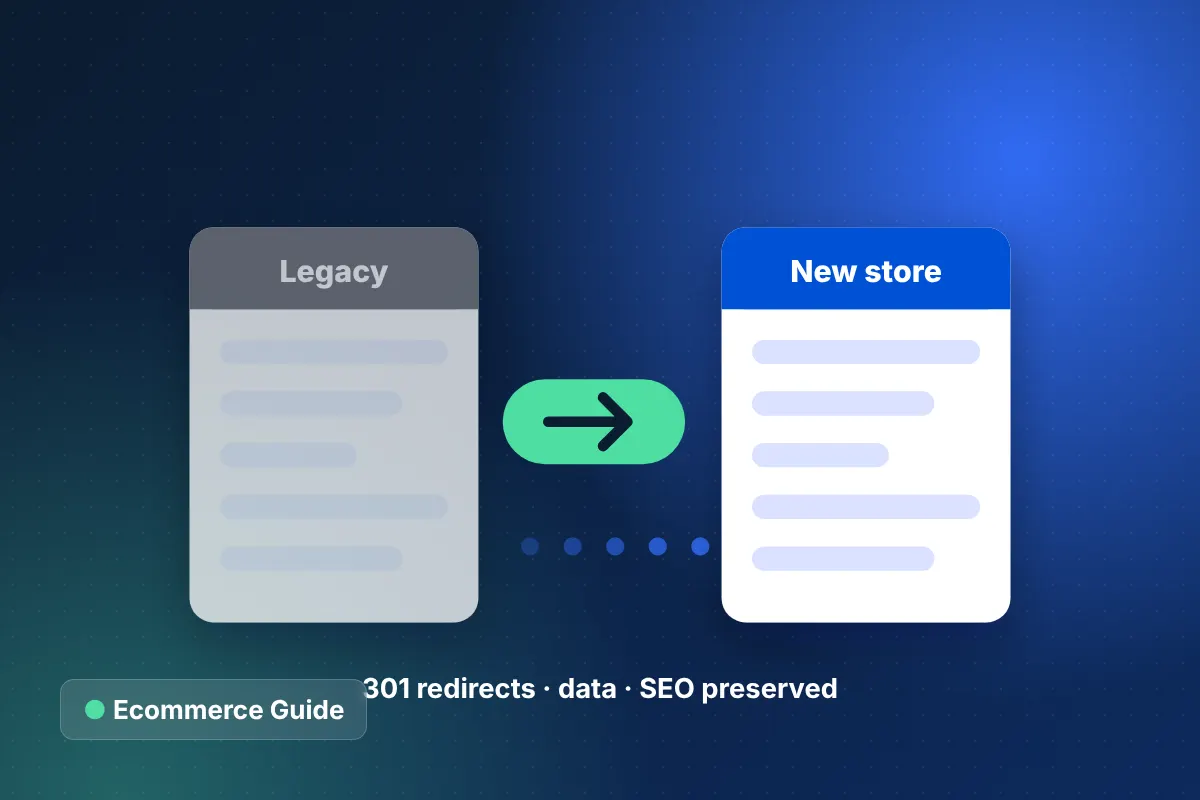
Yes. Protecting rankings through a launch is one of the highest-value things ecommerce SEO services can do, because a rushed migration can erase years of organic growth in a few weeks.
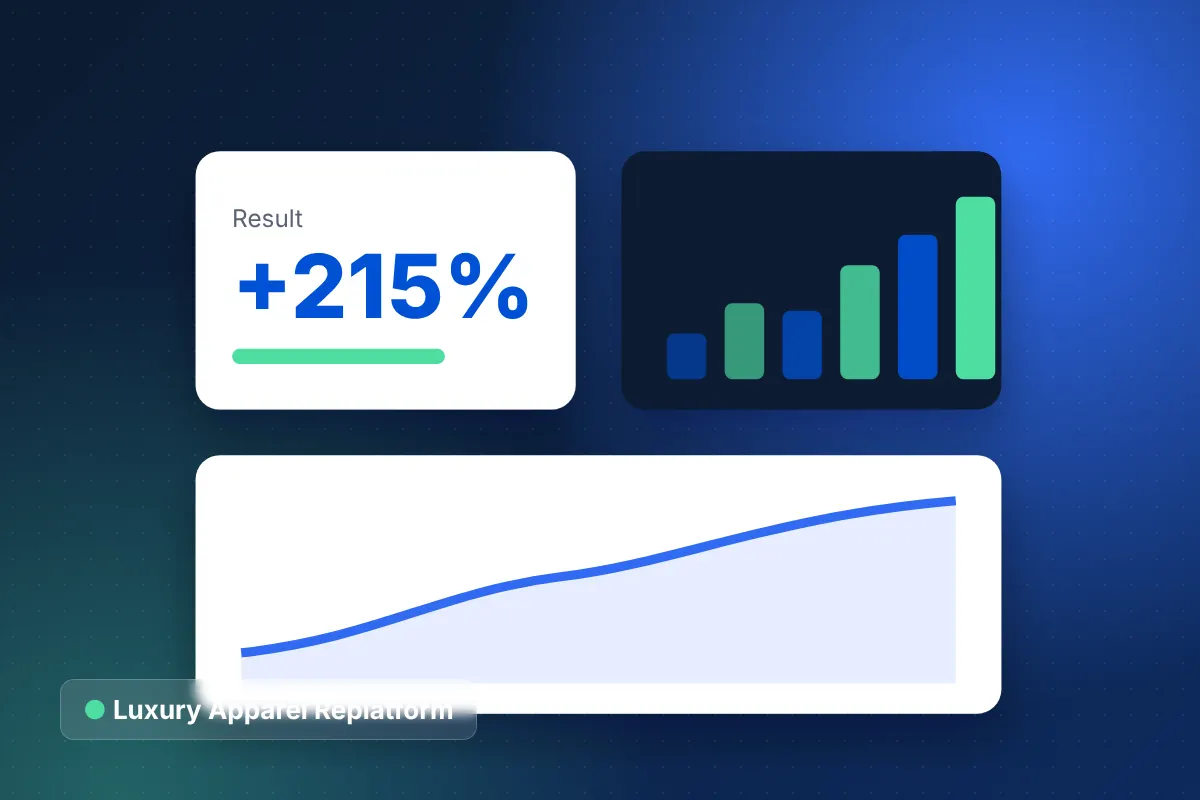
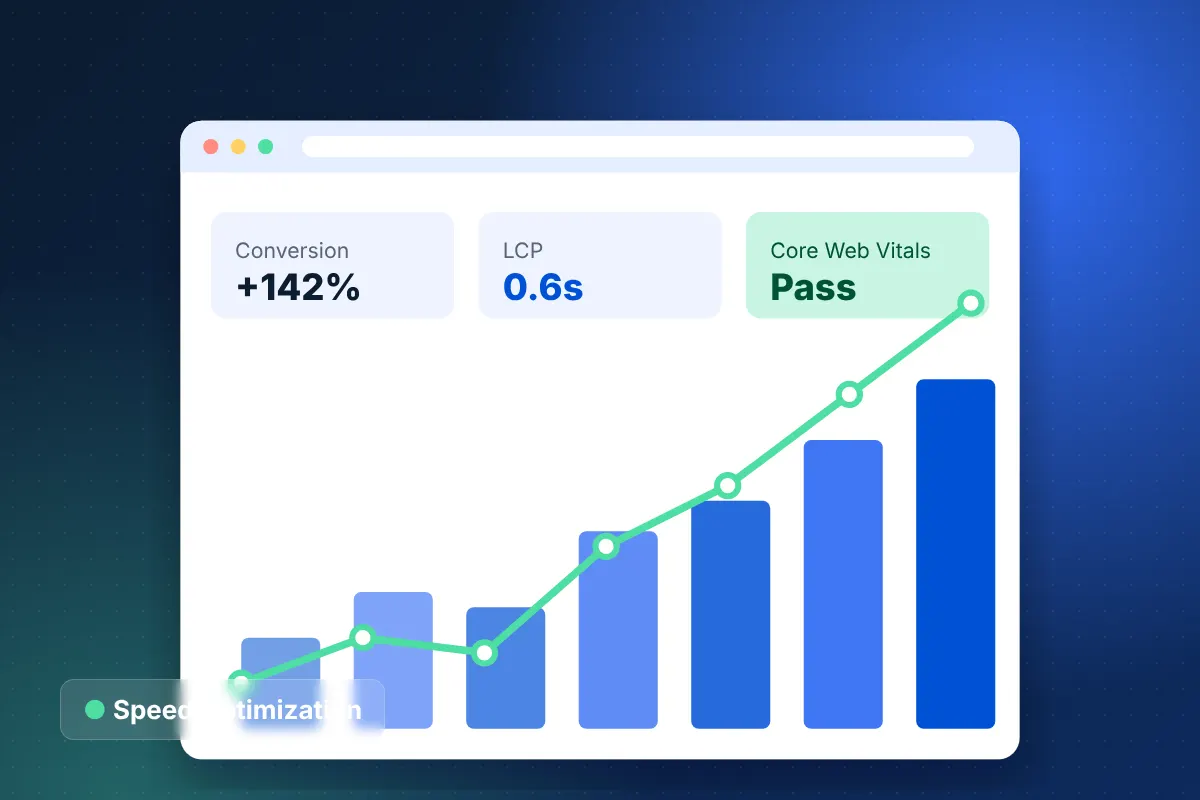
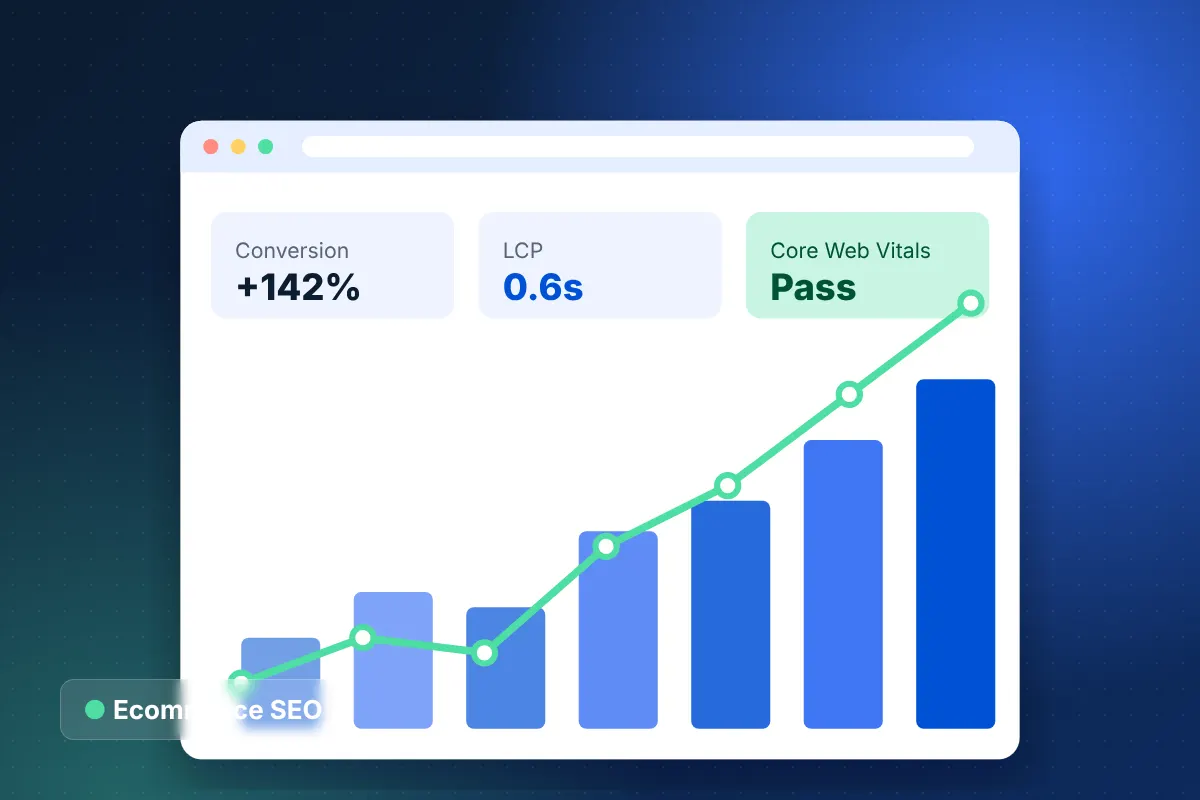
We build complete 301 redirect maps from every indexed URL, carry over or improve metadata and structured data, benchmark rankings before launch and monitor crawl errors daily afterward. Our ecommerce migration SEO checklist lays out the full sequence. In our Magento to Shopify Plus migration case study, a luxury apparel brand unified 8 regional stores on a headless stack, reaching a 0.6s average page load and a 142% lift in mobile conversion rate.
How long does ecommerce SEO take to show results?
Technical fixes often show movement in Search Console within weeks of being recrawled, while competitive category rankings usually take several months. Timing depends on your domain's authority, the competition and how much needs repairing.
We set expectations by phase rather than promising positions, because no honest agency can guarantee rankings. Early gains usually come from recovering pages that weren't indexed, removing duplicate content and speeding up slow templates. Longer-term growth comes from stronger category content, internal links and earned authority.
- First 30 days: audit delivered and critical crawl and indexing issues fixed.
- Months 2–3: category and product template improvements live, schema enhancements appearing in results.
- Months 4–6 and beyond: content expansion, linkable buying guides and ongoing optimization.
Why choose an engineering-led ecommerce SEO agency?
Because most ecommerce SEO problems live in templates, data and infrastructure. A team that can edit the code ships fixes in days instead of filing tickets that wait for months.
We've delivered 350+ ecommerce projects over 15+ years across Shopify Plus, Adobe Commerce, BigCommerce, WooCommerce and headless builds. From our Houston, Texas office we work with brands across the US and internationally. Because speed affects both rankings and conversion, we often pair SEO work with ecommerce speed optimization on key templates.
- Developers and SEO strategists on one team
- Fixes delivered as tested code, not just recommendations
- Reporting tied to organic revenue, not vanity metrics
- You own 100% of the code and content we produce
That combination is what separates ecommerce SEO services that move revenue from audits that gather dust. When strategists and developers share one backlog, priorities stay tied to business results rather than tool scores.
Get a free ecommerce SEO estimate
Our ecommerce SEO services are scoped to your catalog size, platform and the gap between where you rank today and where you could. Book a free 30-minute strategy call and we'll walk through your store's biggest organic opportunities, then send a free project estimate. Planning a rebuild at the same time? Use the ecommerce website cost calculator to size the full project.