Best B2B Ecommerce Platforms Compared: How to Choose the Right One
The best B2B ecommerce platform is the one that fits your buyers, catalog and back-office systems. Shopify Plus B2B suits fast-moving brands selling wholesale, Adobe Commerce B2B fits complex catalogs needing deep customization, BigCommerce B2B Edition balances SaaS simplicity with buyer-portal features, Salesforce B2B Commerce suits CRM-centric sales teams, and custom headless fits unique workflows.
 Custom Ecommerce Website Development
Published
Updated 8 min read
Custom Ecommerce Website Development
Published
Updated 8 min read
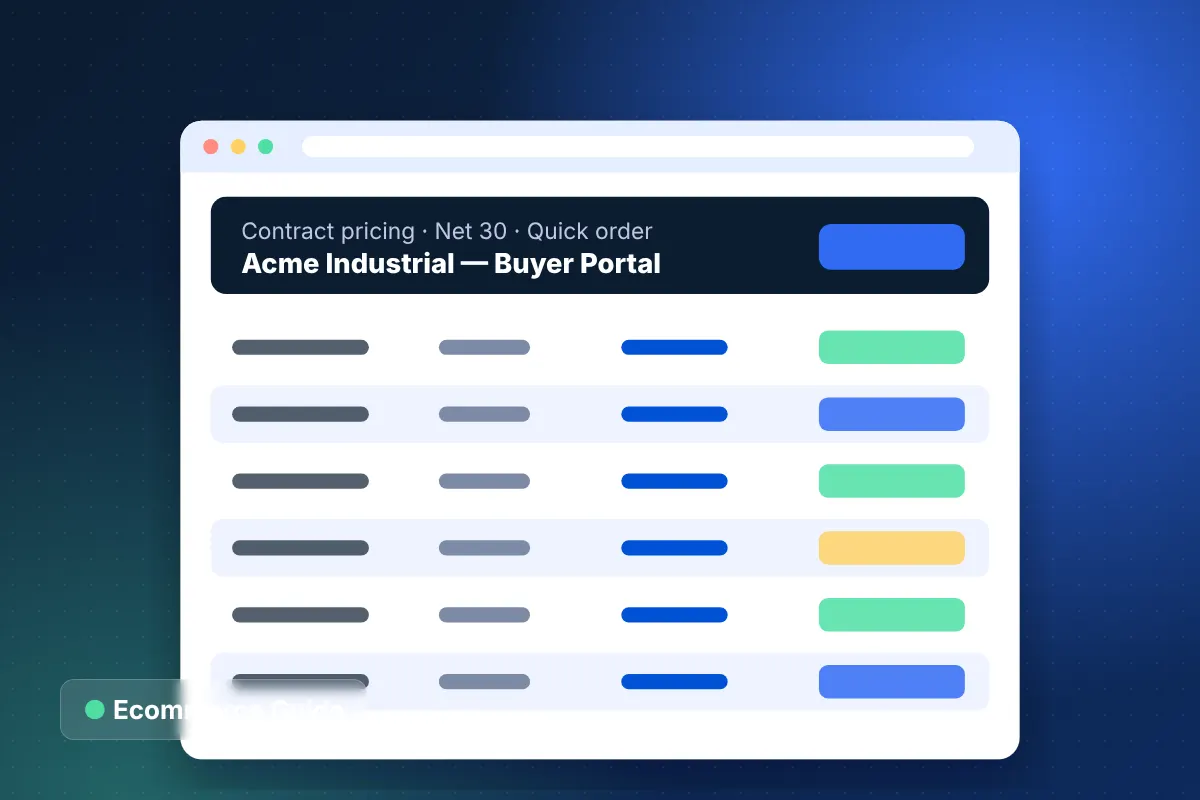
There is no single best B2B ecommerce platform for every company. A distributor with 120,000 SKUs and customer-specific pricing has very different needs from a DTC brand opening a wholesale channel. The right choice depends on how your buyers order, how pricing works and which ERP and CRM systems the store must talk to.
This guide compares five realistic options: Shopify Plus B2B, Adobe Commerce B2B, BigCommerce B2B Edition, Salesforce B2B Commerce and a custom or headless build. It ends with a practical list of selection criteria you can use in vendor conversations.
What makes a B2B ecommerce platform different from B2C?
B2B platforms must handle accounts, contracts and approvals, not just individual shoppers and carts. Business buyers expect to see their own prices, order in bulk and pay on terms, often with several people involved in one purchase.
Core B2B capabilities to look for include:
- Company accounts with multiple buyers, roles and permissions.
- Customer-specific catalogs and price lists, including tiered and contract pricing.
- Quick order and bulk ordering by SKU, CSV upload or reorder from history.
- Quotes and negotiation workflows between buyers and sales reps.
- Payment terms such as net 30 or net 60, purchase orders and credit limits.
- Approval rules so purchases above a threshold need a manager's sign-off.
- ERP integration for real-time inventory, pricing, invoices and order status.
Most of the platforms below cover these basics natively or through extensions. The differences show up in depth, flexibility and total cost of ownership.
Which are the best B2B ecommerce platforms in 2026?
The five options most mid-market and enterprise sellers shortlist are Shopify Plus, Adobe Commerce, BigCommerce, Salesforce B2B Commerce and custom headless builds. The table summarizes where each one fits best.
| Platform | Hosting model | B2B strengths | Watch-outs | Best fit |
|---|---|---|---|---|
| Shopify Plus B2B | SaaS | Native company profiles, catalogs and price lists, payment terms, quantity rules; blended B2B and DTC on one store; fast time to launch | Less flexible for highly complex quoting, configure-price-quote or deep custom logic without apps or custom development | Brands adding wholesale to DTC, mid-market B2B with straightforward pricing |
| Adobe Commerce B2B | Cloud (Adobe-managed) or self-hosted | Shared catalogs, negotiable quotes, requisition lists, purchase orders, approval rules, deep customization | Higher development and hosting effort; needs experienced engineers to maintain and upgrade | Complex catalogs, manufacturers and distributors with unique workflows |
| BigCommerce B2B Edition | SaaS | Buyer portal, company accounts, quotes, shopping lists, invoice portal, multi-storefront | Some advanced workflows require apps or custom development | Mid-market B2B and hybrid sellers wanting SaaS with strong buyer self-service |
| Salesforce B2B Commerce | SaaS on the Salesforce platform | Native connection to Sales Cloud and Service Cloud data, account-based buying, rep-assisted selling | Typically higher licensing and implementation investment; best value inside the Salesforce ecosystem | Enterprises whose sales and service teams already run on Salesforce |
| Custom / headless | Your cloud (e.g. AWS) or composable SaaS | Any workflow: punchout, configurators, complex pricing engines, portal-style UX | Highest ownership; requires a strong engineering partner and roadmap | Unique buying processes that platforms cannot model cleanly |
Licensing models differ widely. Shopify Plus and BigCommerce are subscription-based SaaS, while Adobe Commerce and Salesforce pricing is typically quoted based on revenue or order volume. Ask each vendor for a quote based on your projected volume before comparing.
How do Shopify Plus, Adobe Commerce, BigCommerce and Salesforce compare for B2B?
All four are proven B2B platforms; the differences are in hosting model, depth of native B2B features and how much engineering they need. Here is where each one stands out.
Is Shopify Plus a good B2B ecommerce platform?
Yes, for many companies. Shopify's native B2B features are available on Shopify Plus and let you run wholesale and DTC from one store with company profiles, location-specific catalogs, price lists, volume pricing, quantity rules and net payment terms.
Shopify Plus shines when speed to market, reliability and a familiar admin matter more than infinitely customizable logic. Checkout, hosting and security are managed by Shopify, which keeps maintenance overhead low. Where you need ERP sync, custom quoting or account-specific rules beyond the native features, a Shopify Plus development agency can extend it through Shopify Functions, custom apps and middleware.
If you are weighing it against Magento, our Magento vs Shopify Plus comparison goes deeper on total cost of ownership.
When is Adobe Commerce B2B the better choice?
Adobe Commerce B2B is often the stronger choice when your catalog, pricing and approval logic are complex and you need full control of the codebase. Its B2B module includes company accounts, shared catalogs, negotiable quotes, requisition lists, quick order, purchase orders and approval rules out of the box.
Because it is open and extensible, Adobe Commerce can model almost any process, from multi-warehouse inventory to dealer hierarchies. The trade-off is engineering effort: upgrades, security patches, performance tuning and hosting all need attention. Experienced Magento development services make the difference between a platform that scales and one that becomes fragile.
How does BigCommerce B2B Edition compare?
BigCommerce B2B Edition is a SaaS middle ground: more built-in buyer self-service than a basic store, with less infrastructure to manage than a self-hosted platform. It adds a buyer portal with company accounts, user roles, quotes, shopping lists, invoice management and purchase order payments.
BigCommerce also supports multiple storefronts from one backend and has an open API approach that works well for headless frontends. Brands that want SaaS reliability with B2B depth often shortlist it alongside Shopify Plus. Our BigCommerce development services team configures B2B Edition and builds the ERP connections around it, and our BigCommerce vs Shopify guide covers the broader platform trade-offs.
Who should choose Salesforce B2B Commerce?
Salesforce B2B Commerce makes the most sense when your sales and service organization already runs on Salesforce. The storefront shares account, contact and product data with your CRM, so reps, service agents and buyers all work from the same records.
That native CRM alignment supports rep-assisted ordering, account-based pricing and a unified customer view. The investment is typically larger, both in licensing and implementation, so it is best justified at enterprise scale. Our Salesforce Commerce Cloud development team can assess whether that fit is real for your organization.
When does a custom or headless B2B build make sense?
A custom or headless build makes sense when your buying process is a competitive advantage that off-the-shelf platforms cannot model without heavy workarounds. Common examples are procurement punchout, product configurators, engineered-to-order items and pricing engines driven by an ERP.
The best B2B platform is the one your buyers can order from without calling your sales team.
Custom Ecommerce architecture team
Headless lets you keep a commerce engine for carts and orders while building a portal-style frontend tailored to how your buyers work. Our headless commerce development work often pairs a platform backend with a Next.js buyer portal.
A good example is our B2B ecommerce case study: an industrial OEM with 120,000+ SKUs got a custom B2B punchout store integrated with SAP S/4HANA, driving a 215% increase in digital order volume and saving 40 hours a week in admin work.
How do you choose the best B2B ecommerce platform for your business?
Choose by scoring each platform against your real requirements, not by feature counts. Start with how your buyers order today and which systems must stay the source of truth.
Selection criteria checklist
- Buyer workflows. Map how customers find products, request quotes, get approvals and reorder.
- Pricing complexity. Count price lists, contract prices, tiers and currencies, and decide where pricing is calculated (platform or ERP).
- Catalog size and structure. Consider SKU count, variants, attributes and customer-specific assortments.
- ERP, CRM and PIM integration. Confirm connectors or APIs for systems like NetSuite, SAP, Microsoft Dynamics 365 or Salesforce.
- Payment and credit. Net terms, purchase orders, credit limits, invoices and card payments.
- B2B and DTC on one stack. Decide whether you need one blended store or separate storefronts.
- Total cost of ownership. Include licensing, hosting, apps, development and ongoing maintenance over three to five years.
- Team and partner capacity. Match platform complexity to the engineering support you can sustain.
- Scalability and roadmap. Plan for new regions, channels, marketplaces and mobile apps.
Questions to ask every vendor
- Which of our B2B requirements are native, which need apps, and which need custom code?
- How does the platform sync pricing and inventory with our ERP, and how often?
- What does an upgrade or new feature release require from our team?
- Can buyers self-serve invoices, order history and account users?
Integration is where most B2B projects succeed or stall. Plan your ecommerce ERP integration during discovery, not after the storefront is designed.
What does a B2B ecommerce platform project cost?
For reference, specialized custom stores typically run $25,000–$60,000, and complex headless enterprise or multi-region B2B builds typically run $60,000–$150,000+. Smallest engagements start around $15,000. These figures cover implementation; platform licensing is billed separately by the vendor.
Beyond the build itself, budget for the costs that differ most between platforms:
- Licensing — SaaS subscriptions versus revenue- or volume-based enterprise licenses.
- Hosting and infrastructure — included with SaaS, separate for self-hosted Adobe Commerce or custom stacks.
- Apps and middleware — B2B extensions, ERP connectors and integration platforms.
- Maintenance — upgrades, security patches and new feature work after launch.
A typical build takes 8–16 weeks, with complex ERP integrations pushing toward the longer end. You can model your own scope with the ecommerce website cost calculator.
Get a free B2B platform recommendation
The best B2B ecommerce platform for your company is the one that matches your buyers, pricing and systems at a cost you can sustain. If two options look close, a short discovery phase usually settles it with real data.
Our B2B ecommerce development team builds on Shopify Plus, Adobe Commerce, BigCommerce and custom stacks, so the recommendation is platform-neutral. Book a free 30-minute strategy call to compare your options and get a free project estimate.
Frequently asked questions
What is the easiest B2B ecommerce platform to manage?
Can I run B2B and B2C on the same ecommerce platform?
Does Shopify Plus support net payment terms for B2B?
What is B2B punchout ecommerce?
How long does it take to launch a B2B ecommerce website?
About the author
Custom Ecommerce Website Development is the editorial team at Custom Ecommerce Website Development, a Houston ecommerce development agency with 350+ enterprise projects across Shopify, WooCommerce, Magento, BigCommerce and headless commerce.
Services related to this article
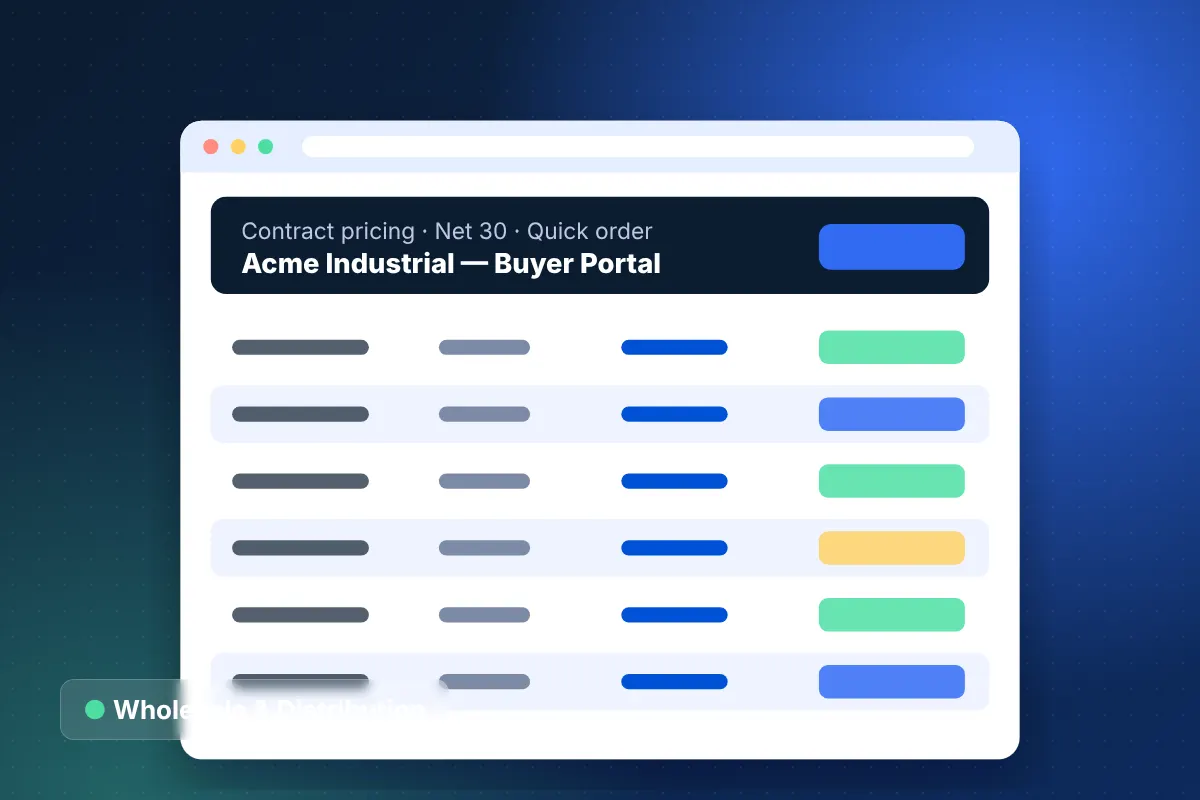
Wholesale Ecommerce Platform Development for Distributors
Distributor portals with customer price levels, case-pack ordering, rep tools and ERP and EDI sync built in.
Learn more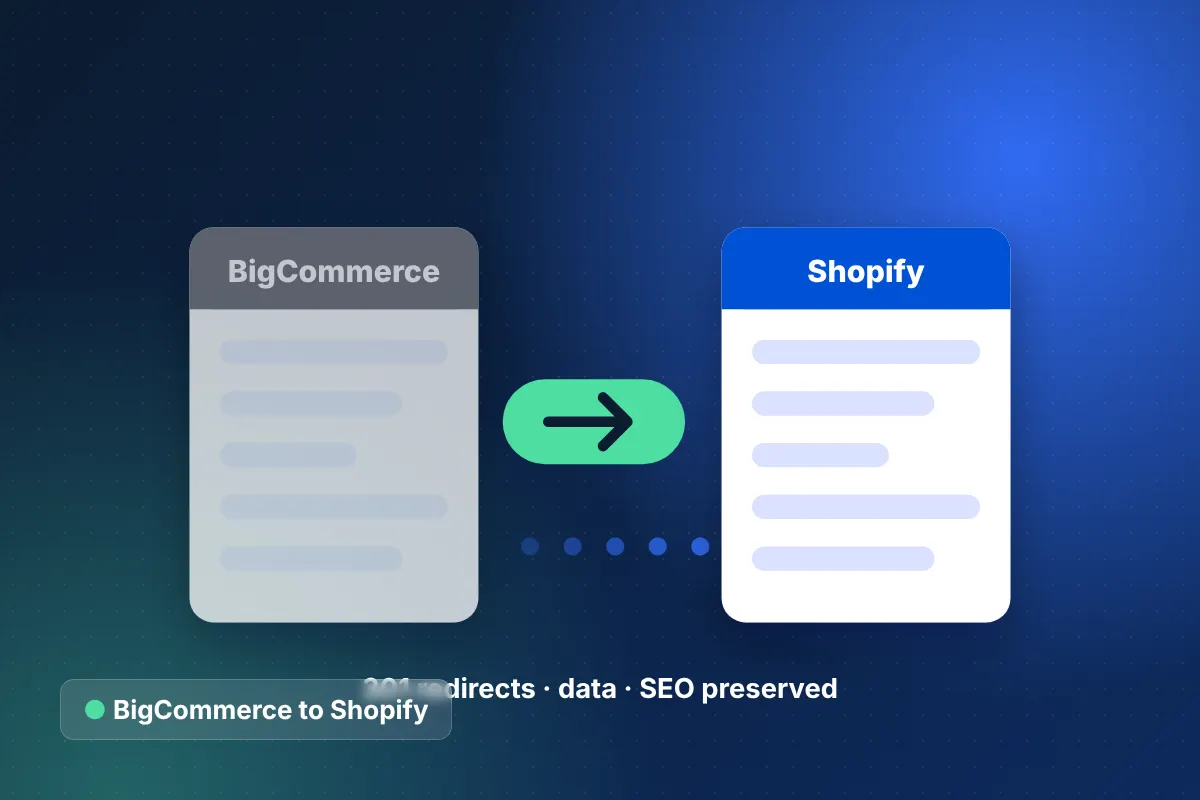
BigCommerce to Shopify Migration With Full SEO Protection
Move from BigCommerce to Shopify or Shopify Plus with options, customer groups, orders, reviews and every URL mapped.
Learn more
Magento to BigCommerce Migration for Growing and B2B Stores
Move from Magento or Adobe Commerce to BigCommerce with full data migration, B2B price lists and 301 redirects that protect rankings.
Learn more