What is ecommerce ERP integration?
Ecommerce ERP integration is a reliable, two-way data connection between your store and the system that runs your finance, inventory and fulfillment. When it works, a web order lands in the ERP in seconds, stock levels update on the site automatically, and nobody copies data between screens.
Custom Ecommerce has 15+ years in commerce engineering and builds integrations as production software, not one-off scripts. That means mapped data contracts, queues, retries, logging and alerts, so a busy sales day does not break your back office.
Data that typically flows between store and ERP
- To the store: products and attributes, inventory by warehouse, price lists, customer-specific pricing, credit limits, order status and tracking numbers.
- To the ERP: new orders, customer accounts, payments, tax amounts, returns and refunds.
- Both ways: customer master data, addresses and B2B account hierarchies.
Signs your store needs ERP integration
Most teams feel the pain before they name it. Common symptoms include staff copying web orders into the ERP by hand, products showing as in stock when the warehouse is empty, B2B buyers seeing list prices instead of their contract prices, and month-end reconciliation that takes days because payments, refunds and invoices never quite match.
Each of these is a data problem, not a people problem. Once orders, stock and pricing move automatically, your team spends its time on customers and exceptions rather than data entry, and reporting finally matches what the ERP says.
Which ERP systems do you integrate with ecommerce?
We integrate the major mid-market and enterprise ERPs with Shopify Plus, Adobe Commerce, BigCommerce, WooCommerce and headless stacks. The right connection method depends on the ERP's APIs, your order volume and how real-time the data needs to be.
NetSuite ecommerce integration
NetSuite exposes SuiteTalk REST and SOAP APIs plus SuiteScript for custom logic. We sync items, matrix products, inventory by location, sales orders, customer deposits and fulfillments, and respect NetSuite's concurrency limits so peak traffic does not cause failures.
SAP ecommerce integration
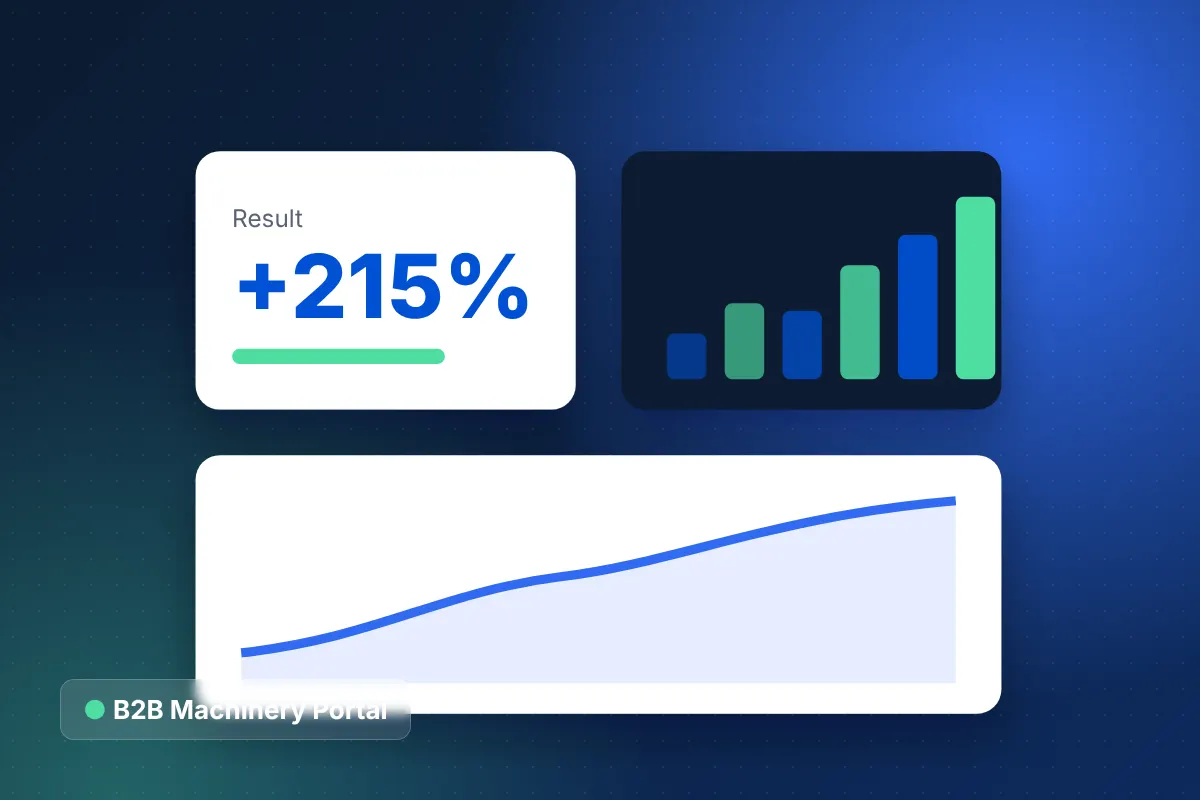
For SAP S/4HANA and SAP Business One, we work through OData services, BAPIs or SAP Integration Suite. On our B2B ecommerce case study, an SAP-integrated portal for an industrial OEM with 120,000+ SKUs drove a 215% increase in digital order volume and saved 40 hours a week of admin work.
Microsoft Dynamics 365 ecommerce integration
Dynamics 365 Business Central and Finance and Operations connect through OData and Dataverse APIs. We map customer groups, trade agreements and warehouse availability so the storefront mirrors what sales reps see.
We also connect Acumatica, Epicor, Sage and Infor where APIs allow, and older systems through flat-file or EDI bridges when necessary.
Beyond ERP: CRM, WMS and PIM integrations
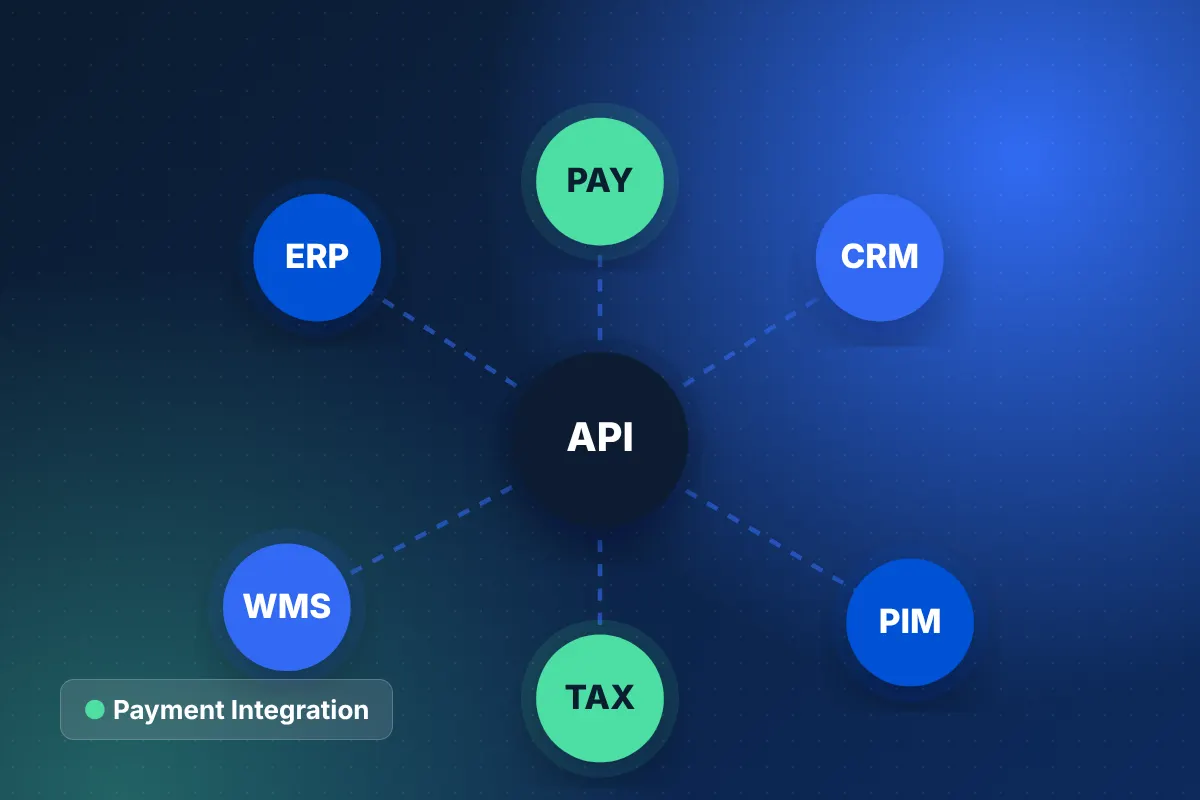
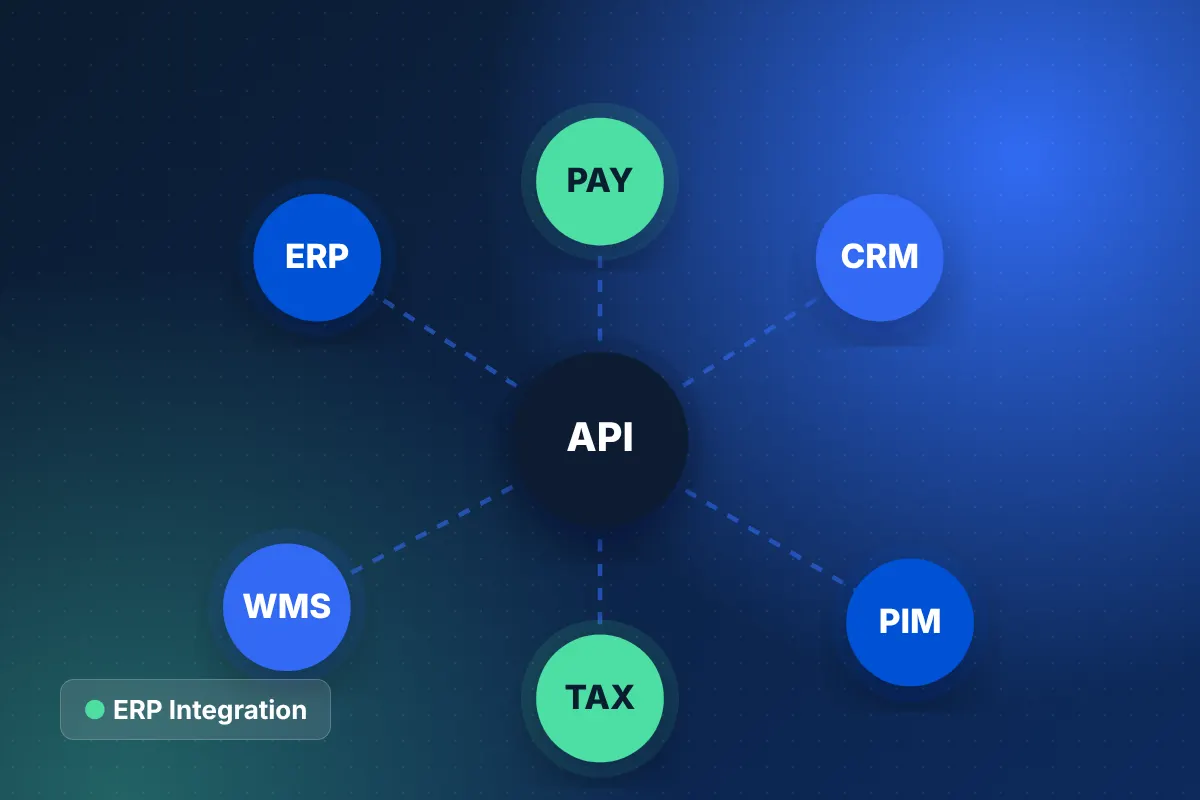
Most brands need more than one back-office connection. We design the integration layer so ERP, CRM, warehouse and product systems all share consistent data with the store.
| System | Common platforms | What it syncs with your store |
|---|---|---|
| ERP | NetSuite, SAP S/4HANA, Dynamics 365, Acumatica | Orders, inventory, pricing, invoices, credit terms |
| CRM | Salesforce, HubSpot, Dynamics 365 Sales | Customer profiles, order history, segments, sales rep assignment |
| WMS / 3PL | ShipBob, Manhattan, ShipStation, custom 3PL APIs | Pick-pack-ship status, tracking numbers, returns, stock movements |
| PIM | Akeneo, Salsify, Pimcore, inRiver | Product attributes, rich content, images, channel-specific copy |
A common question is whether product data should live in the ERP or a PIM. Our rule of thumb: the ERP owns SKUs, costs, stock and prices, while the PIM owns marketing content, specifications, images and channel-specific copy. The store reads from both, and the integration layer keeps them from overwriting each other.
When products also need to reach Amazon, Walmart or TikTok Shop, the same data layer feeds our Amazon integration for ecommerce work, so inventory stays accurate across every channel.
How we build reliable ecommerce ERP integration
Reliable integrations come from clear data ownership, the right sync pattern for each object and constant monitoring. We decide which system is the source of truth for every field before writing code.
- Discovery and data mapping: we document each entity, its owner, field mappings, transformation rules and edge cases such as backorders, kits and partial shipments.
- Architecture: choose between a native connector, an iPaaS such as Celigo, Boomi or MuleSoft, or custom middleware on AWS when logic is complex or volumes are high.
- Sync patterns: webhooks and event queues for orders and stock, scheduled batches for large catalog and price updates, and on-demand API calls for real-time B2B pricing.
- Error handling: idempotent processing, automatic retries, dead-letter queues and a dashboard where your team can see and replay failed records.
- Testing: sandbox-to-sandbox runs with real order scenarios, including refunds, split shipments and tax edge cases.
- Launch and monitoring: phased cutover, 24/7 monitoring and alerts when sync latency or error rates rise.
Connector, iPaaS or custom middleware: which should you choose?
Choose an off-the-shelf connector when your processes are standard, an iPaaS when you need several systems and some customization, and custom middleware when business rules are complex or volume is high. Many clients combine them.
- Prebuilt connectors are quick to set up but often struggle with custom fields, B2B pricing and unusual fulfillment flows.
- iPaaS platforms offer visual flows and monitoring, with ongoing subscription costs and some limits on complex transformations.
- Custom middleware gives full control and performance, and you own 100% of the code and IP.
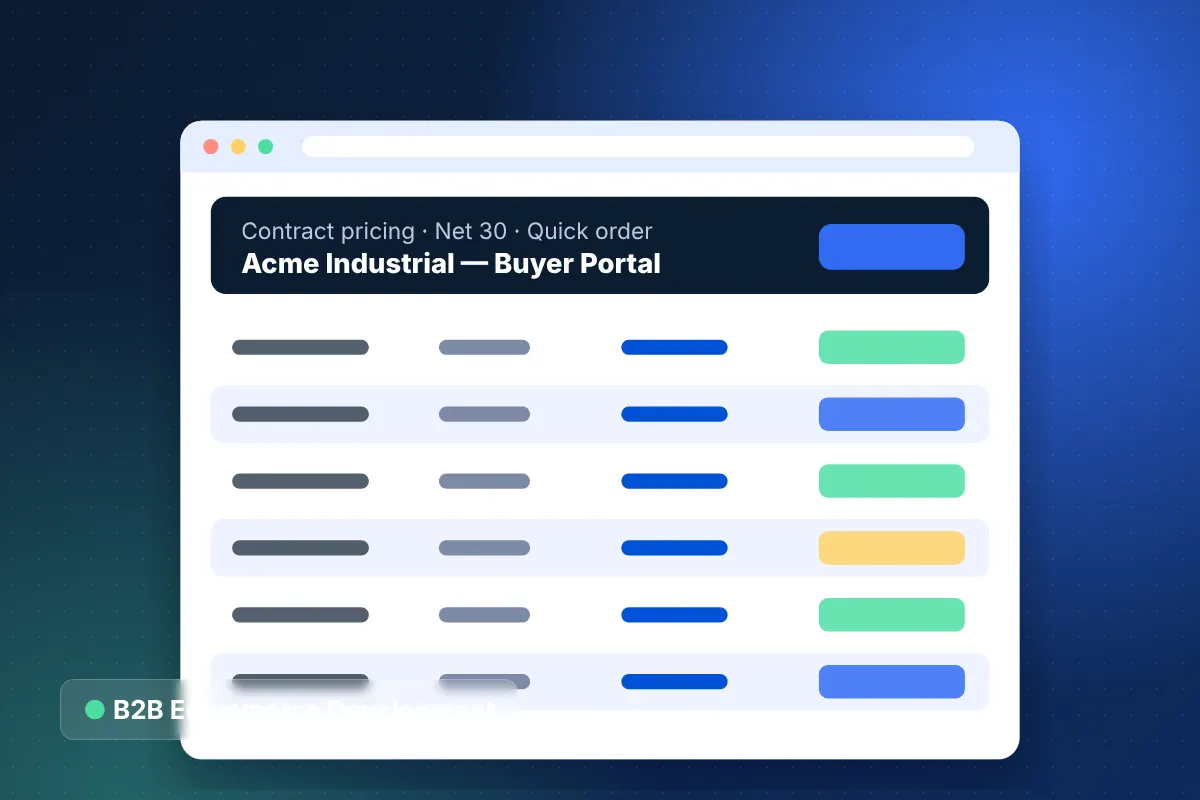
B2B stores feel these differences most, because account pricing, quotes and credit checks all depend on live ERP data. Our B2B ecommerce development team builds storefront and integration together so those rules behave identically online and offline. For platform choices, see our guide to the best B2B ecommerce platform options.
How much does ecommerce ERP integration cost?
Ecommerce ERP integration cost depends on the number of systems, data objects and custom rules involved. Smaller connector-based projects start around our $15,000 minimum engagement, while complex multi-system B2B work sits in the $60,000 to $150,000+ band.
The biggest cost factors are ERP API quality, customer-specific pricing logic, the number of warehouses, historical data migration and whether CRM, WMS or PIM systems are in scope. We quote fixed-price milestones after discovery. For an early range, use the ecommerce website cost calculator.
Why choose our ecommerce integration team
We have delivered 350+ ecommerce projects across 24+ verticals, many of them integration-heavy B2B and manufacturing builds. Our Houston, Texas team works with distributors, manufacturers and DTC brands nationwide.
Integrations run on infrastructure designed to AWS Well-Architected practices, with ISO 27001 aligned security controls for the customer and financial data passing through them. Post-launch support includes 24/7 monitoring and a 15-minute response to critical issues.
Get a free ecommerce ERP integration estimate
If your team is still re-keying orders or fighting stock mismatches, a well-built ecommerce ERP integration pays back quickly in saved hours and fewer errors. Tell us your ERP, store platform and pain points, and we will map a practical integration plan.
Book a free 30-minute strategy call to receive a free project estimate. We reply within 24 hours and sign a mutual NDA on request.