What do ecommerce consulting services include?
Ecommerce consulting services give you senior, independent advice on platform, architecture, integrations, user experience and growth before you commit budget. Typical engagements are an ecommerce website audit, platform selection, technical due diligence or a roadmap for the next 12 to 24 months.
We're a build agency, so our advice is grounded in what it actually takes to ship and run a store. But consulting is a standalone deliverable. You own the findings and can execute them with us, with your in-house team or with another partner.
What does an ecommerce website audit cover?
An ecommerce website audit reviews your store across code, performance, SEO, UX, integrations and security, then ranks every problem by revenue impact and cost to fix. It answers a simple question: what is holding this store back, and what should we fix first?
- Code and architecture: customization quality, app or plugin sprawl, technical debt and the upgrade path.
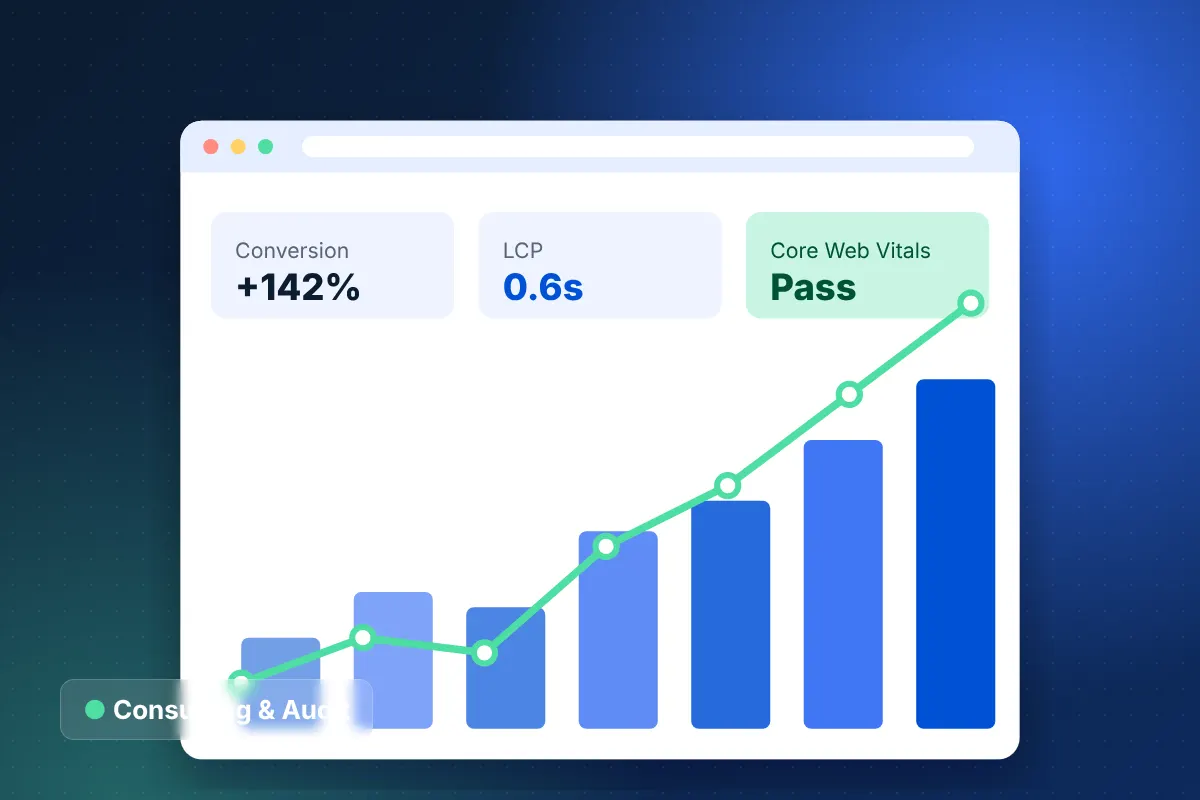
- Performance: Core Web Vitals field data measured against LCP ≤ 2.5s, INP ≤ 200ms and CLS ≤ 0.1.
- Conversion UX: funnel drop-off, site search, product pages, cart and checkout friction.
- SEO health: indexing, duplicate URLs, redirects and structured data.
- Integrations and data: ERP, OMS, PIM and payment flows, sync errors and manual workarounds.
- Security and compliance: patch levels, access controls, PCI scope and accessibility.
How audit findings are prioritized
Not every issue deserves attention right away. We score each finding on revenue impact, risk and effort, which separates quick wins, such as removing an unused app that slows every page, from larger projects like rebuilding checkout or replacing a fragile integration.
You receive a written report, a prioritized backlog with effort estimates and a walkthrough session with your team so nothing gets lost in translation.
How does platform selection consulting work?
Within our ecommerce consulting services, platform selection consulting matches your business model, catalog, integrations and team to the platform with the lowest total cost of ownership that still meets your requirements. We hold Shopify Plus, Adobe Commerce and BigCommerce partner status and also build on WooCommerce, Salesforce Commerce Cloud and headless stacks, so we have no single platform to push.
- Requirements workshop: business model, catalog complexity, B2B needs, regions, integrations and team skills.
- Weighted scorecard: each shortlisted platform scored against your must-haves and nice-to-haves.
- Total cost of ownership model: licenses, hosting, apps, development and maintenance over three years.
- Integration feasibility: how each option connects to your ERP, OMS, PIM and payment providers.
- Recommendation and roadmap: a clear choice, the reasons behind it and a phased plan.
For a head start, see our overview of the best ecommerce platform for business needs, or comparisons such as Magento vs Shopify Plus.
Which ecommerce consulting engagement is right for you?
Choose the engagement that matches the decision in front of you. Most clients start with an audit or platform selection and add roadmap support later.
| Engagement | Best for | Typical output |
|---|---|---|
| Ecommerce website audit | Live stores with stalled growth or rising running costs | Report, prioritized backlog, team walkthrough |
| Platform selection consulting | Teams planning a replatform or a first enterprise build | Scorecard, TCO comparison, recommendation |
| Technical due diligence | Investors or acquirers evaluating a commerce business | Risk assessment of code, infrastructure and integrations |
| Roadmap and fractional leadership | Brands without a senior commerce technologist | Quarterly roadmap, vendor oversight, architecture decisions |
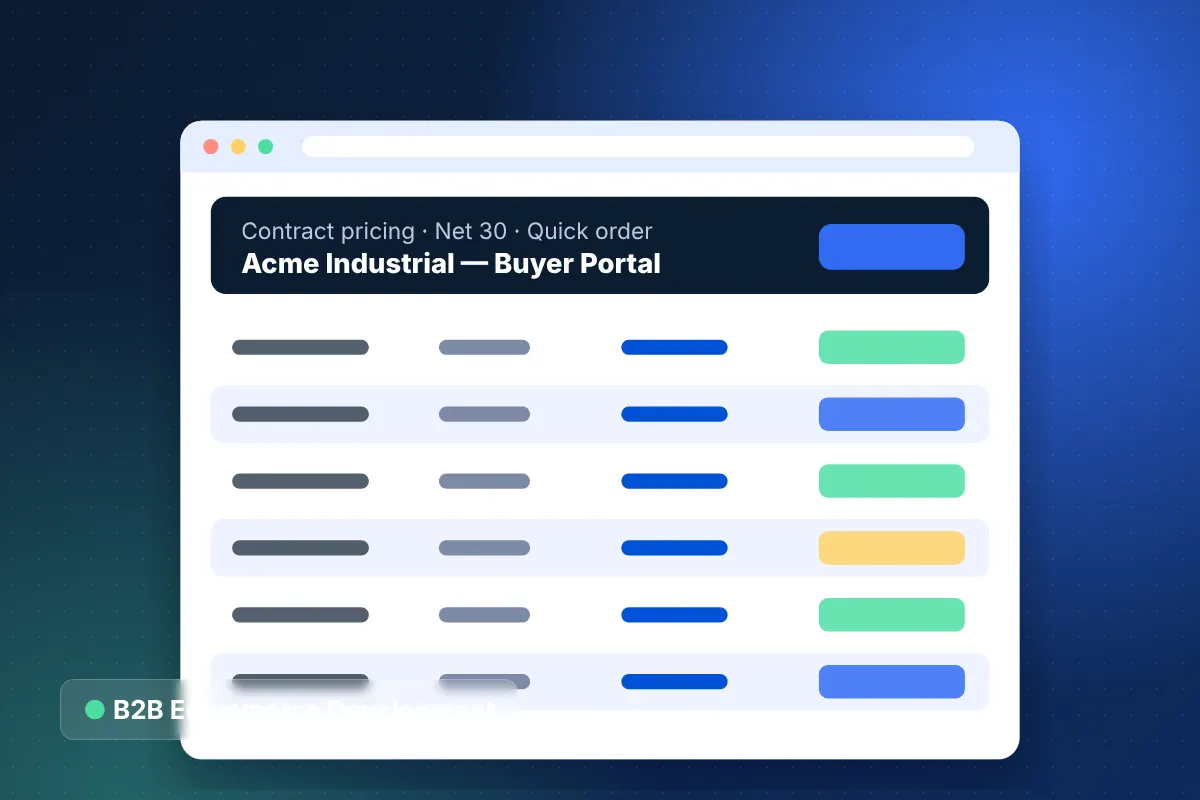
| B2B digital strategy | Manufacturers and distributors moving ordering online | Requirements, ERP integration plan, phased launch plan |
When should you hire an ecommerce consultant?
Bring in ecommerce consulting services when a decision is expensive to reverse: choosing a platform, starting a rebuild, signing a multi-year license or integrating an ERP. A few weeks of analysis can prevent months of rework.
- Conversion or revenue has plateaued and nobody can say exactly why.
- Hosting, app and developer costs keep climbing year over year.
- Your team spends hours on manual order entry or spreadsheet syncs.
- You're unsure whether to replatform or fix the store you have.
- A license renewal or platform end-of-life deadline is approaching.
An outside view also helps when internal teams disagree. A neutral, evidence-based recommendation gives finance, operations and marketing a shared basis for the decision instead of competing opinions.
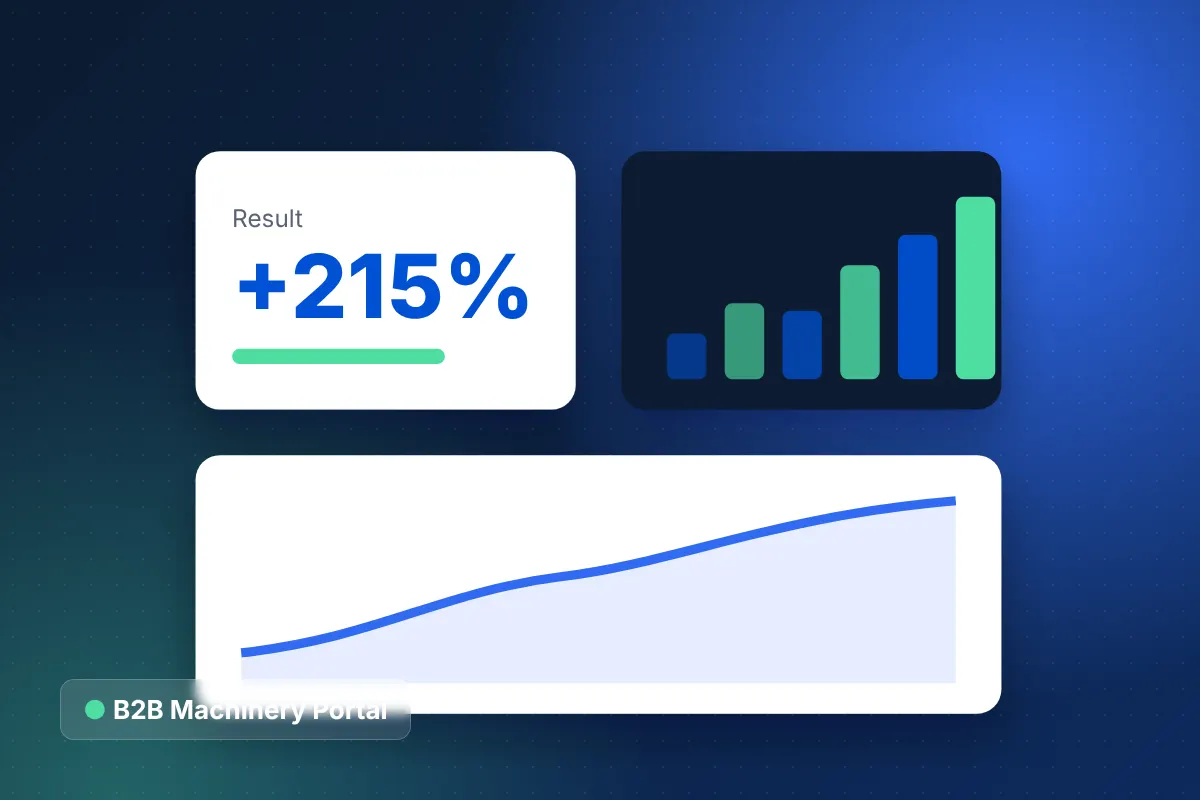
For example, for an industrial OEM with 120,000+ SKUs, early discovery defined the SAP S/4HANA integration and punchout requirements behind the portal in our B2B ecommerce case study. The result was a 215% increase in digital order volume and 40 hours a week of admin time saved.
How much do ecommerce consulting services cost?
Consulting is scoped as a fixed-price engagement after a free strategy call, based on the number of systems, storefronts and stakeholders involved. We don't publish a flat consulting rate because a single-store audit and a multi-region platform selection are very different projects.
What we can share is how consulting connects to build budgets. When an engagement leads to development, specialized custom stores typically land between $25,000 and $60,000, and complex headless enterprise or multi-region B2B programs run $60,000 to $150,000+. Good consulting makes those numbers more predictable because scope is clear before a line of code is written.
What happens after the consulting engagement ends?
You decide what happens next. The deliverables are yours, and the roadmap is written so any capable team can execute it.
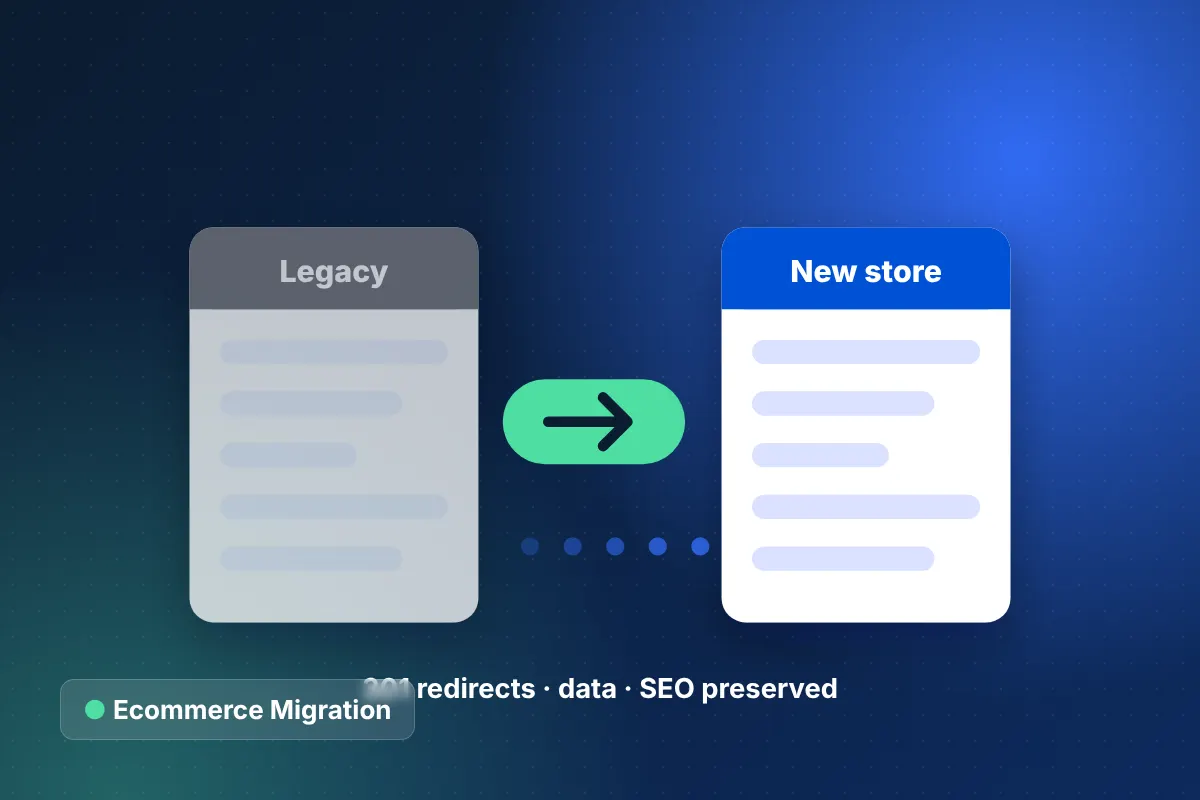
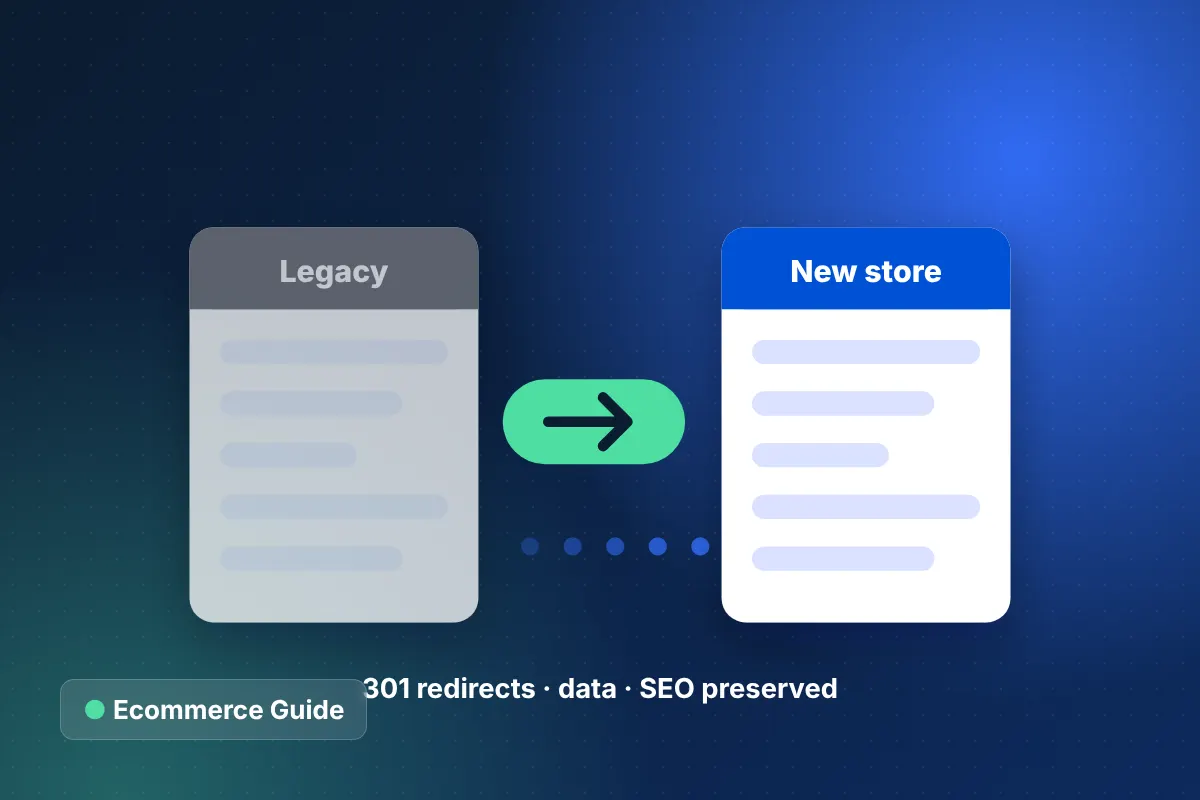
If you want us to build, findings flow straight into our 6-phase process, starting with Discovery & Strategy, so nothing is repeated or paid for twice. If the answer is a replatform, our ecommerce migration services team handles data, redirects and integrations end to end.
Some clients keep us on a light retainer after the engagement to review vendor proposals, sanity-check estimates and attend key architecture decisions, which keeps the roadmap on track without adding a full-time hire.
Why choose our ecommerce consulting team?
You get advice from people who have delivered 350+ ecommerce projects over 15+ years, not generalists working from slide templates. Every recommendation comes with a realistic effort estimate because the engineers who would build it helped write it.
Our ecommerce consulting services are also practical about your team's capacity. We don't hand over a list of fifty recommendations and walk away; we sequence the work so internal staff, agencies and budgets can realistically deliver it quarter by quarter.
We work from Houston, Texas with brands across the US and internationally. A mutual NDA is available before you share data, we reply within 24 hours, and our 98% client retention reflects long-term relationships that often begin with a single audit.
Book a free ecommerce consulting call
Not sure whether you need an audit, a platform decision or a full roadmap? Book a free 30-minute strategy call and we'll recommend the right ecommerce consulting services for your situation and send a free project estimate. If a rebuild is likely, the ecommerce website cost calculator gives you an early budget range.