What should a building materials ecommerce website do?
A building materials ecommerce website should let pros order exactly what a job needs, at their price, delivered when the crew is ready. For homeowners, it should make product selection and quantities easy to understand.
Building supply is a hybrid market. Contractors buy on account, by job and in bulk, while DIY customers buy smaller orders and need guidance. Many suppliers serve both from the same branches. The website has to handle units of measure, bulky freight, branch-level stock and credit terms without confusing either audience.
Who uses construction supply online ordering?
- General and specialty contractors: reordering materials by job, often from the truck.
- Home builders: placing larger scheduled orders tied to project phases.
- Office and purchasing staff: reviewing invoices, statements and job spend.
- Homeowners and DIY buyers: pricing a project and choosing pickup or delivery.
Must-have features for construction supply online ordering
The most valuable features cut phone calls to the counter and reduce ordering mistakes. Pricing, availability and delivery come first.
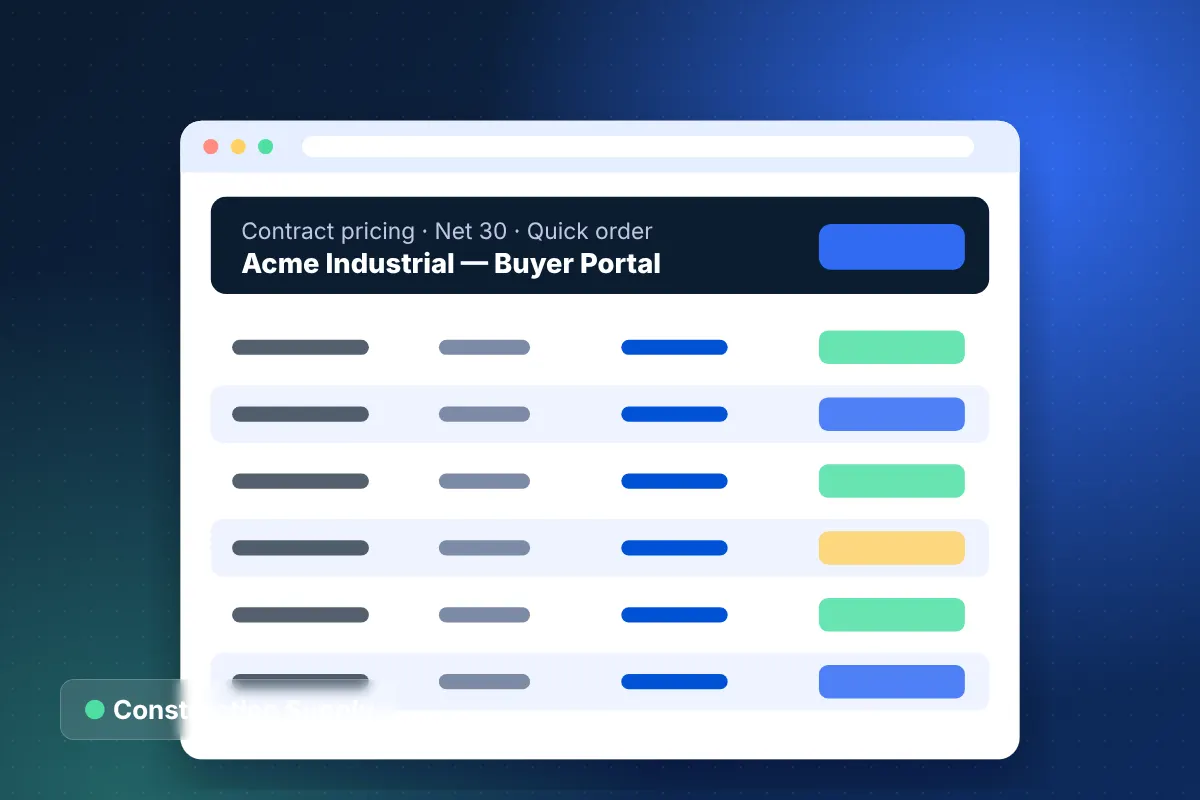
- Contractor accounts: customer-specific pricing, credit limits and charge-to-account checkout.
- Job-based ordering: tag orders to jobs or purchase orders and view spend by project.
- Units of measure: sell by piece, board foot, bundle, square, pallet or linear foot.
- Quantity calculators: estimate drywall, roofing, decking or concrete from dimensions.
- Delivery scheduling: choose job-site delivery windows, boom or forklift needs and pickup branch.
- Branch inventory: show live stock by yard so buyers know what is ready.
- Account self-service: invoices, statements, proof of delivery and quick reorder.
Which platform is best for a building supply website?
The best platform depends on catalog size, pricing complexity and how much of your business is pro versus retail. Most suppliers fit one of four approaches.
| Platform | Best for |
|---|---|
| BigCommerce B2B Edition | Regional suppliers selling to both contractors and homeowners |
| Adobe Commerce | Multi-branch dealers with complex pricing and large catalogs |
| Shopify Plus | Specialty products, tools and branded materials sold DTC and B2B |
| Headless / custom | Large distributors needing deep ERP logic and custom delivery rules |
Our B2B ecommerce development team scopes the platform around your ERP and branch structure. If you are still comparing, read our guide to the best B2B ecommerce platform options.
Integrations that make building materials ecommerce work
Construction supply runs on ERP data, so integration is the core of the project. Accurate pricing and stock matter more than design polish.
- Lumber and building material ERPs: Epicor BisTrack, Epicor LumberTrack, ECI Spruce or similar, plus NetSuite and Dynamics 365.
- Delivery and dispatch: route planning and delivery confirmation tools.
- Payments: card, ACH and on-account terms through our payment gateway integration services.
- Product content: manufacturer data feeds for specs, images and SDS sheets.
- Tax: jobsite-based sales tax and exemption certificates for resale buyers.
Building materials ecommerce challenges and how to solve them
Most building materials ecommerce website projects stall on data and logistics, not design. Solving these early keeps the launch on schedule.
- Commodity price swings: lumber and metal prices change often. Prices sync from the ERP on a short schedule, and volatile items can switch to quote-only with one setting.
- Thin product data: many yards have SKU codes but few images or specs. We pull manufacturer content feeds and prioritize the top-selling products for enrichment.
- Freight and delivery cost: heavy, long items cannot use parcel rates. Delivery zones, minimum orders and branch-based fees protect margin.
- Branch differences: stock, pricing and services vary by yard. The site uses a selected branch to show the right availability and pickup options.
- Counter staff adoption: online orders should land in the same ERP queue as phone orders, so staff process them without a second system.
When these pieces work, the website becomes another branch that never closes, rather than a separate channel your team has to manage.
Performance, accessibility and mobile for job-site buyers
Contractors often order from a phone on a job site with weak signal. Fast, simple pages are a practical requirement, not a nice extra, and they help every buyer from the foreman to the homeowner.
- Pages tuned to meet Core Web Vitals thresholds, including LCP at or under 2.5 seconds.
- Large tap targets and quick-order forms that work one-handed.
- WCAG 2.2 AA accessibility for forms, filters and checkout.
- Saved carts and reorder lists so repeat orders take seconds.
How we build building materials ecommerce websites
We deliver in 8–16 weeks across six phases: Discovery & Strategy, Conversion UX/UI Design, Architecture & API Engineering, Custom Development, Testing & Optimization and Zero-Downtime Launch.
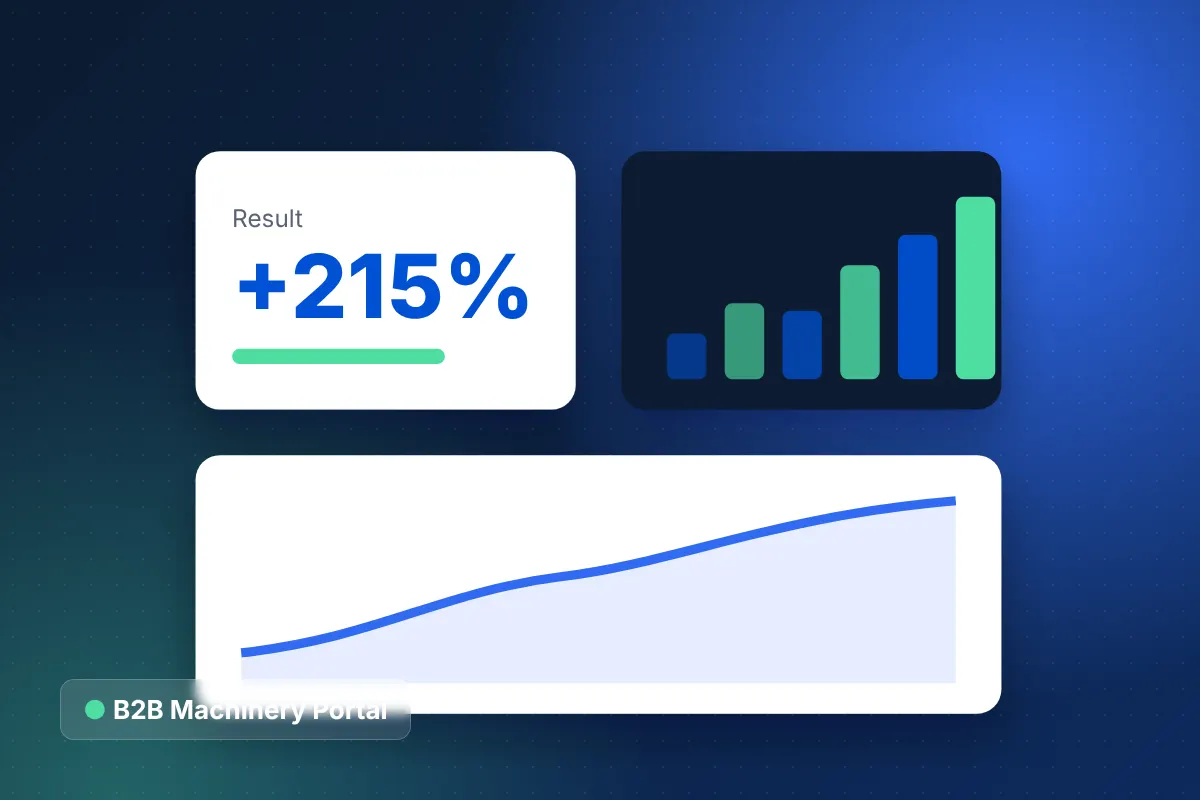
Our ERP-heavy B2B experience carries over directly. For an industrial OEM with 120,000+ SKUs, our SAP-integrated portal grew digital order volume by 215%. Read the B2B ecommerce case study.
How much does a building supply website cost?
Specialized builds typically cost $25,000–$60,000. Multi-branch or headless enterprise projects with deep ERP integration usually run $60,000–$150,000+, under fixed-price milestones with full code ownership.
Start your building materials ecommerce website project
If your counter staff spend the day reading prices over the phone, online ordering can take that load off. Book a free 30-minute strategy call or use the ecommerce website cost calculator, and we will send a building materials ecommerce website plan and free estimate within 24 hours.