What is B2B ecommerce development?
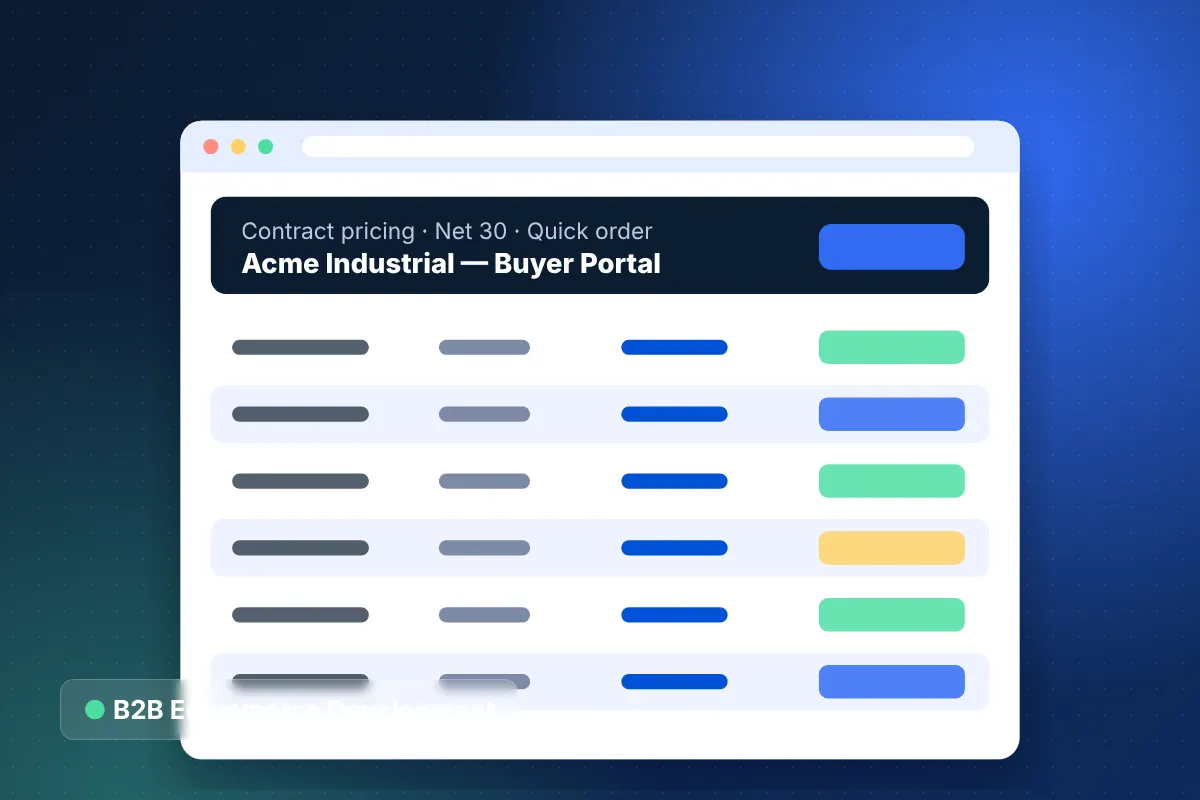
B2B ecommerce development is the engineering work behind online stores and ordering portals for business customers. Unlike consumer stores, B2B sites must handle negotiated prices, account hierarchies, credit terms, large orders and deep integration with ERP and procurement systems.
Most B2B buyers now expect to research, reorder and track shipments online without calling a rep. The hard part is not the storefront; it's encoding years of pricing agreements, approval rules and fulfillment logic into software that stays in sync with your ERP. That's where our engineering team spends most of its time.
Typical starting points include phone and email orders keyed manually into the ERP, PDF price lists that go out of date, or an aging EDI setup that only your largest accounts can use. B2B ecommerce development replaces those manual steps with a self-service channel that every customer can use around the clock.
B2B ecommerce development vs B2B portal solutions: what's the difference?
This page covers the engineering service: the custom features, integrations and code we build. Our B2B ecommerce portal solutions page covers the business outcomes, showing how different B2B models, from dealer networks to procurement-driven buyers, use a portal to grow digital revenue.
In practice, the solution page helps you define what you need, and this service is how we deliver it. If you already know your requirements, such as a quoting engine, punchout integration or an ERP-driven price engine, you're in the right place.
What features does a B2B ecommerce website need?
A B2B ecommerce website needs account-aware pricing, fast bulk ordering, buyer permissions and reliable ERP data at a minimum. The features below are the ones we build most often, grouped by who benefits.
For buyers
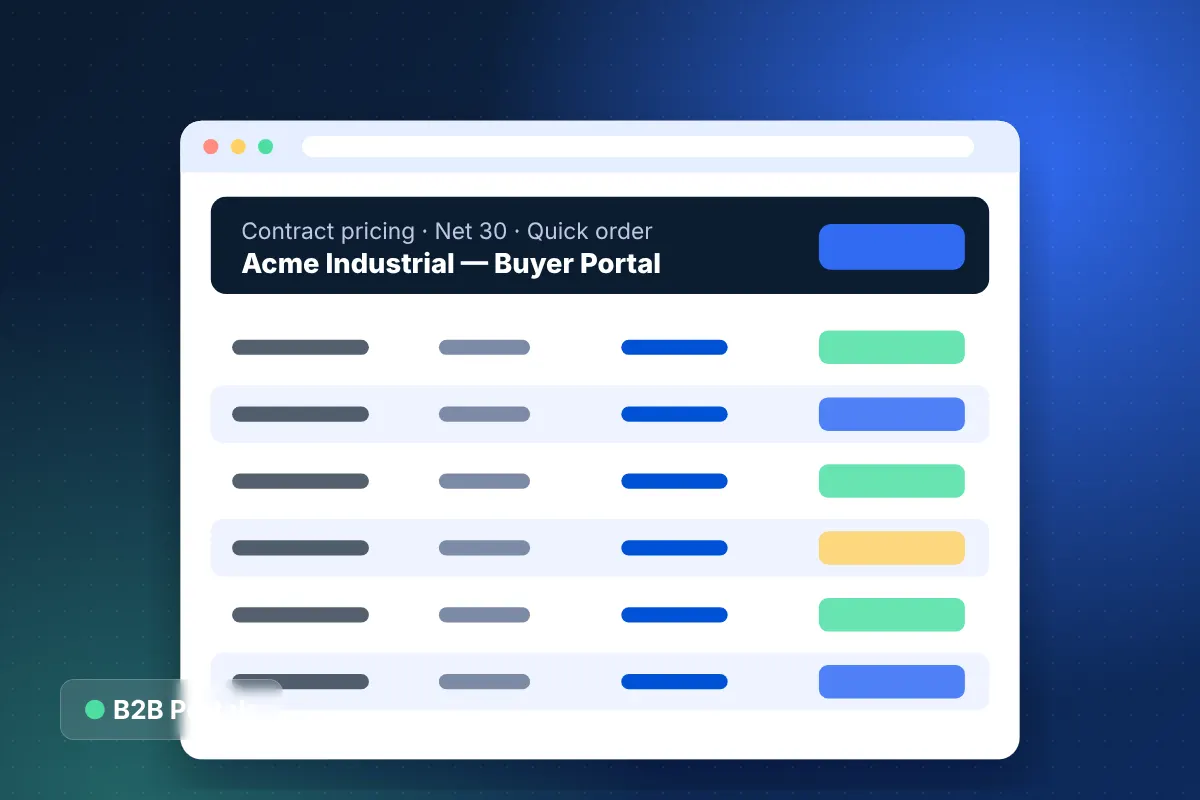
- Customer-specific catalogs, contract pricing and volume breaks.
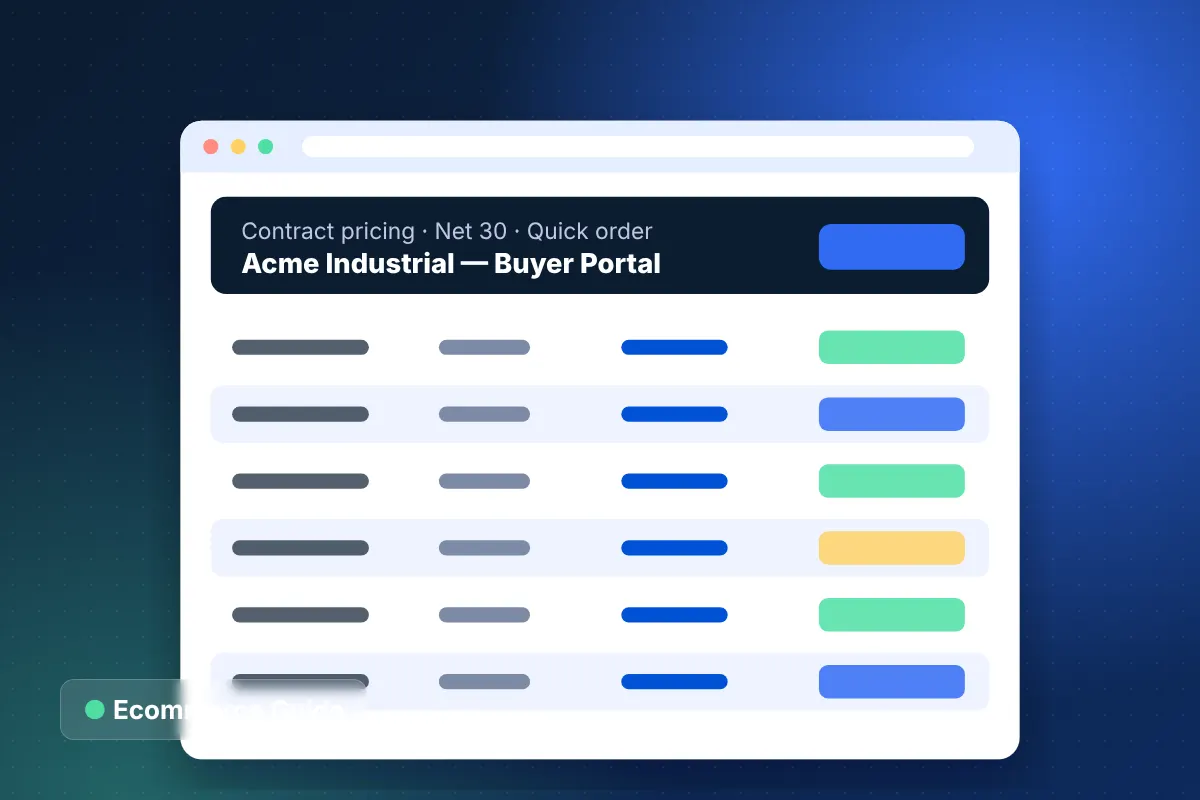
- Quick order by SKU, CSV upload and saved order lists.
- Request-for-quote flows with sales-rep negotiation.
- Invoice history, statements and pay-on-account checkout.
- Real-time stock, lead times and shipment tracking.
For your operations team
- Company accounts with buyer roles, spending limits and approval chains.
- Sales-rep tools to place orders on behalf of customers.
- Punchout catalogs (cXML and OCI) for buyers on Coupa, Ariba and similar procurement systems.
- Automated order routing into your ERP and warehouse systems.
For your sales reps
A good B2B store makes reps more effective rather than replacing them. We build rep dashboards that show each account's order history, open quotes and abandoned carts, plus the ability to build a cart for a customer and send it for approval. Reps spend less time keying orders and more time on new accounts.
Which platform is best for B2B ecommerce development?
There's no single best platform; the right choice depends on catalog size, pricing complexity and how much you sell direct to consumers. We build on all four options below and recommend based on your requirements, not a partner quota.
| Platform | Best for | Watch out for |
|---|---|---|
| Shopify Plus B2B | Brands blending DTC and wholesale with moderate pricing rules | Very complex price matrices need custom apps |
| Adobe Commerce B2B | Large catalogs, deep account hierarchies, negotiable quotes | Higher hosting and maintenance effort |
| BigCommerce B2B Edition | Mid-market distributors wanting SaaS with native B2B tools | Some workflows need app extensions |
| Custom or headless build | Unique pricing engines, configurators or ERP-first architectures | Larger upfront investment |
For a deeper comparison, read our guide to the best B2B ecommerce platform options.
How do we integrate ERP, PIM and punchout systems?
We integrate B2B stores with ERP, PIM and procurement systems through documented APIs and middleware, so pricing, inventory, customers and orders flow automatically in both directions. Integration design starts in discovery, not after the storefront is built.
Our ecommerce ERP integration team works with SAP, NetSuite, Microsoft Dynamics 365 and other systems, using queues and retries so a short ERP outage never loses an order. Typical data flows include:
- Customer accounts, ship-to addresses and credit terms from ERP to store.
- Contract pricing and stock levels, refreshed on a schedule or in real time.
- Orders, quotes and payments from store to ERP.
- Invoices, shipment status and tracking back to the buyer's account.
Handling large catalogs and messy product data
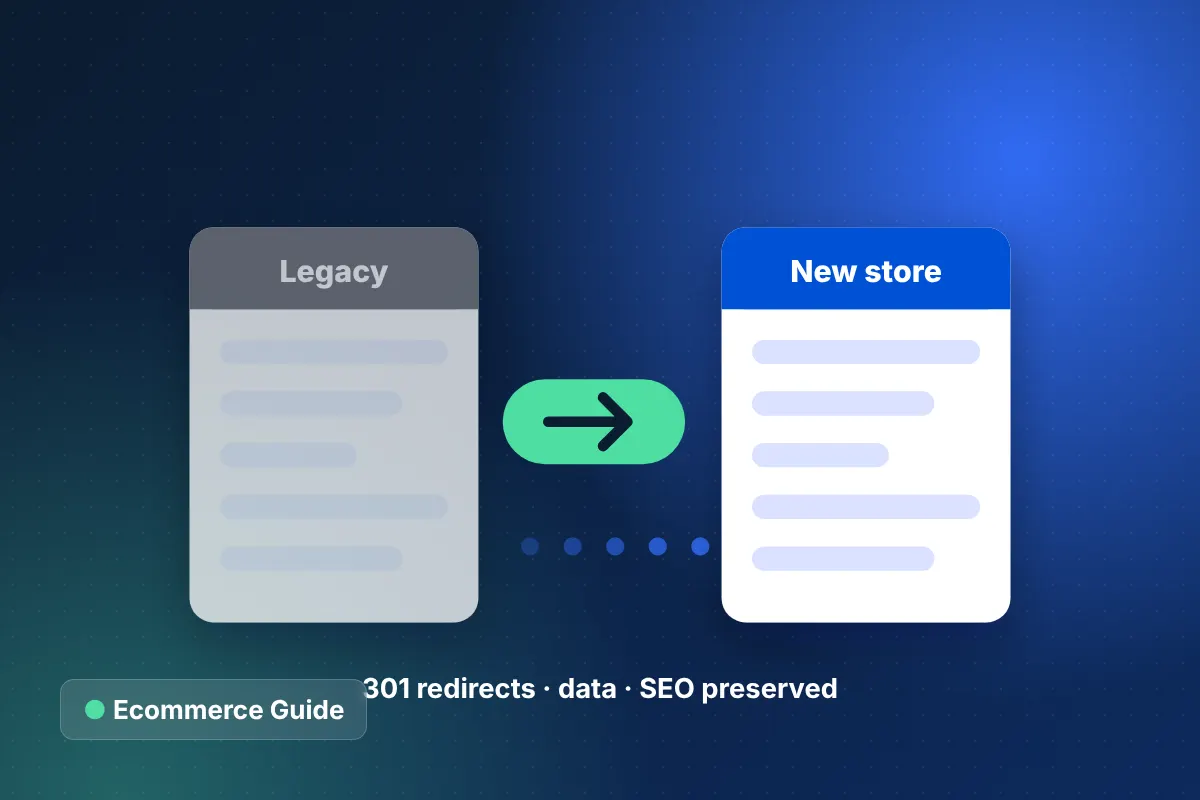
Industrial and distribution catalogs often arrive with inconsistent attributes, duplicate SKUs and missing images. We clean and normalize product data during migration, connect a PIM where it makes sense, and build attribute-driven search so buyers find parts by specification, part number or cross-reference rather than guessing at product names.
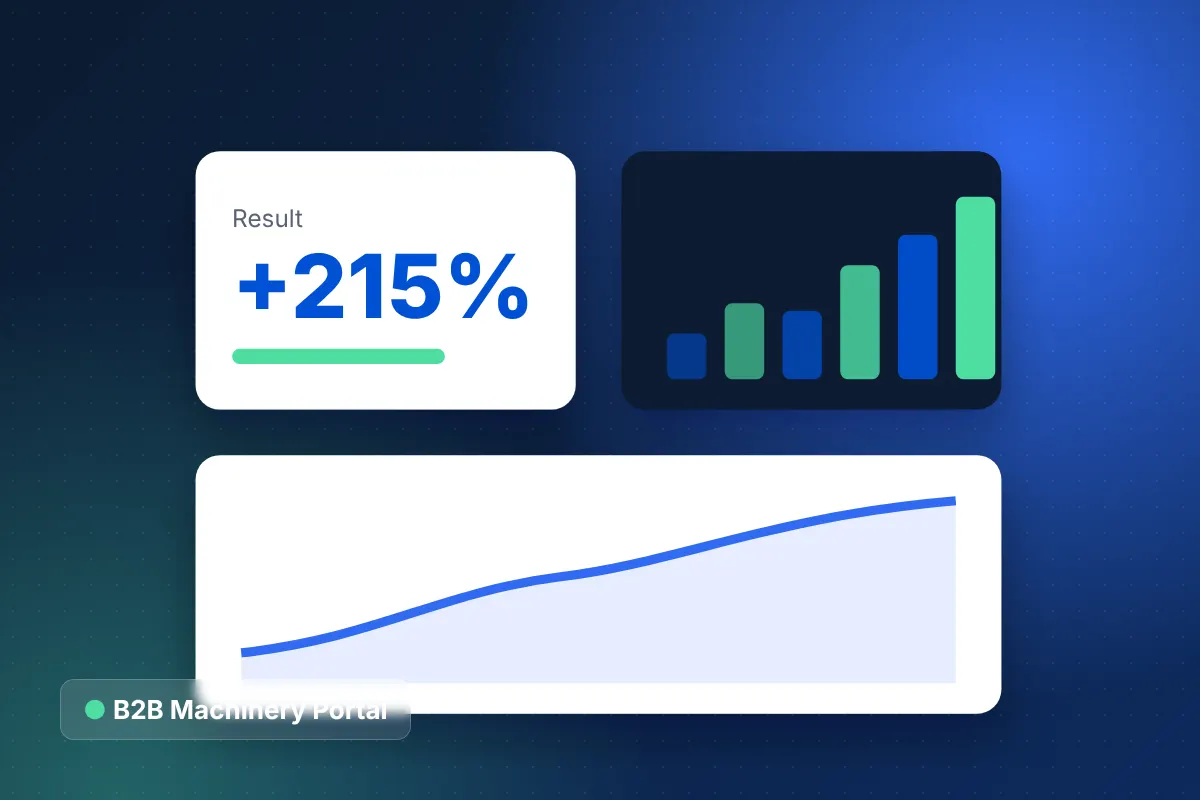
Our B2B ecommerce case study shows this at scale: an industrial OEM with 120,000+ SKUs got a custom punchout store integrated with SAP S/4HANA, increasing digital order volume by 215% and saving 40 hours a week of admin work.
How much does B2B ecommerce development cost?
B2B ecommerce development typically falls in our higher bands: specialized B2B stores usually cost $25,000–$60,000, while multi-region B2B portals with complex ERP integration run $60,000–$150,000+. The final figure depends on pricing logic, integrations and catalog size.
The main cost drivers are:
- The number of price lists, contract rules and customer groups.
- ERP, PIM, CRM and procurement integrations, and whether they run in real time.
- Quote, approval and sales-rep workflows.
- Catalog size and the amount of data clean-up required.
- Number of regions, currencies and storefronts.
Because B2B projects are integration-heavy, we spend extra time in discovery mapping data and edge cases. That's what lets us commit to fixed-price milestone contracts. A typical build takes 8–16 weeks, with ERP integration testing scheduled early in development rather than squeezed in before launch.
Why manufacturers and distributors choose our B2B team
B2B buyers judge you on accuracy: the right price, the right stock and the right invoice every time. Our team has delivered 350+ ecommerce projects over 15+ years, including complex industrial and distribution portals, and follows ISO 27001 security practices.
From our Houston, Texas office we work with manufacturers, distributors and energy suppliers across the US and internationally. You own 100% of the code, a mutual NDA is available before you share pricing data, and our support plans include 24/7 monitoring with a 15-minute critical response.
We've built portals across 24+ verticals, including manufacturing ecommerce solutions, industrial supply, building materials and oil and gas equipment, so we already understand units of measure, minimum order quantities, kits and the other details that trip up generalist agencies.
Get a free B2B ecommerce development estimate
Bring your price lists, ERP details and biggest ordering headaches to a free ecommerce strategy call. In 30 minutes, a senior B2B architect will outline the right platform and integration approach for your B2B ecommerce development project, and we'll follow up with a free estimate. For a quick budget range first, use our ecommerce website cost calculator.