What is Salesforce Commerce Cloud development?
Salesforce Commerce Cloud development is the design, build, customization and integration of storefronts on Salesforce's enterprise commerce platform. It covers B2C Commerce, formerly known as Demandware, and Salesforce B2B Commerce, plus custom cartridges, headless front ends and integrations with ERP, order management and the wider Salesforce ecosystem.
The platform suits enterprise brands running many sites, regions, languages and currencies that want commerce tied closely to Salesforce Service, Marketing and Data Cloud. It is powerful, but its architecture, sandbox workflow and release process reward developers who know it well.
Where Salesforce Commerce Cloud fits in the Salesforce ecosystem
The strongest case for SFCC is connection. Customer service agents can see order history in Service Cloud, marketing journeys can react to browsing and purchase events, and Einstein AI features can personalize product recommendations and search. Salesforce Commerce Cloud development that plans these connections from the start delivers far more value than a standalone storefront.
What do our SFCC developers build?
Our SFCC developers handle storefronts, back-end customization, integrations and performance. Most projects combine several of these workstreams, and many start with an audit of an existing SFCC site that has accumulated technical debt over years of changes.
- SFRA storefronts: Storefront Reference Architecture sites with custom cartridges that keep upgrades manageable.
- Headless builds: PWA Kit and Composable Storefront front ends using the Salesforce Commerce API (SCAPI).
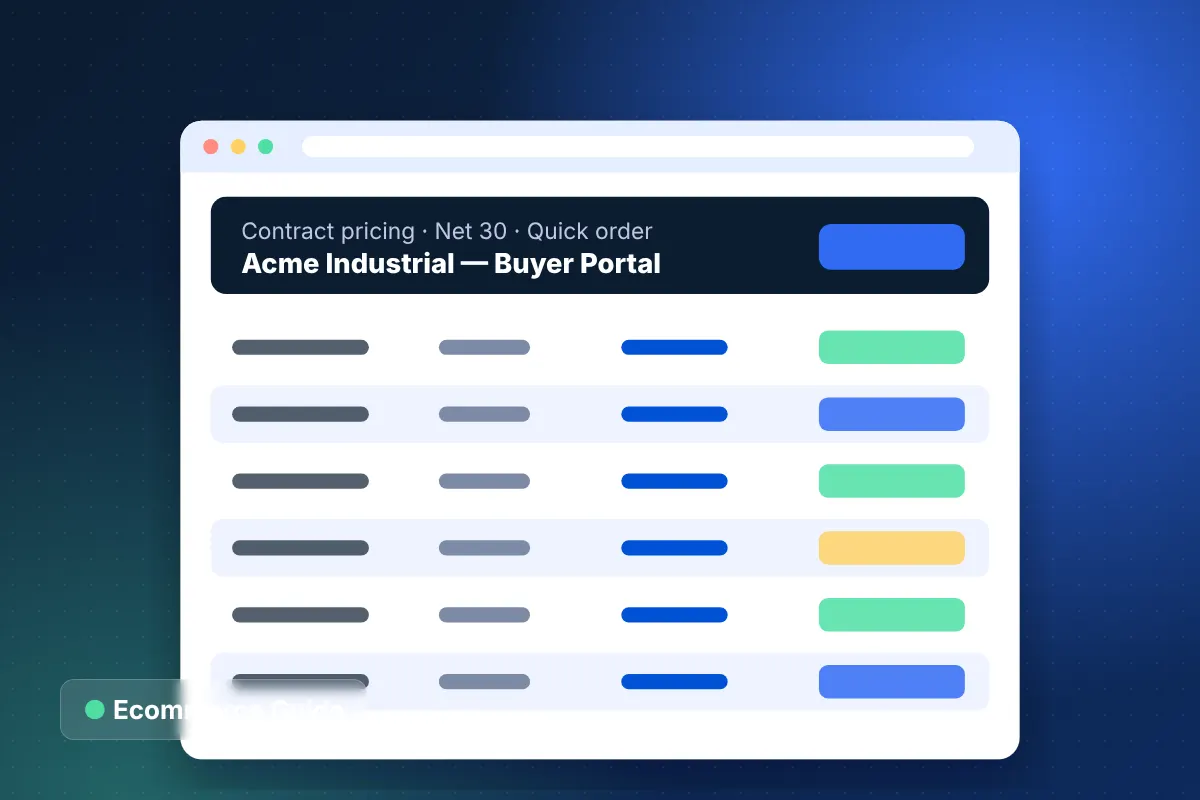
- Salesforce B2B Commerce: account-based storefronts with contract pricing, quick order and buyer roles.
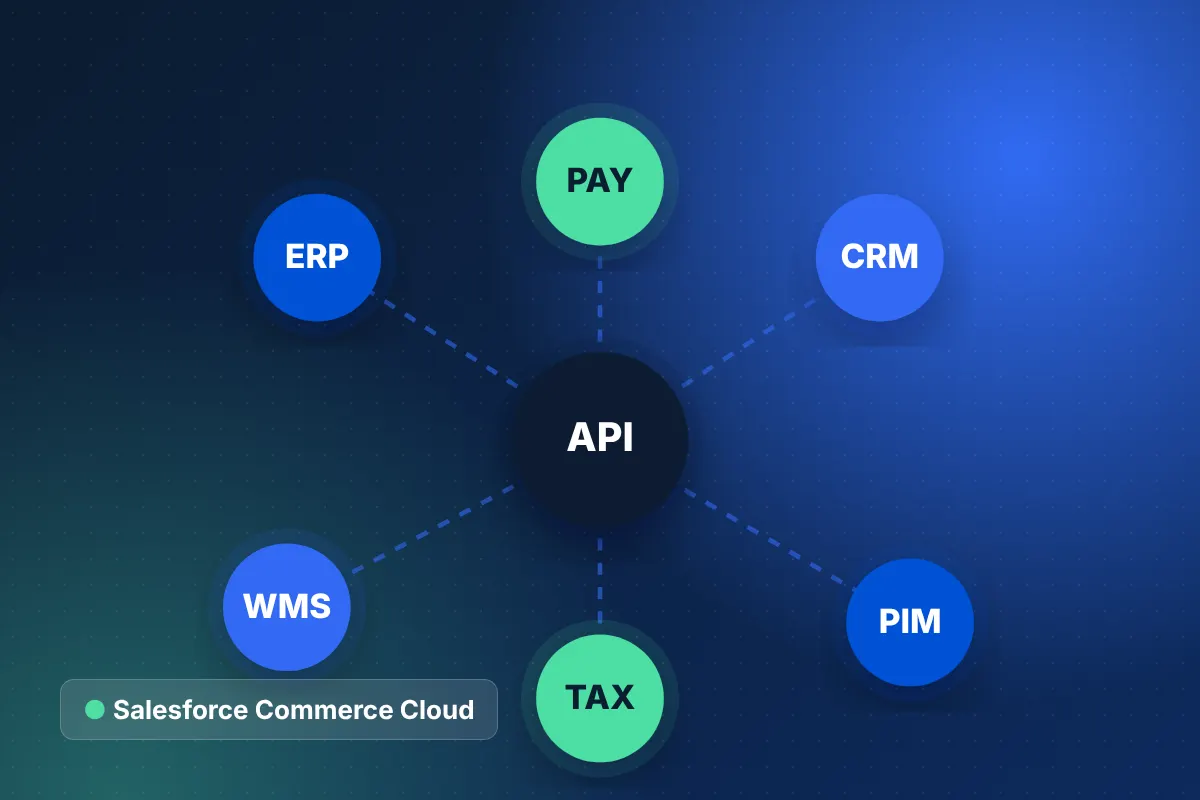
- Integrations: ERP, OMS, PIM, payment, tax and shipping connections through OCAPI, SCAPI and middleware, with error handling and retry logic so orders never silently fail.
- Business Manager configuration: multi-site setup, locales, price books, promotions and search tuning.
- Performance and SEO: template and script optimization toward Core Web Vitals and clean URL structures.
SFRA or Composable Storefront: which should you use?
SFRA is the established server-rendered approach, with a mature cartridge ecosystem and simpler operations. Composable Storefront built on PWA Kit is a headless React front end that gives more design freedom and app-like speed, at the cost of more front-end engineering. Both can deliver excellent results when built well. We recommend based on your team, timeline and roadmap, and our headless commerce development experience across platforms informs that choice.
Salesforce B2C Commerce vs Salesforce B2B Commerce
B2C Commerce is built for consumer storefronts at scale, while B2B Commerce runs on the core Salesforce platform and is built around business accounts and negotiated terms. Many enterprises need both.
| Area | B2C Commerce | B2B Commerce |
|---|---|---|
| Primary buyer | Individual consumers | Business accounts with multiple buyers and roles |
| Storefront approach | SFRA or PWA Kit / Composable Storefront | Lightning Web Runtime storefront |
| Pricing | Price books and promotions | Account-specific price books and contract pricing |
| Ordering | Cart and checkout optimized for conversion | Quick order, reorder, bulk entry and approvals |
| Data model | Dedicated Commerce Cloud instance | Core Salesforce platform alongside CRM data |
Salesforce B2B Commerce development for manufacturers and distributors
Salesforce B2B Commerce works best when your sales team already lives in Salesforce. Accounts, contacts, contracts and opportunities can drive what each buyer sees and pays, so online ordering reflects the relationships your reps manage.
Buyers expect the same convenience they get as consumers, plus features that match how businesses purchase. Typical requirements include saved lists, reorder from history, bulk CSV upload, purchase order and net-terms payment options, multi-level approvals and visibility into invoices and shipments.
We configure entitlements, account pricing, quick order and reorder flows, and connect inventory and order status from your ERP. For a wider look at the options, read our comparison of the best B2B ecommerce platform choices, or explore our broader B2B ecommerce development services.
Should you choose Salesforce Commerce Cloud or another platform?
Choose Salesforce Commerce Cloud if you're a multi-brand or multi-region enterprise heavily invested in Salesforce and need deep personalization and governance. If those conditions don't apply, another platform may deliver similar results at a lower total cost. Salesforce Commerce Cloud development is a long-term commitment, so the decision deserves careful analysis.
Because we hold Shopify Plus, Adobe Commerce and BigCommerce partner status as well as delivering Salesforce Commerce Cloud development, we can compare options honestly. Factors we weigh include:
- How much of your customer data and service operation already runs on Salesforce.
- Number of brands, sites, regions and currencies you need to manage.
- In-house development skills and appetite for a headless front end.
- Platform licensing terms, which are contracted directly with Salesforce.
- Integration complexity with your ERP and order management.
How we deliver Salesforce Commerce Cloud projects
We follow our 6-phase process, adapted to SFCC's sandbox and release model. Each phase ends with a clear milestone and sign-off under a fixed-price contract.
- Discovery & Strategy: requirements, integration mapping and site architecture.
- Conversion UX/UI Design: designs built around SFRA components or a headless design system.
- Architecture & API Engineering: cartridge structure, SCAPI or OCAPI usage and middleware.
- Custom Development: storefront, Business Manager configuration and integrations.
- Testing & Optimization: functional, performance and accessibility testing on staging instances.
- Zero-Downtime Launch: cutover with redirects, monitoring and hypercare.
SFCC work happens across sandboxes, a development instance, staging and production, with code versions activated deliberately. We automate builds and deployments with CI/CD so releases are repeatable, and we keep custom code in separate cartridges so future platform updates are easier to absorb.
Moving onto or off SFCC? Our ecommerce migration services cover catalog, customer and order data plus SEO-safe redirects.
How much does Salesforce Commerce Cloud development cost?
Salesforce Commerce Cloud development is typically an enterprise investment. Complex headless enterprise and multi-region B2B programs usually fall in the $60,000 to $150,000+ range for development, with exact scope confirmed during discovery.
The main cost drivers are:
- Number of sites, brands, locales and currencies.
- SFRA versus a headless Composable Storefront front end.
- Depth of ERP, OMS, PIM and payment integrations.
- Custom features such as configurators, B2B approvals or subscriptions.
- Data migration volume and SEO redirect complexity.
Platform licensing is separate and contracted directly with Salesforce, so we recommend reviewing both build and license costs over several years before committing. Integration work often drives the budget; our ecommerce ERP integration team has connected storefronts to systems like SAP S/4HANA, including the 120,000+ SKU portal in our B2B case study, which delivered a 215% increase in digital order volume.
Get a free Salesforce Commerce Cloud development estimate
Our Houston, Texas team works with enterprise brands across the US and internationally. Book a free 30-minute strategy call to discuss your Salesforce Commerce Cloud development plans and get a free project estimate. A mutual NDA is available, you own 100% of the code we write, and we reply within 24 hours. If you're still comparing platforms, we'll help you decide whether SFCC is the right fit before any development starts.