What are ecommerce website design services?
Ecommerce website design services combine user experience (UX) design and user interface (UI) design to create an online store that is easy to shop and looks unmistakably like your brand. The work spans research, information architecture, wireframes, visual design, prototyping and a design system developers can build from.
Good store design is measured in conversion rate, average order value and returns, not in awards. That's why our designers sit in the same team as our engineers and analysts. Every layout decision is grounded in how your customers actually browse, compare and buy, and every component is designed knowing how it will be built and how fast it will load.
Our ecommerce website design services work on any major platform, including Shopify, BigCommerce, Adobe Commerce, WooCommerce and headless stacks. We design within each platform's strengths, so the finished store is affordable to build and easy for your team to manage after launch.
What's included in our ecommerce UI/UX design process
Our ecommerce UI/UX design process moves from evidence to execution in five steps, each with a clear deliverable you approve before we move on.
- UX audit and analytics review: we study funnels, heatmaps, session recordings and search terms to find where shoppers drop off.
- Customer research: stakeholder interviews, customer surveys and competitor reviews to define buyer needs and objections.
- Information architecture: category structure, navigation, filters and search behavior tested with card sorting where needed.
- Wireframes and prototypes: mobile-first layouts for key templates, clickable in Figma for usability testing.
- Visual design and design system: high-fidelity UI, components, tokens and states documented for development.
What you receive at the end
- A Figma file with every template at mobile, tablet and desktop breakpoints.
- A component library with typography, color, spacing tokens and interaction states.
- A prioritized list of UX findings and the evidence behind each design decision.
- Annotated specs for animations, accessibility and edge cases such as empty states and errors.
Which pages matter most in online store design?
Product pages, category pages, cart and checkout carry most of the revenue impact, so we design them first and test them hardest. Home and content pages matter for brand and SEO, but they rarely decide whether an order is placed.
| Template | Design priorities | Metric we watch |
|---|---|---|
| Product page | Imagery, variant selection, delivery info, reviews, clear add-to-cart | Add-to-cart rate |
| Category and search | Filters, sorting, product cards, zero-result handling | Product views per session |
| Cart and mini-cart | Totals, shipping thresholds, cross-sells, editing | Cart-to-checkout rate |
| Checkout | Fewer fields, express payments, trust signals, error recovery | Checkout completion rate |
| Home and landing pages | Value proposition, navigation entry points, campaign modules | Click-through to category |
Designing for large catalogs and B2B buyers
Stores with thousands of SKUs or trade customers need different patterns from a typical fashion or beauty brand. We design spec-driven filters, comparison tables, quick order forms, saved lists and account dashboards that help repeat buyers move fast. The goal is fewer clicks to the right product, whether the shopper is browsing for inspiration or reordering a known part number.
For Shopify brands, these designs become reusable sections through custom Shopify theme development, so marketers can rearrange pages without breaking the design system.
How do you design an accessible, fast ecommerce website?
You design for accessibility and speed from the first wireframe rather than fixing them after launch. We follow WCAG 2.2 AA guidelines and set performance budgets for every template before visual design begins.
Accessibility built into the design
- Color contrast, focus states and touch targets checked against WCAG 2.2 AA.
- Logical heading structure, form labels and error messages specified in the design file.
- Keyboard and screen reader behavior documented for menus, filters, carousels and modals.
Accessible stores convert more shoppers and reduce legal exposure; our guide to ADA compliance for ecommerce websites explains what's at stake.
Performance designed in
Heavy hero videos, oversized image carousels and third-party widgets are the usual reasons a beautiful store feels slow. We design with Core Web Vitals in mind, targeting LCP of 2.5s or less, INP of 200ms or less and CLS of 0.1 or less, and our ecommerce speed optimization engineers review designs before they're signed off.
How much do ecommerce website design services cost?
Ecommerce website design services are scoped as part of a project after a free strategy call. Design-led store builds typically fall within our specialized custom store band of $25,000–$60,000, and our smallest engagements start around $15,000.
The biggest factors in design cost are the number of unique templates, the depth of research and testing, the number of brands or regions, and whether you need a full design system or a refresh of an existing one. Ecommerce website design services delivered without development are possible, but most clients choose design and build together, because one team owning both avoids costly handoff gaps. We quote on fixed-price milestones, so research, UX and UI phases each have a clear price and deliverable.
Template vs custom ecommerce web design: which is right for you?
A template is right if you're validating a new product line on a tight budget; custom design is right when your brand, catalog or buying journey doesn't fit standard layouts. Many brands sit in the middle, and we're comfortable recommending that too.
- Template customization: fastest and cheapest, but your store looks like many others and complex catalogs often fight the layout.
- Custom design on a platform theme: a unique look and tailored UX built on a solid theme framework, which is our most common recommendation.
- Fully custom or headless design: maximum freedom for brands with distinctive experiences, configurators or editorial content.
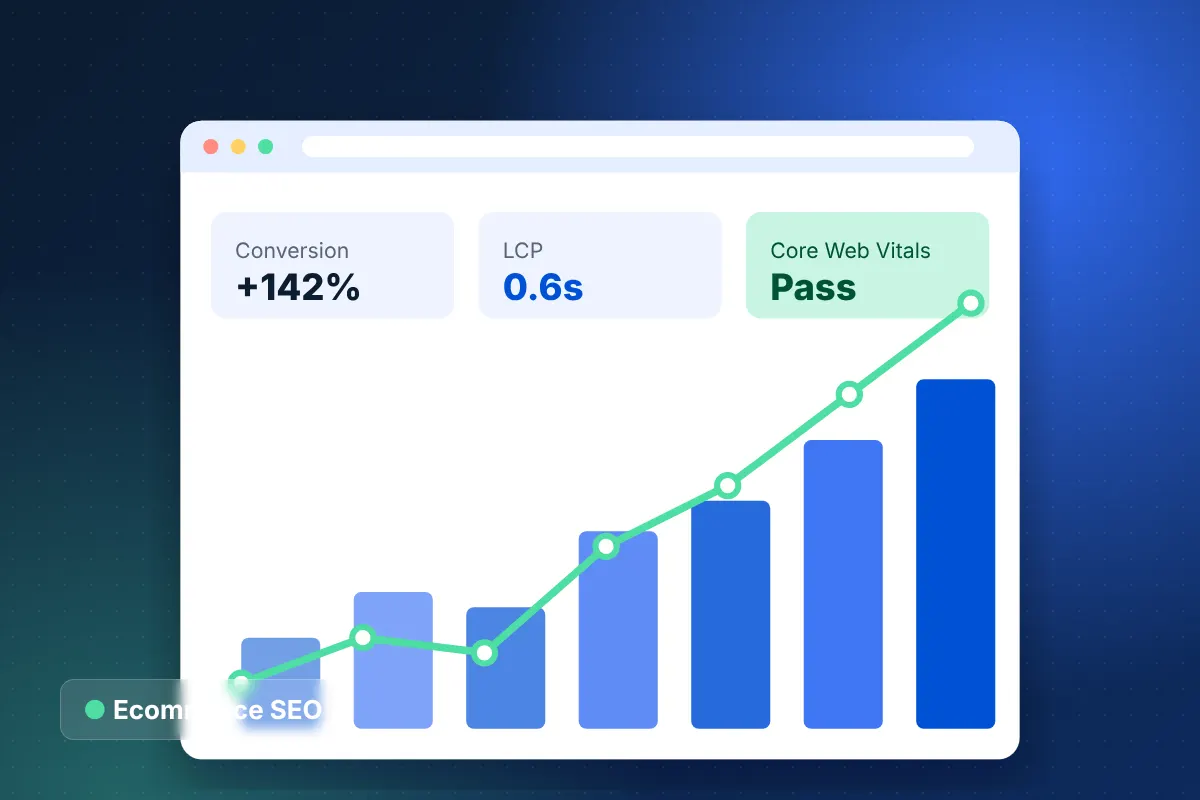
Design choices can make a measurable difference. In our Magento to Shopify Plus migration case study, a redesigned, mobile-first headless storefront contributed to a 142% lift in mobile conversion rate for a luxury apparel brand.
Why work with an ecommerce web design company that also builds stores?
Because designs that ignore platform limits, page speed or data structure end up compromised during development. Our designers and engineers work in one team, so what you approve is what gets built. Developers review wireframes for feasibility, and designers review the build for fidelity before anything ships.
We've delivered 350+ ecommerce projects across 24+ verticals over 15+ years, and you own 100% of the design files and code. Our studio is in Houston, Texas, and if you're local, our ecommerce web design Houston team can run workshops in person; most clients across the US and abroad collaborate with us remotely.
Get a free ecommerce website design estimate
Share your current store, analytics access and brand goals on a free ecommerce strategy call. In 30 minutes, a senior designer will point out the biggest UX opportunities we see, and we'll follow up with a free estimate for our ecommerce website design services. Want a quick budget range first? Try the cost calculator before we talk.