What is Shopify app development?
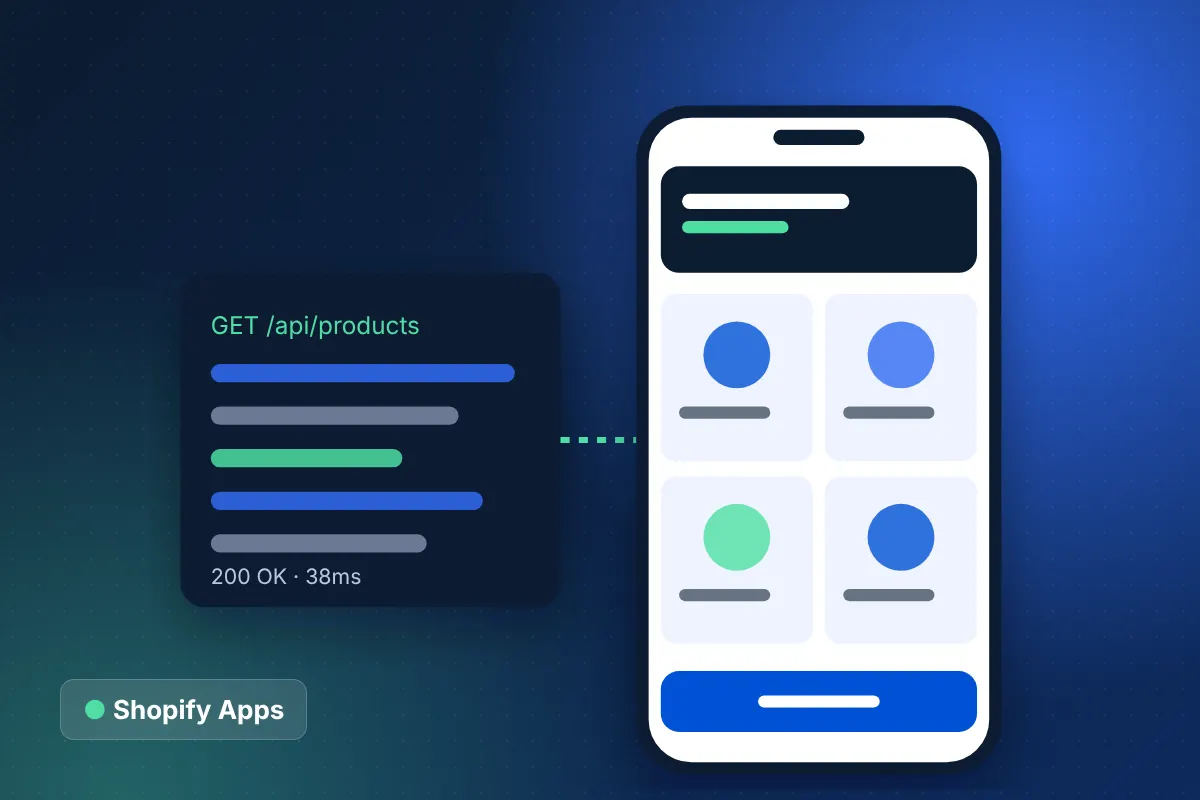
Shopify app development is the engineering of applications that add features or connect systems to a Shopify store through Shopify's APIs and extension points. Apps can add admin tools, change checkout behavior, power storefront features or move data between Shopify and the rest of your business.
We focus on custom apps that solve a specific merchant problem, such as pricing rules, fulfillment routing or ERP synchronization, rather than generic features you could install from the App Store. When a public app already does the job well, we will tell you.
Many of our app projects start as a list of manual tasks: staff copying orders into another system, editing tags by hand or checking stock in a spreadsheet before approving shipments. A well-scoped custom Shopify app removes those steps entirely and reduces the errors that come with them.
Custom Shopify app vs. public App Store app: which do you need?
Build a custom Shopify app when your requirement is unique to your business or must integrate with your private systems; use a public App Store app when the need is common and a reputable app covers it. The differences are significant.
| Factor | Custom Shopify app | Public App Store app |
|---|---|---|
| Who can install it | Your store or organization only | Any Shopify merchant |
| Shopify App Store review | Not required | Required before listing |
| Fit to your workflow | Exact; built to your rules and data | Generic; configurable within limits |
| Ongoing cost | Hosting and maintenance only | Monthly subscription, often usage-based |
| Data and code ownership | You own the code and control the data | Vendor owns the code and processes your data |
| Best for | Integrations, proprietary logic, internal tools | Common needs like reviews, email or loyalty |
A useful rule: if you are paying for several public apps and still filling gaps with manual work, a single custom app built around your process is often cheaper over two to three years and far easier to support.
What we build with Shopify app development
Our Shopify app development covers every modern extension point, so logic runs where it is most reliable and performant.
Shopify Functions
Shopify Functions let developers customize backend logic that runs on Shopify's own infrastructure. We build Functions for custom pricing and promotions, payment and delivery method customization, cart and checkout validation, and order routing. Because they run inside Shopify, they stay fast during traffic spikes and do not depend on your servers.
Checkout and admin UI extensions
Checkout UI extensions add fields, upsells, delivery instructions or B2B purchase order inputs to checkout in an upgrade-safe way. Admin UI extensions place custom actions and data blocks directly inside product, order and customer pages, so staff never leave the Shopify admin.
Integration apps
Integration apps keep Shopify synchronized with ERP, WMS, PIM, CRM and 3PL systems. For complex back-office connections, our ecommerce ERP integration team designs the data flows, mapping and error handling end to end.
Theme app extensions and storefront features
Theme app extensions add app blocks such as configurators, calculators or personalized recommendations that merchants place in the theme editor without editing theme code.
Internal tools and automation
Some apps exist purely for your team: bulk editors for complex product data, approval queues for wholesale accounts, or reports that combine Shopify data with figures from other systems. These tools are built with Shopify's Polaris components so they look and behave like the rest of the admin.
Hiring a Shopify private app developer: what changed
Shopify no longer allows new private apps; what used to be called a private app is now a custom app. If you are looking for a Shopify private app developer, you need someone who builds custom apps with today's tooling.
Custom apps are created in the Shopify admin or through the Partner Dashboard, authenticate with scoped access tokens and should use the GraphQL Admin API, which Shopify now treats as its primary API. Legacy private apps and REST-based integrations still running on older stores are worth auditing, because they often rely on deprecated endpoints or overly broad permissions.
How we build secure, maintainable Shopify apps
We build Shopify apps to the same engineering standards as any production system, because an app failure can stop orders or corrupt inventory. Our standard practices include:
- Least-privilege access scopes so each app requests only the data it needs.
- Webhook verification using HMAC signatures, with idempotent handlers that safely process duplicate deliveries.
- Rate-limit aware queues that respect Shopify's API cost limits and retry failed calls with backoff.
- Observability through structured logs, alerts and dashboards, covered by 24/7 monitoring.
- API version management so apps are upgraded before Shopify retires the API version they use.
- Infrastructure on AWS or Shopify-hosted extensions, following AWS Well-Architected and ISO 27001 practices.
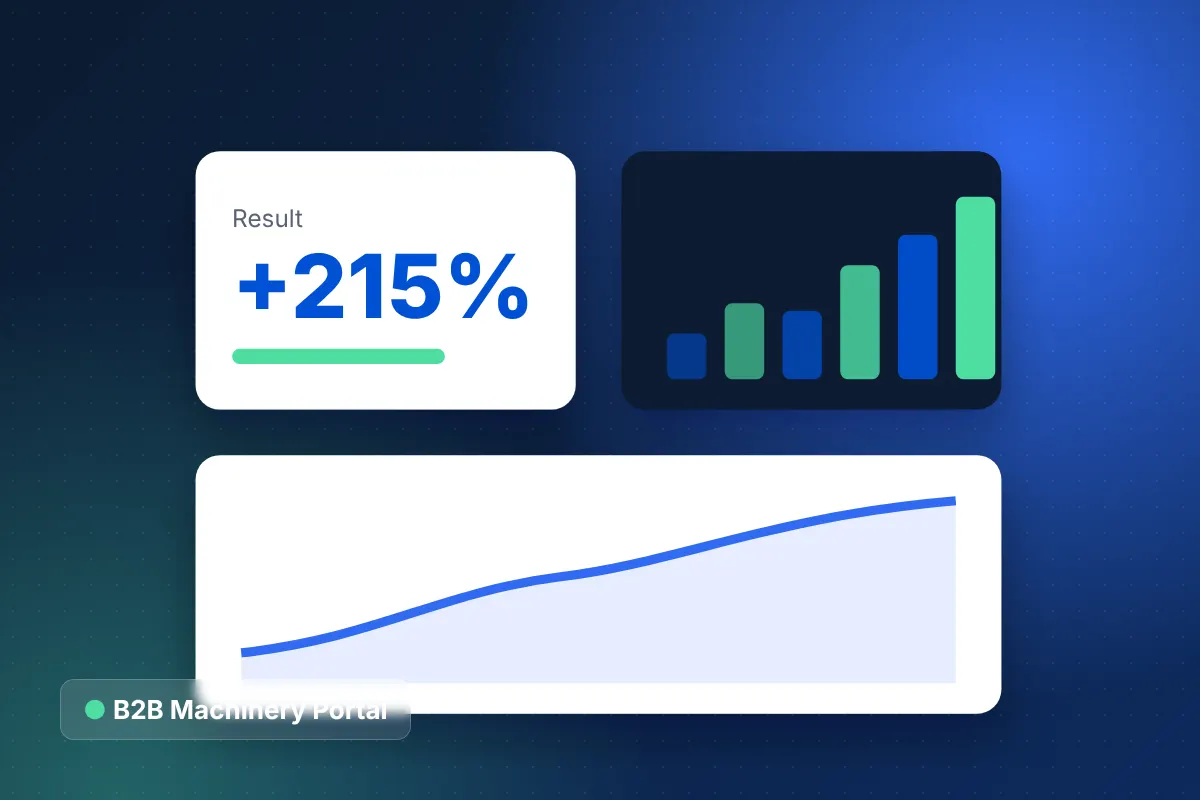
Our integration work outside Shopify follows the same discipline. In our B2B ecommerce case study, an industrial OEM's 120,000+ SKU store integrated with SAP S/4HANA grew digital order volume by 215% and saved 40 hours a week of admin work.
Our Shopify app development process and timeline
App projects follow our six-phase process and fit within the 8–16 week range, with simpler single-purpose apps and Functions finishing well before larger integration apps.
- Discovery & Strategy: define the workflow, data, users and success metrics, and confirm an app is the right solution.
- UX/UI Design: design admin screens and extensions using Shopify's Polaris design system so they feel native.
- Architecture & API Engineering: choose extension points, data models, scopes and hosting.
- Custom Development: build with Shopify CLI and the official app framework in two-week sprints.
- Testing & Optimization: test against development stores, edge-case orders and API failure scenarios.
- Zero-Downtime Launch: install on production, monitor closely and hand over documentation.
How much does Shopify app development cost?
Shopify app development is scoped after a free strategy call, because cost depends on the number of extension points, integrations and admin screens involved. Our smallest engagements start around $15,000, and apps that form part of a larger specialized build fall within our $25,000–$60,000 band.
You own 100% of the app code, so there is no per-month license fee to us. Apps for Plus-only capabilities, such as custom Functions deployed as custom apps, are often delivered alongside our Shopify Plus development agency engagements. Our engineers are based in Houston, Texas, and build Shopify apps for merchants across the US and internationally.
Start your Shopify app development project
Describe the workflow you want to automate or the system you need connected, and we will recommend the simplest reliable approach. Book a free ecommerce strategy call for 30 minutes 1:1 with a Shopify engineer and receive a free Shopify app development estimate. For a quick budget range on a broader project, try the ecommerce website cost calculator.