What are ecommerce migration services?
Ecommerce migration services are the planning, data transfer, rebuild and launch work required to move an online store to a new platform. Done well, customers notice a better store, search engines see the same content at well-redirected URLs, and your team gets a platform that fits how the business runs now.
Replatforming is one of the riskiest projects an ecommerce business undertakes, because revenue, rankings and operations all depend on getting it right. Our ecommerce migration services treat it as an engineering project with checklists, test migrations and sign-off gates, not a weekend data import.
Which ecommerce platform migrations do we handle?
We handle migrations between all major ecommerce platforms. These are the seven paths we run most often, each with its own detailed guide:
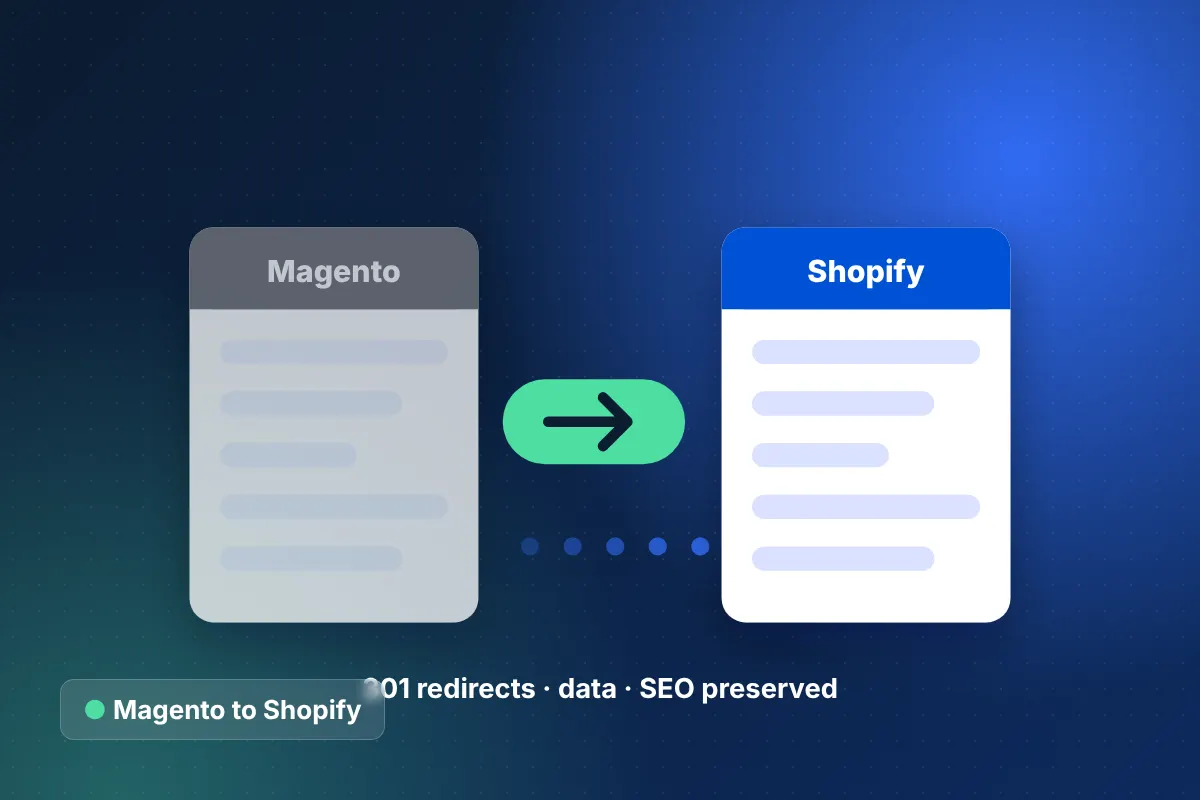
- Magento to Shopify migration: for brands leaving self-hosted maintenance for Shopify or Shopify Plus.
- WooCommerce to Shopify migration: for growing WordPress stores that need hosted reliability and simpler operations.
- BigCommerce to Shopify migration: for brands that want Shopify's app ecosystem and checkout.
- Shopify to WooCommerce migration: for businesses that want full ownership of hosting, data and code.
- Magento 1 to Magento 2 migration: for stores still on an unsupported Magento 1 installation.
- Magento to BigCommerce migration: for catalog-heavy and B2B brands moving to SaaS.
- Wix to Shopify migration: for small stores, including Squarespace sites, ready to scale.
We also migrate legacy custom carts, Salesforce Commerce Cloud and other platforms. If your route isn't listed, the process below still applies.
When is it time for ecommerce replatforming?
It's time to replatform when your current platform costs more to keep running than it returns, or when it blocks growth you've already planned. The decision should be driven by total cost of ownership and business requirements, not by a trend.
Common reasons brands replatform
- Hosting, patching and extension maintenance consume most of the development budget.
- The platform is end-of-life or no longer receiving security updates.
- Licensing costs have grown faster than revenue.
- Missing features, such as B2B pricing, multi-region stores or subscriptions, require expensive workarounds.
- Page speed and checkout limitations hurt conversion.
- Integrations with ERP, PIM or marketplaces are fragile or impossible.
If you're unsure whether to migrate or simply improve your current store, an ecommerce website redesign on the same platform may deliver the gains you need for less effort and risk.
What data moves during an ecommerce platform migration?
Everything your business and customers rely on moves: products, customers, orders, content, URLs and SEO metadata. Some items, such as stored card details and passwords, can't be transferred directly for security reasons, and we plan around them.
| Data type | How we handle it |
|---|---|
| Products and variants | Mapped attribute by attribute, including options, images, inventory and pricing tiers |
| Categories and collections | Rebuilt with the same structure or improved navigation, with redirects for any changes |
| Customers | Accounts, addresses, groups and tags migrated; passwords reset through a secure invite flow |
| Order history | Historical orders imported so customers and support teams keep full records |
| Subscriptions and saved cards | Migrated through payment-provider token transfers where supported |
| Content and blog | Pages, posts and media moved with metadata and internal links updated |
| URLs and SEO | Every indexable URL mapped to a 301 redirect; titles, descriptions and schema preserved |
We run at least one full test migration on staging, reconcile counts and spot-check records with your team, then run a final delta migration at launch to capture new orders and customers.
How do we make a platform migration SEO-safe?
We make migrations SEO-safe by inventorying every URL, preserving high-value content and metadata, and redirecting old URLs to their closest new equivalents before launch. Most post-migration traffic losses come from skipped redirects or missing content, and both are avoidable.
- Crawl the existing site and export URLs, titles, meta descriptions, canonicals and structured data.
- Rank pages by organic traffic, backlinks and revenue to protect the most valuable ones first.
- Build and test a one-to-one 301 redirect map, avoiding redirect chains.
- Match or improve page speed against Core Web Vitals targets.
- Launch, re-crawl, submit sitemaps and monitor Search Console and rankings closely.
Our ecommerce migration SEO checklist walks through every step in detail.
How much do ecommerce migration services cost, and how long do they take?
Ecommerce migration services are priced after a data and integration audit. Specialized migrations typically fall in the $25,000–$60,000 range, while headless or multi-region B2B replatforming runs $60,000–$150,000+. Smaller migrations start around $15,000.
A typical migration takes 8–16 weeks: discovery and UX in weeks 1–4, rebuild and data migration in weeks 5–12, and testing and launch in weeks 13–16. Catalog size, custom features, the number of integrations and whether you redesign at the same time all affect the timeline and budget. You can get an early range from our ecommerce website cost calculator.
Our zero-downtime migration process
Our migrations follow the same six phases as every build, with extra checkpoints for data and SEO: Discovery and Strategy, Conversion UX/UI Design, Architecture and API Engineering, Custom Development, Testing and Optimization, and Zero-Downtime Launch. The old store keeps trading until the moment DNS switches, and we keep a rollback plan ready.
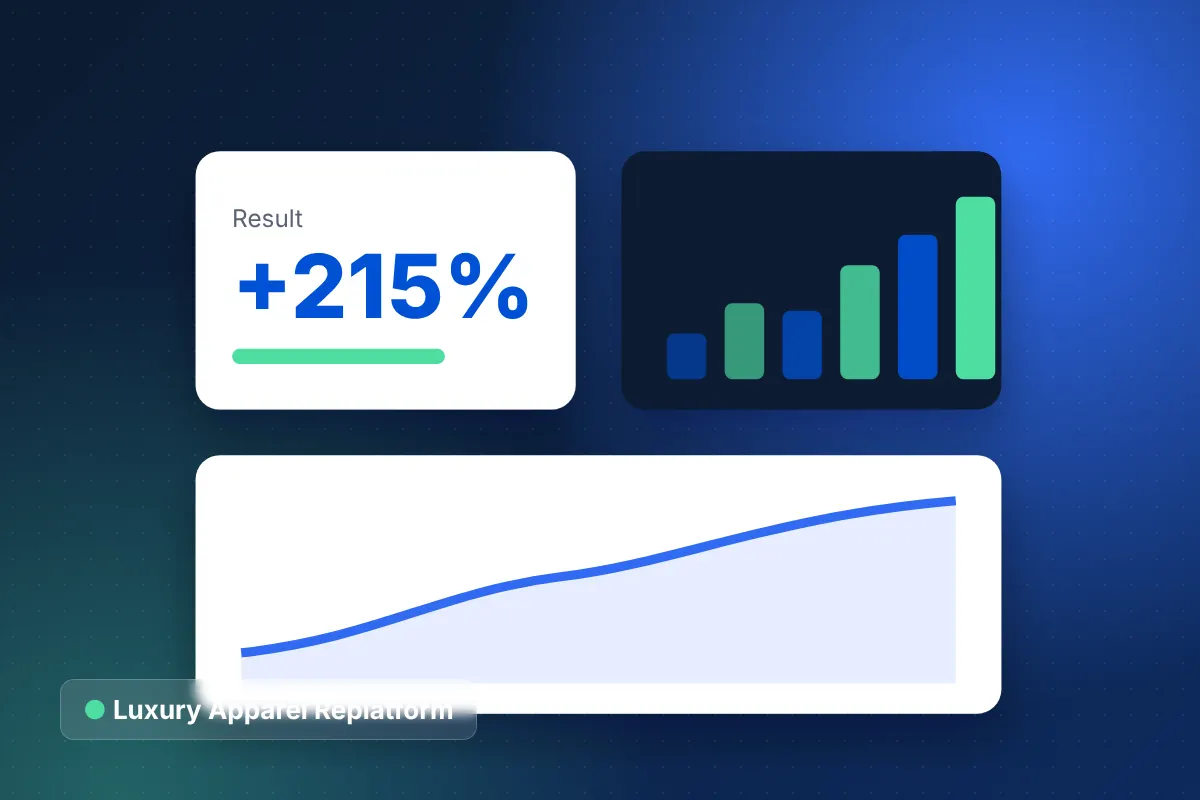
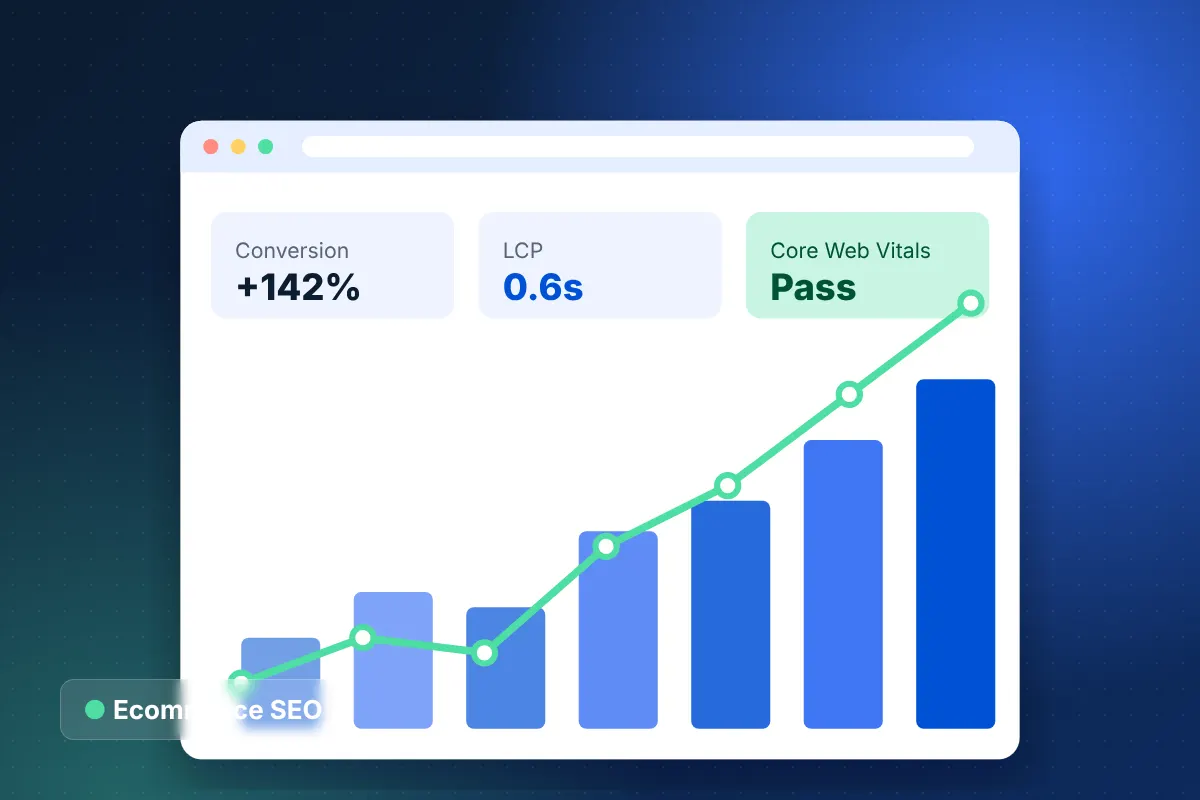
The approach works at scale. In our Magento to Shopify Plus migration case study, a luxury apparel brand moved from a Magento monolith to headless Next.js on Shopify Plus, unifying eight regional stores and achieving a 142% lift in mobile conversion rate and 0.6-second average page loads.
From our Houston, Texas office, we've delivered 350+ ecommerce projects for brands across the US and internationally. You own 100% of the code, a mutual NDA is available before you share data, and post-launch support includes 24/7 monitoring with a 15-minute critical response.
Get a free ecommerce migration estimate
Book a free ecommerce strategy call to review your current platform, data and integrations with a senior migration lead. In 30 minutes, we'll outline the right target platform and migration approach, and follow up with a free estimate for our ecommerce migration services. Use the cost calculator first if you'd like a budget range before the call.