What does fashion ecommerce website development involve?
Fashion ecommerce website development means building a store around visual discovery, fit confidence and fast fulfillment. It covers style-color-size catalogs, editorial merchandising, returns logic and the tools your team uses to launch each collection.
Apparel shoppers browse more than they search. They arrive on a phone from Instagram, TikTok or an email, check the size chart twice, and leave the moment shipping or return terms feel unclear. A clothing ecommerce website has to answer "will it fit?" and "can I send it back?" before the shopper asks.
How fashion shoppers actually buy
- Mobile-first discovery: the product page is often the first page a social visitor sees, so it has to sell on its own.
- Fit anxiety: shoppers compare measurements, read fit reviews and look for models with a similar build.
- Drop and season cycles: new collections create sharp traffic spikes and short sell-through windows.
- Outfit-level buying: average order value climbs when the site shows complete looks instead of single items.
Must-have features for a clothing ecommerce website
The features that move apparel revenue are the ones that lower fit risk and make browsing fast. Everything else is secondary until these work well on a phone.
- Swatch-driven variants: color swatches that swap the full image gallery, not just the thumbnail.
- Size charts and fit finders: charts per product type, plus fit notes such as "runs small" pulled from reviews.
- Shop the look: bundled outfits with one-tap add-to-cart for each piece in the shopper's size.
- Size-level stock alerts: back-in-stock and low-stock messages for the exact size a shopper needs.
- Smart filtering: filters for size, color, fabric and fit that hide out-of-stock sizes by default.
- Self-service returns and exchanges: exchange-first flows that keep revenue instead of refunding it.
- Drop mode: countdowns, pre-orders, purchase limits and bot protection for limited releases.
- Wishlists and recently viewed: easy ways for mobile browsers to come back and buy on desktop.
Which platform is best for an apparel Shopify store or custom fashion build?
For most fashion brands, Shopify or Shopify Plus is the right foundation. Headless makes sense when editorial content, multi-region selling and page speed outgrow what a theme can deliver.
| Platform | Best for |
|---|---|
| Shopify | Emerging labels launching an apparel Shopify store quickly |
| Shopify Plus | Scaling brands running drops, wholesale and multiple currencies |
| Headless (Next.js + Shopify Plus) | Editorial, content-heavy brands that need sub-second pages |
| Magento / Adobe Commerce | Large catalogs with complex multi-store pricing and B2B |
| BigCommerce | Brands selling across many channels from one catalog |
As a Shopify Plus development agency, we usually start fashion clients on Plus and add headless commerce development only when the brand experience demands it. The platform decision should follow your catalog size, regions and content model, not trends.
Which integrations does a fashion online store need?
A fashion store needs inventory, returns, reviews and marketing tools to share the same product and size data. When those systems drift, shoppers see sizes that are not really in stock.
- ERP or PIM: NetSuite, Akeneo or similar for style-color-size matrices and seasonal attributes.
- Returns platforms: Loop or Narvar-style portals that push exchanges back into inventory.
- Reviews with fit data: Yotpo or Okendo fields for height, usual size and fit rating.
- Email and SMS: Klaviyo flows for drops, restocks and browse abandonment.
- Marketplaces and social: feeds to Amazon, TikTok Shop and Meta through multichannel ecommerce integration.
- Buy now, pay later: Klarna, Afterpay or Shop Pay Installments at checkout.
Compliance and performance considerations for apparel brands
Fashion has fewer regulated-product rules than healthcare or alcohol, but accessibility, privacy and product labeling still need attention. Image-heavy pages also put Core Web Vitals at risk.
- Accessibility: WCAG 2.2 AA alt text, readable color names on swatches and keyboard-friendly size selectors.
- Product labeling data: fields for fiber content, care instructions and country of origin, populated from your compliance team.
- Privacy and consent: consent management for tracking pixels across US states and the EU.
- Speed: responsive images and lazy-loaded lookbooks to keep LCP at or under 2.5 seconds.
How our fashion ecommerce website development process works
We deliver fashion ecommerce website development in 8–16 weeks using our six-phase process, with design and merchandising work front-loaded so your team can test real collections early.
- Discovery & Strategy: catalog audit, size data review, returns analysis and platform fit.
- Conversion UX/UI Design: mobile-first product pages, lookbooks and collection layouts from our ecommerce website design services team.
- Architecture & API Engineering: variant models, PIM and ERP connections, multi-currency setup.
- Custom Development: fit tools, shop-the-look bundles and drop mode.
- Testing & Optimization: load tests for launch traffic, device QA and accessibility checks.
- Zero-Downtime Launch: redirect mapping and monitoring through the first drop.
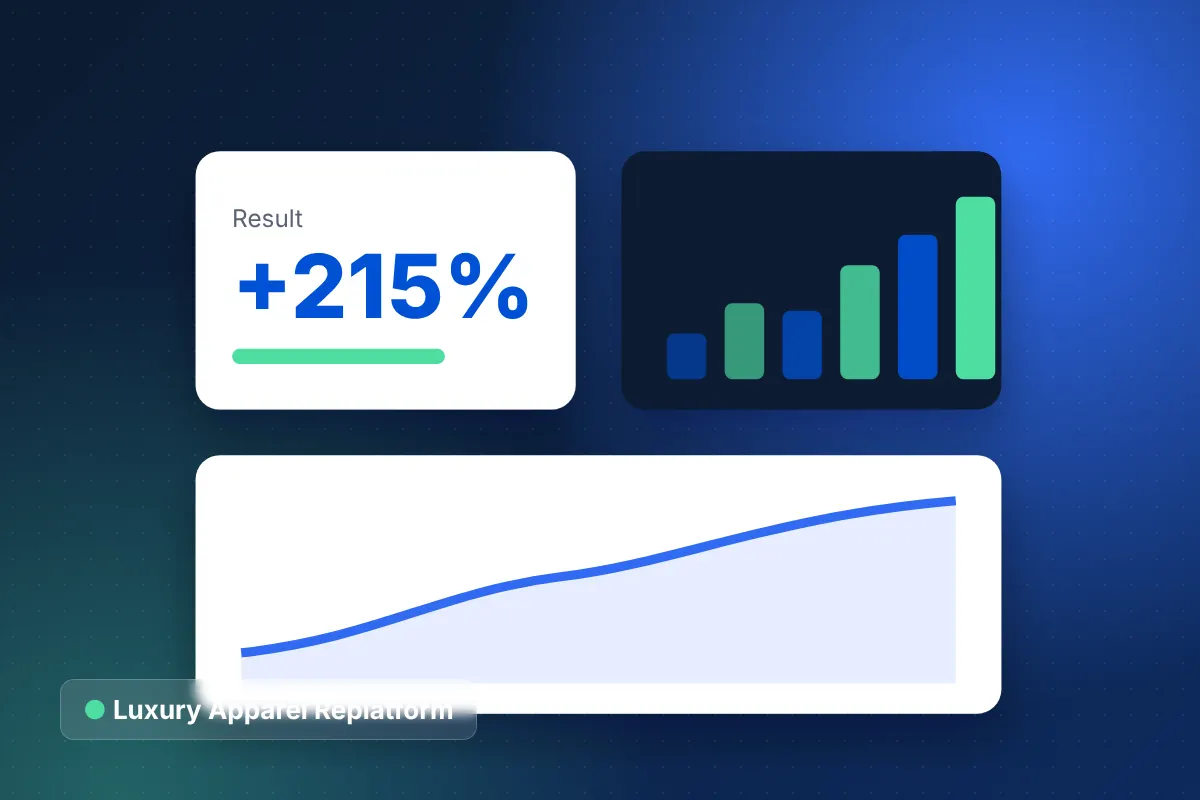
For a luxury apparel brand, we moved a Magento monolith to headless Next.js and Shopify Plus and unified 8 regional stores. The result was a 142% lift in mobile conversion rate and a 0.6-second average page load. Read the Magento to Shopify Plus migration case study.
What does a fashion ecommerce build cost?
Specialized custom fashion stores typically run $25,000–$60,000. Headless, multi-region builds generally land between $60,000 and $150,000+. Every engagement uses fixed-price milestones, and you own 100% of the code.
Get a free fashion ecommerce estimate
If your clothing ecommerce website is slowing down your drops or driving avoidable returns, let's map out a better one. Run your scope through the ecommerce website cost calculator, then book a free 30-minute strategy call with our Houston team. We reply within 24 hours and will outline a fashion ecommerce website development plan and project estimate you can take to your leadership.