What is an ecommerce website redesign?
An ecommerce website redesign is a planned rebuild of your store's design, user experience and front-end templates to fix what's holding back sales. It can include new navigation, product and checkout flows, a refreshed visual identity and faster code, with or without changing platforms.
A redesign is different from a reskin. Changing colors and fonts rarely moves conversion; restructuring how shoppers find, evaluate and buy products does. Our ecommerce website redesign projects start with your analytics and customer data, keep what already works, and change what doesn't, so you protect revenue while improving the store.
What are the signs your online store needs a redesign?
Your online store needs a redesign when it underperforms on mobile, is hard for your team to update, or no longer reflects the brand customers expect. Any two of the signs below usually justify a structured review.
- Mobile conversion is far below desktop, even though most traffic is mobile.
- Core Web Vitals fail on product or category pages.
- Marketing needs a developer for every landing page or campaign.
- The catalog has outgrown the navigation, filters or search.
- Your brand has evolved, but the store still looks like it did years ago.
- Accessibility gaps or customer complaints point to usability problems.
- The theme is heavily patched, and every update risks breaking something.
What a redesign won't fix
A new design can't fix uncompetitive pricing, weak product-market fit or a broken fulfillment process. It also won't solve platform limits such as missing B2B features or unaffordable licensing. We say so early, because spending on a redesign when the real problem lies elsewhere wastes budget and delays the fix that matters.
Redesign, replatform or optimize: which do you need?
Redesign when the platform is fine but the experience isn't; replatform when the platform itself is the constraint; optimize when the store is broadly sound and needs targeted fixes. Choosing correctly is the biggest cost decision in the project.
| Option | Choose it when | Typical scope |
|---|---|---|
| Optimize | Design is current; a few pages or speed issues hurt conversion | Targeted UX fixes, A/B tests, performance work |
| Redesign | Platform meets your needs; UX, brand or code quality don't | New design system, templates and front-end code on the same platform |
| Replatform | Platform limits, costs or maintenance block growth | New platform, data migration, redesign and redirects |
If the platform is the problem, our ecommerce migration services combine replatforming with a redesign in one project, so you only go through a launch once.
How do you redesign an ecommerce site without losing SEO?
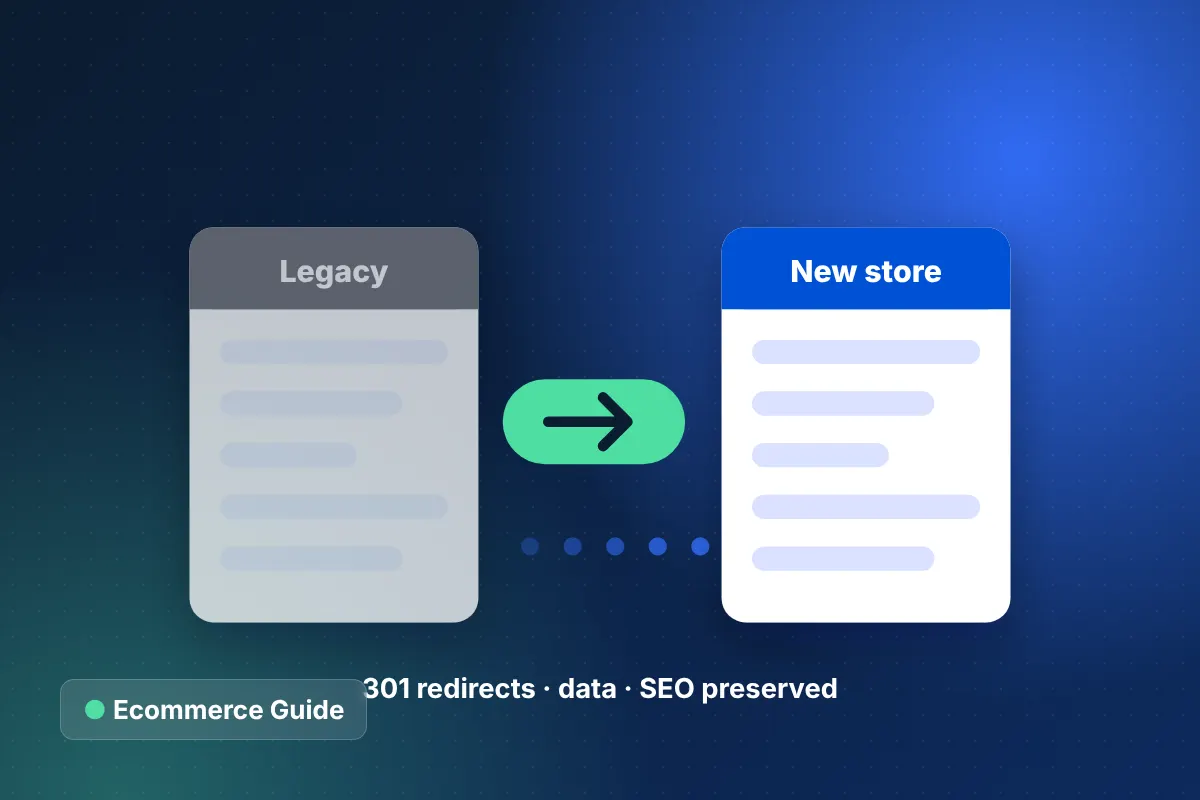
You protect SEO by treating URLs, content and technical signals as requirements from day one, not a launch-week checklist. Most traffic drops after a redesign come from missing redirects, removed content or slower pages, and all three are preventable.
Before launch
- Crawl the current site and export every indexable URL, title, meta description and canonical.
- Identify top landing pages by organic traffic and revenue, and keep their content and intent.
- Build a one-to-one 301 redirect map for every URL that changes.
- Carry structured data, image alt text and internal links into the new templates.
- Benchmark rankings and Core Web Vitals so you can compare after launch.
After launch
We re-crawl the new site, check redirects and status codes, submit updated sitemaps, and monitor Search Console for crawl errors and ranking shifts for at least the first few weeks. Our ecommerce migration SEO checklist lists every step, and our ecommerce SEO services team can stay on to grow rankings once the new store settles.
What's included in our ecommerce website redesign service?
Our ecommerce website redesign service covers research, design, development, SEO protection and launch, delivered by one team so nothing gets lost between agencies.
- Conversion audit: analytics, heatmaps, session recordings and on-site search analysis.
- UX and UI design: mobile-first templates and a reusable design system.
- Front-end rebuild: clean, fast theme or headless code instead of layers of patches.
- Content and merchandising: updated navigation, collections and product page structure.
- SEO protection: URL mapping, redirects, metadata and structured data carried over.
- Analytics and tracking: GA4 events and conversion tracking verified before go-live.
- Accessibility: templates designed and tested against WCAG 2.2 AA.
We redesign stores on Shopify, BigCommerce, Adobe Commerce and WooCommerce. A Shopify redesign typically means a new Online Store 2.0 theme with flexible sections; on Magento it often means moving to a lighter front end such as Hyvä. In every case, products, customers and order history stay intact.
How much does an ecommerce website redesign cost and how long does it take?
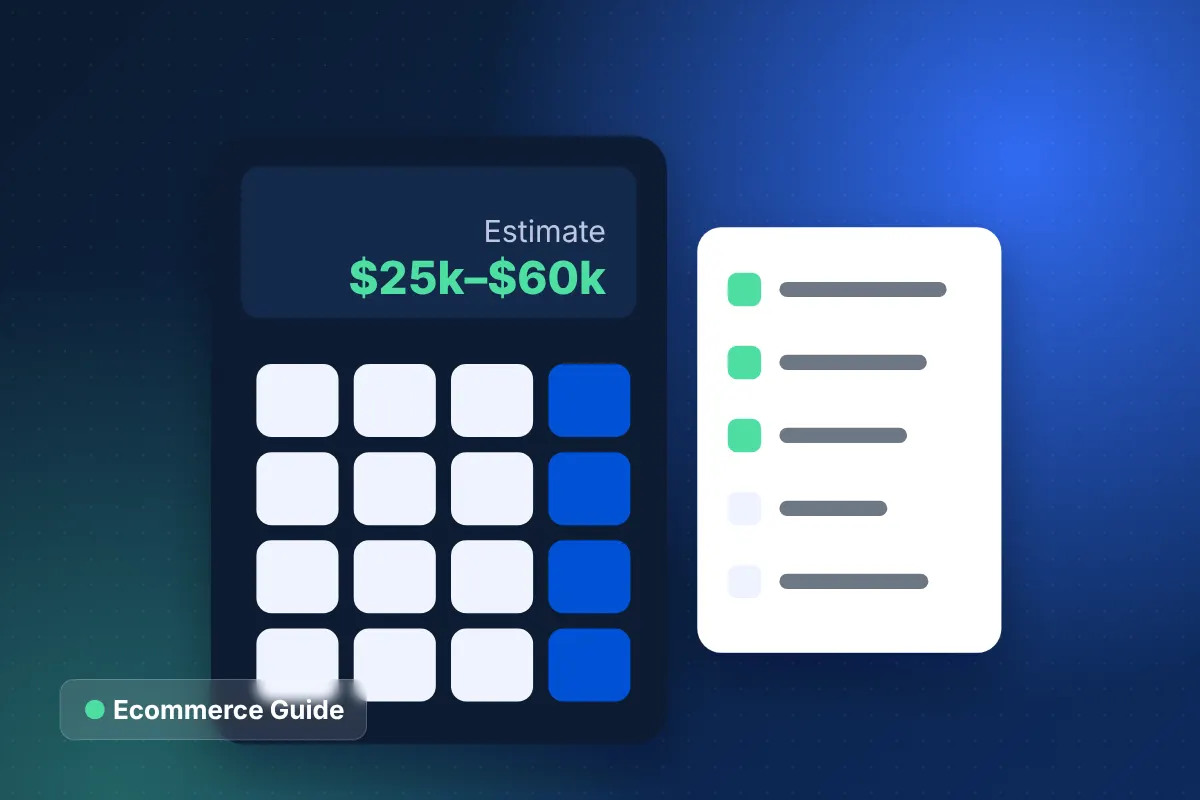
Most ecommerce website redesign projects fall in our specialized custom store band of $25,000–$60,000, with smaller, focused redesigns starting around $15,000. Redesigns that include replatforming, headless front ends or multiple regions typically run $60,000–$150,000+.
The factors that shape the price are:
- The number of unique templates and custom components.
- Whether the front end is a theme rebuild or a headless build.
- The depth of research and user testing.
- Content, imagery and catalog restructuring.
- Integrations that must be retested, such as ERP, reviews and subscriptions.
A typical redesign takes 8–16 weeks. Discovery and UX run in weeks 1–4, development in weeks 5–12, and QA and launch in weeks 13–16. We price on fixed milestones, and you can get a quick range from our ecommerce website cost calculator before we talk.
Our data-led redesign process
We follow the same six-phase process on every redesign: Discovery and Strategy, Conversion UX/UI Design, Architecture and API Engineering, Custom Development, Testing and Optimization, and Zero-Downtime Launch. The difference on a redesign is that we have real customer behavior to learn from, so each phase starts with evidence.
Your team stays involved throughout. Merchandisers, customer service and marketing review wireframes, because they know the questions customers ask and the workarounds they rely on today. That input keeps useful features from disappearing in the redesign.
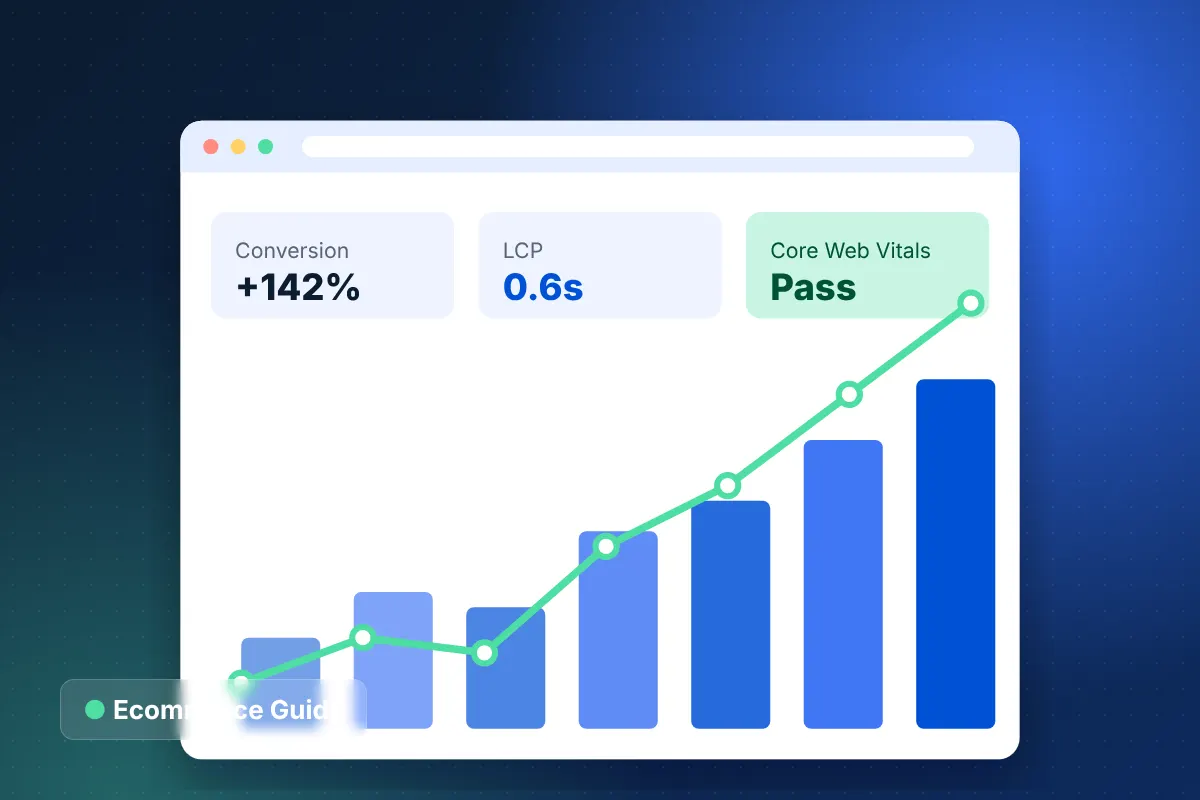
Where traffic allows, we validate major changes with A/B tests or staged rollouts instead of switching everything at once. The result can be dramatic: in our Magento to Shopify Plus migration case study, a luxury apparel brand's redesigned headless storefront delivered a 142% lift in mobile conversion rate and 0.6-second average page loads.
Our team is based in Houston, Texas, and works with brands across the US and internationally. We've delivered 350+ ecommerce projects, keep a 98% client retention rate, and you own 100% of the code and design files.
Start your ecommerce website redesign
Book a free ecommerce strategy call to talk through your store, traffic and goals with a senior strategist. In 30 minutes we'll tell you whether you need an optimization, a redesign or a replatform, and follow up with a free estimate for your ecommerce website redesign. You can also use the cost calculator first to set a budget range.