Ecommerce development terms explained
Plain-English definitions of the ecommerce, platform and SEO terms you’ll hear during a project.
Headless commerce
An ecommerce architecture where the customer-facing storefront is decoupled from the commerce backend and the two communicate through APIs.
Composable commerce
Building an ecommerce platform from independent, best-of-breed services (commerce engine, search, CMS, payments, PIM) that can each be replaced without rebuilding the whole system.
Replatforming
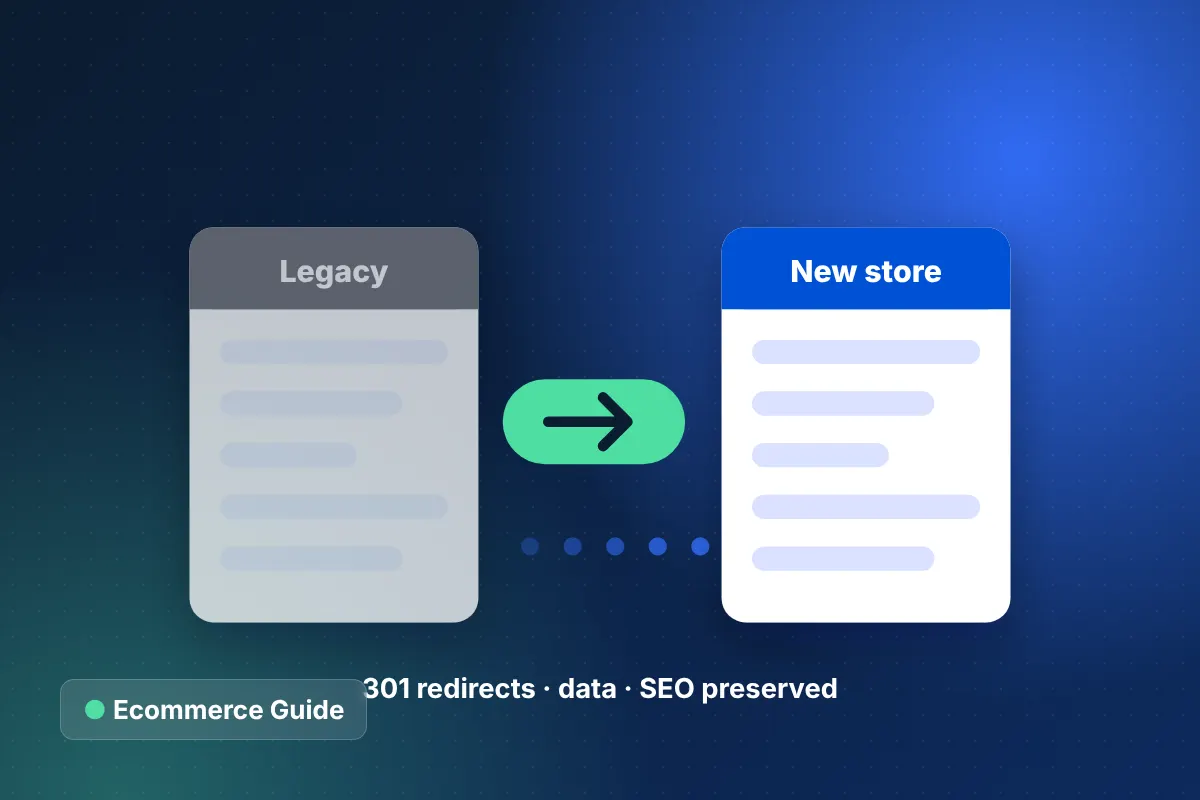
Migrating an online store from one ecommerce platform to another, including products, customers, orders, integrations and SEO URLs.
Core Web Vitals
Google's user-experience metrics: Largest Contentful Paint (loading), Interaction to Next Paint (responsiveness) and Cumulative Layout Shift (visual stability).
Largest Contentful Paint (LCP)
The time it takes for the largest visible element on a page, usually a hero image or heading, to render. Good LCP is under 2.5 seconds; our target is under 1.2 seconds.
Interaction to Next Paint (INP)
A Core Web Vital measuring how quickly a page visually responds after a user interaction such as a tap or click.
Cumulative Layout Shift (CLS)
A Core Web Vital measuring unexpected movement of page content while it loads.
ERP integration
Connecting an online store to enterprise resource planning software such as SAP, NetSuite or Dynamics 365 so inventory, pricing and orders sync automatically.
Punchout catalog
A B2B ecommerce feature that lets a buyer's procurement system (such as SAP Ariba or Coupa) open a supplier's store, build a cart and return it for approval.
Faceted navigation
Filters on category pages (size, color, brand, price) that let shoppers narrow results; it must be controlled carefully for SEO to avoid index bloat.
Canonical tag
An HTML element telling search engines which URL is the preferred version of a page when similar or duplicate versions exist.
Structured data (JSON-LD)
Machine-readable code using the Schema.org vocabulary that describes products, prices, reviews and organizations so search and AI engines can understand a page.
Conversion rate optimization (CRO)
Improving a store so a higher share of visitors complete a purchase, using analytics, research, design changes and A/B testing.
Checkout Extensibility
Shopify's upgrade-safe framework for customizing checkout with UI extensions and Shopify Functions.
Dunning
The automated process of retrying failed subscription payments and notifying customers to update payment details, reducing involuntary churn.
Multi-vendor marketplace
An ecommerce platform where many independent sellers list products and buyers check out in one cart, with payments split automatically.
PCI-DSS
The Payment Card Industry Data Security Standard, a set of security requirements for any business that stores, processes or transmits cardholder data.
Total cost of ownership (TCO)
The full cost of an ecommerce platform over time, including licenses, hosting, apps, development and maintenance, not just the initial build.