What is a wholesale ecommerce platform?
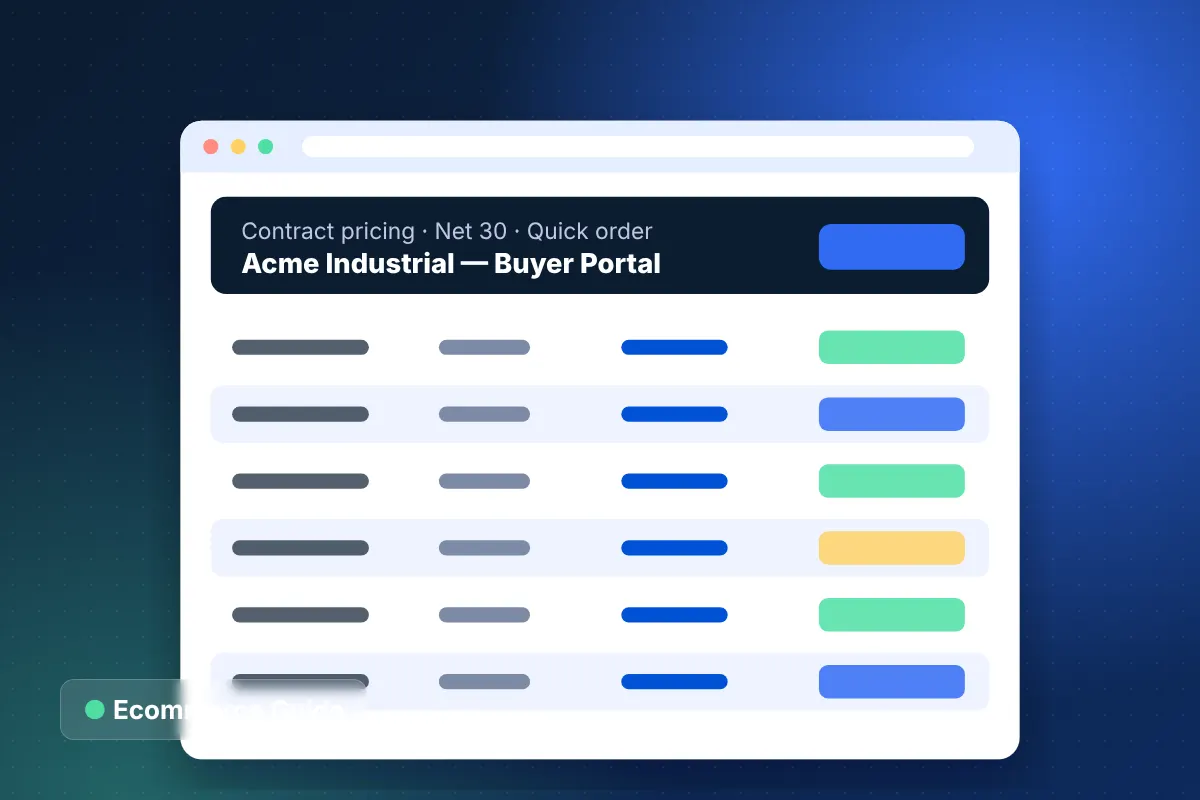
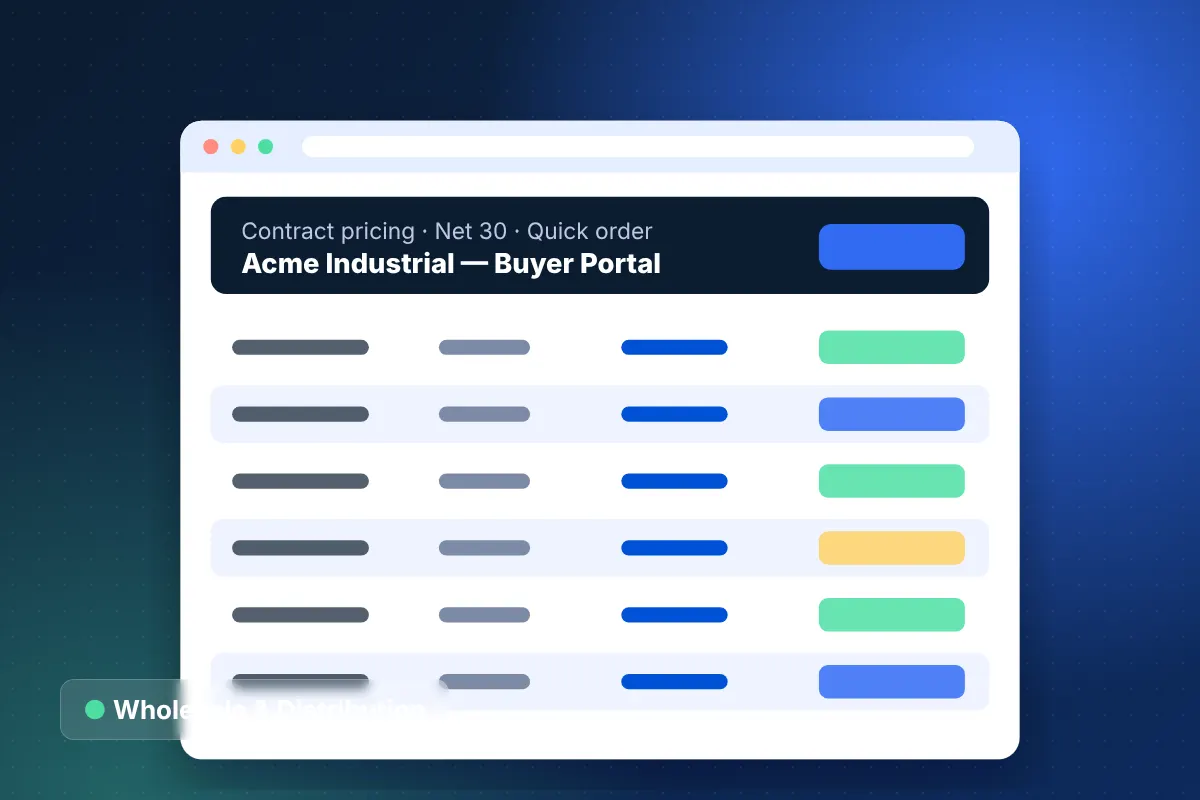
A wholesale ecommerce platform is an online ordering channel built for distributors, where every customer sees their own prices, buys in case packs and pays on terms. It replaces phone, email and spreadsheet orders with a self-service portal that posts directly into your ERP.
Distributors sit between many suppliers and many customers, so their catalogs are wide, their margins are tight and their order volumes are high. A distributor ecommerce website has to make reordering fast, protect pricing and reduce the manual work that eats into margin.
How wholesale buyers behave
- Frequent, routine reorders: store owners and purchasing managers reorder the same items weekly or monthly.
- Price sensitivity by account: buyers expect their negotiated price levels and volume breaks every time.
- Rep relationships: many accounts still rely on a sales rep to suggest products and place orders.
- Mixed channels: the same customer may order online, by EDI, by email and in person in the same month.
Must-have features for a B2B ordering portal
The must-have features make ordering faster for buyers and cheaper to process for you. They mirror what your customer service team handles today.
- Customer price levels: price lists, volume breaks and promotional pricing synced from ERP.
- Case-pack and minimum rules: sell by each, inner pack, case or pallet with enforced multiples.
- Quick order tools: SKU entry, CSV upload, order guides and one-click reorder from history.
- Sales rep mode: reps log in as a customer, build carts and send them for approval.
- Credit limits and terms: net terms, credit holds and online invoice payment.
- Multi-warehouse availability: stock by location with ship-from rules and backorder dates.
- Drop-ship and special orders: vendor-direct items routed to the right supplier.
- Customer self-service: invoices, statements, proof of delivery and returns requests online.
Which wholesale ecommerce platform is best for distributors?
BigCommerce B2B Edition and Shopify Plus B2B suit many mid-market distributors, while large catalogs with complex pricing usually need Adobe Commerce or a custom portal. Integration depth with your ERP matters more than the feature checklist.
| Platform | Best for |
|---|---|
| BigCommerce B2B Edition | Mid-market distributors with price lists, quotes and company accounts |
| Shopify Plus B2B | Brands and distributors with simpler price levels selling wholesale and DTC |
| Adobe Commerce B2B | Large catalogs, multiple warehouses and complex pricing hierarchies |
| Custom headless portal | High-volume distributors with unusual pricing, EDI-heavy flows or many integrations |
Our BigCommerce development services are a common starting point for distributors, and our guide to the best B2B ecommerce platform options compares them in more depth.
How a distributor ecommerce website connects to ERP and EDI
A distributor ecommerce website should read pricing, stock and customer data from your ERP and write orders back automatically. Without that, the portal adds work instead of removing it.
Our ecommerce ERP integration work covers NetSuite, Dynamics 365, SAP, Epicor Prophet 21, Infor and other distribution ERPs. Customer accounts, ship-to addresses, price levels and credit status sync on a schedule or in real time, and orders post with the right warehouse and terms.
Typical wholesale integrations
- ERP for pricing, inventory, credit and order processing
- EDI for large retail customers who order through 850 and 810 documents
- Warehouse management and shipping systems for pick, pack and tracking
- PIM for supplier content, images and specifications
- CRM for sales rep visibility into account activity
- Payment processing for card, ACH and invoice payments
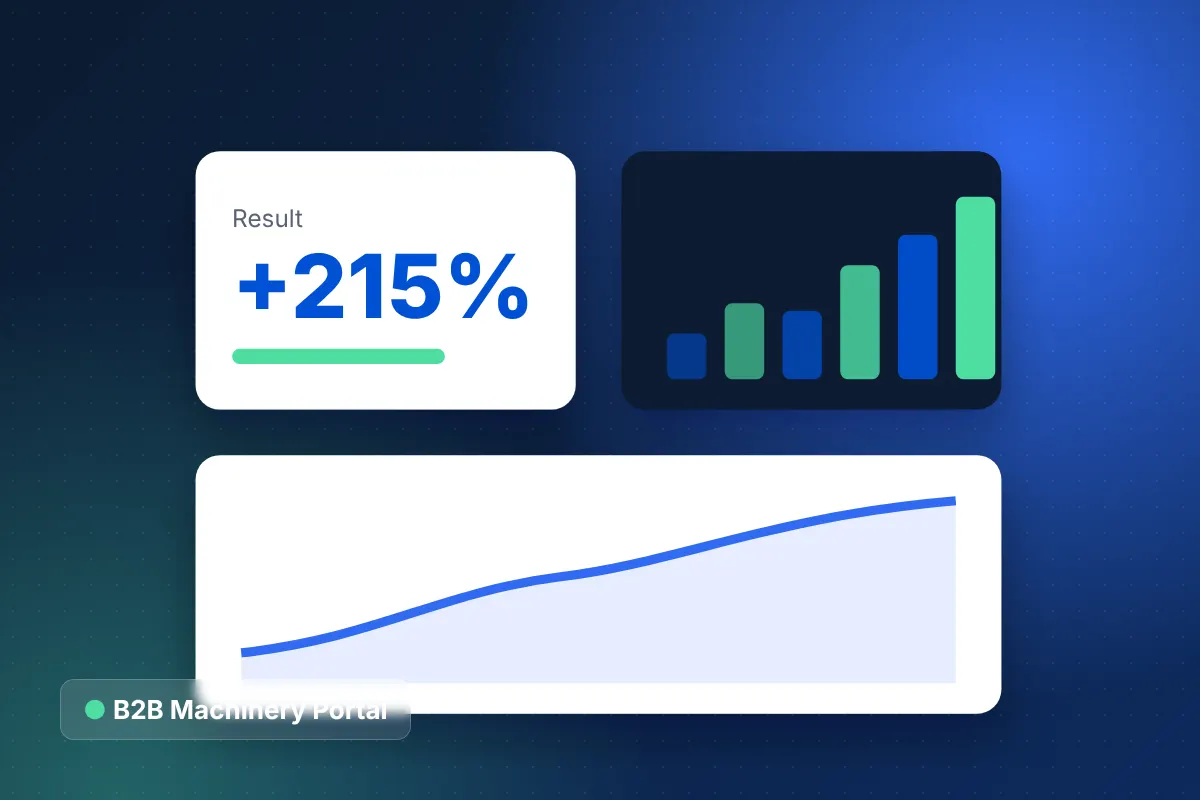
For an industrial OEM with 120,000+ SKUs, our SAP S/4HANA-integrated portal raised digital order volume by 215% and saved 40 hours of admin per week. Read the B2B ecommerce case study for the details.
Compliance and operational considerations for distributors
Distributors need to manage tax exemptions, restricted products, data security and accessibility across many customer accounts. The portal should handle these by account automatically.
- Sales tax exemptions: resale and exemption certificates stored per account and applied at checkout.
- Restricted products: items limited by license, region or customer type hidden from ineligible accounts.
- Hazmat items: shipping restrictions and documentation for regulated goods your suppliers flag.
- Account security: SSO, role-based permissions and audit logs for multi-user companies.
- Accessibility: WCAG 2.2 AA ordering screens for every buyer.
How we build wholesale ecommerce platforms
We build distributor portals in 8–16 weeks, and complex ERP or EDI scopes use the full window. The process starts by mapping your real order data, not an idealized one.
- Discovery & Strategy: pricing hierarchies, account structures, channels and ERP data audit.
- Conversion UX/UI Design: fast order screens designed for buyers who order dozens of lines at once.
- Architecture & API Engineering: ERP, EDI, WMS and payment integrations.
- Custom Development: rep tools, case-pack logic and self-service account features.
- Testing & Optimization: price accuracy testing against ERP for every price level.
- Zero-Downtime Launch: account invitations, rep training and phased customer rollout.
Our B2B ecommerce development projects for distributors typically land between $60,000 and $150,000+ when deep ERP and EDI integration is required, while focused portals can start in the $25,000–$60,000 range. All work is fixed-price by milestone.
Get a free wholesale ecommerce estimate
If your team still keys orders from email and fax, a wholesale ecommerce platform can give that time back. Estimate your budget with the ecommerce website cost calculator, then book a free 30-minute strategy call to map out your B2B ordering portal.