What is subscription ecommerce platform development?
Subscription ecommerce platform development creates the full system behind recurring orders: the storefront offer, the billing engine, the subscriber account and the analytics that tell you why customers stay or leave. It applies to replenishment products, curated boxes, memberships and subscribe-and-save programs.
Recurring revenue is valuable because each subscriber is worth many orders. It is also fragile. A confusing cancellation flow, a failed card nobody retries or a box customers cannot customize can quietly erase months of acquisition spend. The platform has to make staying easier than leaving.
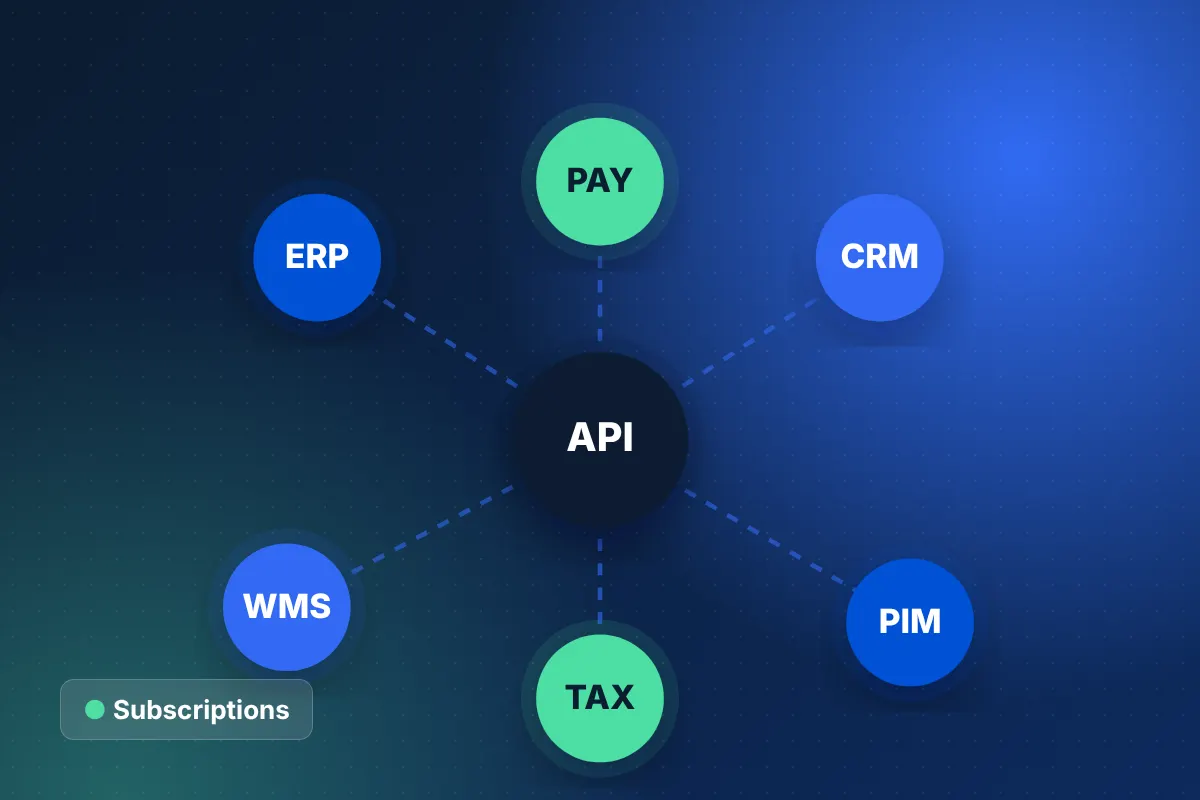
Good subscription ecommerce platform development also connects the subscription to the rest of the business. Renewal forecasts feed purchasing and inventory, fulfillment needs clean batch exports on shipping day, and finance needs revenue reports that separate new, renewing and recovered payments. When those connections are missing, teams spend renewal week fixing spreadsheets instead of growing.
Which subscription models can we support?
We build replenishment, curated box, build-your-own box, membership and hybrid subscription models. Each one needs different billing logic and customer controls.
- Replenishment: subscribe-and-save on consumables with flexible delivery frequency.
- Curated box: a themed box chosen by your team each cycle.
- Build-your-own box: subscribers choose products within rules on size, price or category.
- Membership: paid access to member pricing, perks, content or early releases.
- Prepaid plans: three, six or twelve deliveries paid upfront, often as gifts.
Many brands combine models, for example a replenishment plan with member pricing, or a curated box with optional add-ons. The billing engine has to handle mixed carts, one-time items added to a recurring order and plan changes mid-cycle without confusing the subscriber or the warehouse.
What features reduce subscription churn?
Self-service control, smart payment recovery and personalized retention offers reduce churn the most. Subscribers who can adjust their plan rarely cancel it.
Self-service subscriber portal
Subscribers should be able to pause, skip a delivery, swap products, change frequency, update addresses and update cards without contacting support. Every one of these actions is a cancellation avoided.
Dunning and payment recovery
- Automatic retries of failed payments on a smart schedule.
- Email and SMS reminders with a one-click card update link.
- Card account updater support through your payment provider where available.
Cancellation flows that listen
Ask why a subscriber is leaving, then respond with a relevant option: skip a month, change frequency, swap a flavor or downgrade a plan. Capture the reason either way, because cancellation data is one of the clearest product insights you will get.
Retention analytics
Track retention by signup month, acquisition channel, first product and plan type. These cohort views show which offers attract subscribers who stay and which attract one-and-done buyers, so marketing spend shifts toward the customers with the highest lifetime value.
What happened when a beverage brand outgrew its subscription app?
A specialty beverage DTC brand had outgrown an off-the-shelf subscription app. Customers could not customize boxes, failed payments quietly cancelled subscriptions and support spent hours on manual pause and swap requests.
We engineered a custom subscription architecture with a dynamic bundle builder, automated recurring billing and dunning, and a self-service portal. The result was +$1.2M in ARR expansion and 88% subscriber retention. Read the full subscription ecommerce case study for the architecture and rollout.
Subscription app or custom engine: which should you choose?
Subscription apps are the fastest start for most brands; custom subscription ecommerce platform development pays off when your box logic, pricing or retention flows outgrow what apps allow. The decision usually follows subscriber volume and model complexity. We often recommend starting with an app, measuring where it limits retention, and then investing in custom subscription ecommerce platform development only where the numbers justify it.
| Option | Good for | Limits |
|---|---|---|
| Shopify subscription app | Simple replenishment and launching quickly | Custom box rules and portal UX constrained |
| Subscription app plus custom extensions | Growing brands needing custom portals or bundles | Logic split between app and custom code |
| Custom billing engine (e.g. on Stripe Billing) | Complex boxes, memberships, hybrid B2B and DTC plans | Larger build and ongoing ownership |
Our custom ecommerce website development team builds custom engines and portals, while our Shopify app development team extends subscription apps with custom bundle builders and checkout logic when a full rebuild is not needed.
How much does subscription ecommerce platform development cost?
Most custom subscription builds fall between $25,000 and $60,000, while complex engines with memberships, multiple regions or ERP integration reach $60,000 to $150,000+. Extending an existing subscription app with a custom portal or bundle builder is often a smaller engagement starting around $15,000.
Cost depends on the number of subscription models, bundle rules, payment provider, migration of existing subscribers and the analytics you need. Migrating active subscriptions and payment tokens between providers needs careful planning so nobody is double-billed or dropped. We scope that migration explicitly as part of subscription ecommerce platform development, never as an afterthought.
How we build and migrate subscription programs
We follow our six-phase process, usually 8 to 16 weeks, with extra testing on billing edge cases.
- Discovery: review churn reasons, failed-payment rates and support tickets.
- UX design: plan the offer, box builder, portal and cancellation flow.
- Architecture: choose app versus custom engine and define billing rules.
- Development: build the storefront offer, portal, dunning and integrations.
- Testing: simulate renewals, proration, skips, failed cards and refunds.
- Launch: migrate subscribers in batches and monitor renewals closely.
Renewal days are the riskiest moments in any subscription program, so we load-test the billing run, stagger large renewal batches when needed and set alerts for unusual decline rates. Fulfillment exports are tested against your warehouse or 3PL format before the first live cycle.
Our team works from Houston, Texas with brands across the US and internationally. You own 100% of the code, and 24/7 monitoring with 15-minute critical response protects renewal days.
Start your subscription ecommerce project
If churn, failed payments or manual subscription changes are holding back growth, subscription ecommerce platform development focused on retention is the fix. Book a free 30-minute strategy call to review your subscriber data, or get a first range from the ecommerce website cost calculator.