What are Magento development services?
Magento development services are the engineering work needed to launch, extend and run a store on Magento 2, either the free Open Source edition or the licensed Adobe Commerce. That covers architecture, theme and module development, integrations, performance tuning, security patching and version upgrades.
Magento is the right tool when your catalog, pricing or fulfillment rules outgrow simpler SaaS platforms. As an Adobe Commerce Solution Partner, we treat Magento as an engineering platform, not a theme marketplace: every customization is written as a clean, upgrade-safe module that your team owns outright.
What's included in our Magento development services
Our Magento development services span the full lifecycle, from a brand-new build to stabilizing an existing store that has become slow or fragile. Most clients engage us for a combination of the following.
Build and customization
- New Magento 2 and Adobe Commerce builds with multi-store, multi-currency and multi-language store views.
- Custom module development for pricing logic, product configurators, checkout steps and admin workflows, written with plugins and dependency injection rather than core overrides.
- Front-end development on Luma, Hyvä or a headless Next.js storefront, depending on your budget and speed targets.
- Adobe Commerce B2B features such as company accounts, shared catalogs, negotiable quotes, requisition lists and purchase orders.
Integration and operations
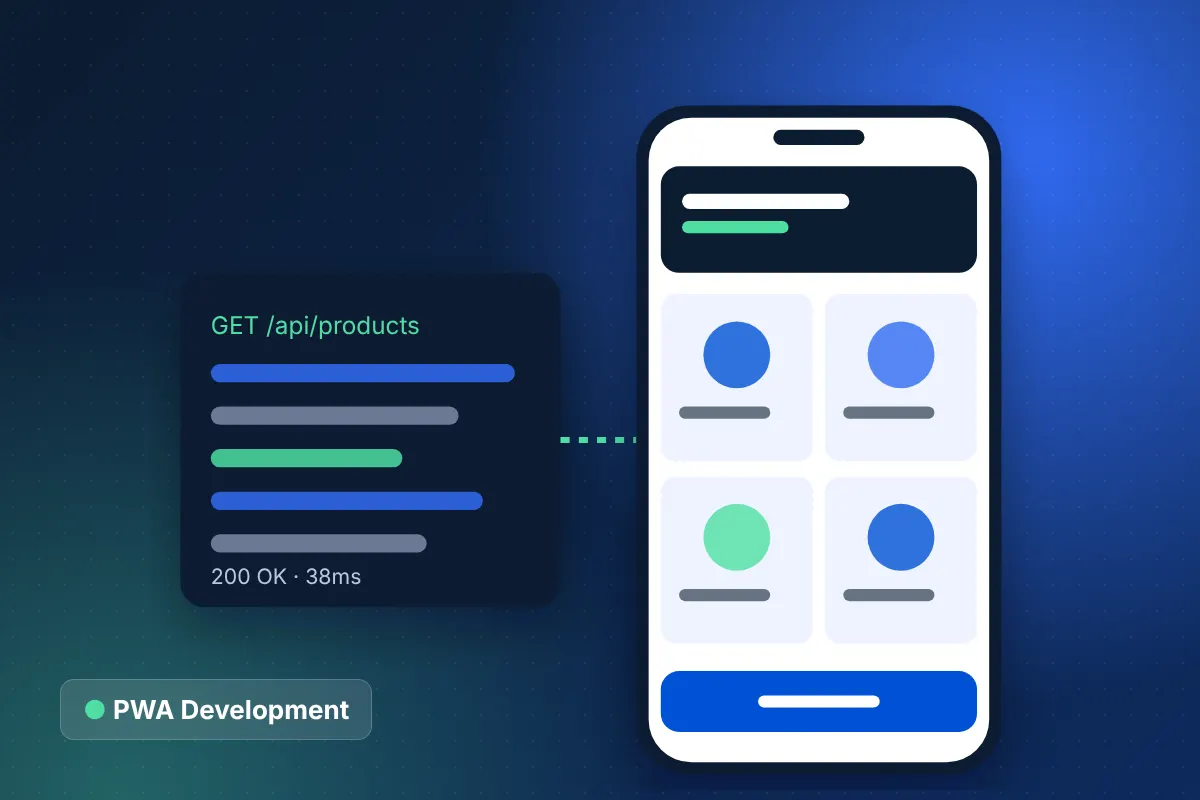
- ERP, PIM, OMS and WMS connections through the Magento REST and GraphQL APIs, message queues and scheduled imports.
- Extension audits that remove conflicting, duplicated or abandoned third-party modules.
- Security patching and version upgrades, including PHP, OpenSearch and dependency compatibility work.
- Performance engineering with Varnish, Redis, full-page cache tuning, indexer optimization and Core Web Vitals fixes.
When Magento has to exchange data with NetSuite, SAP or Dynamics 365, our ecommerce ERP integration team designs the data flows so inventory, customer pricing and orders stay in sync without manual re-keying.
Who our Magento development services are for
Our typical Magento clients run catalogs with tens of thousands of SKUs, configurable or made-to-order products, customer-specific pricing, or several brands and regions on one installation. Many are manufacturers and distributors that sell to trade accounts and consumers from the same back end. If your current store needs workarounds for every new promotion or price rule, Magento's flexibility usually pays for itself.
Magento Open Source vs Adobe Commerce: which edition do you need?
Choose Magento Open Source if you have the technical resources to handle hosting and build missing features, and choose Adobe Commerce if you need native B2B tools, advanced merchandising and Adobe-managed cloud infrastructure. The table below summarizes the practical differences we cover in discovery.
| Factor | Magento Open Source | Adobe Commerce |
|---|---|---|
| License | Free, self-hosted | Annual license, typically tied to revenue |
| Hosting | Your choice, such as AWS or a managed host | Adobe Commerce Cloud or on-premise |
| B2B functionality | Extensions or custom code required | Included: company accounts, quotes, shared catalogs |
| Content staging and customer segments | Not included | Included |
| Best fit | Mid-market brands with in-house or agency developers | Enterprise retailers and complex B2B operations |
Many Open Source stores we inherit are on the right edition; the problems usually come from rushed customization, not the license. If an upgrade isn't worth the cost, we'll say so.
How much do Magento development services cost?
Magento development services are scoped per project after discovery, but most specialized custom stores we build land between $25,000 and $60,000. Complex Adobe Commerce builds with headless front ends, multi-region storefronts or deep B2B logic typically run $60,000 to $150,000+.
The biggest cost drivers are:
- The number of custom modules and how much business logic they hold.
- Integrations with ERP, PIM, shipping, tax and payment systems.
- The front-end approach: Luma customization, Hyvä or headless.
- Catalog size, store views and the complexity of data migration.
- Hosting and DevOps needs, including staging environments and CI/CD pipelines.
Every engagement runs on fixed-price milestone contracts, so you know the cost of each phase before it starts. For a quick range, try our ecommerce website cost calculator.
Should you stay on Magento, upgrade, or replatform?
Stay on Magento if your catalog complexity, B2B rules or customization needs genuinely require it; replatform if you're paying Magento-level maintenance for a store a SaaS platform could run. We help you make that decision with total-cost numbers, not platform loyalty.
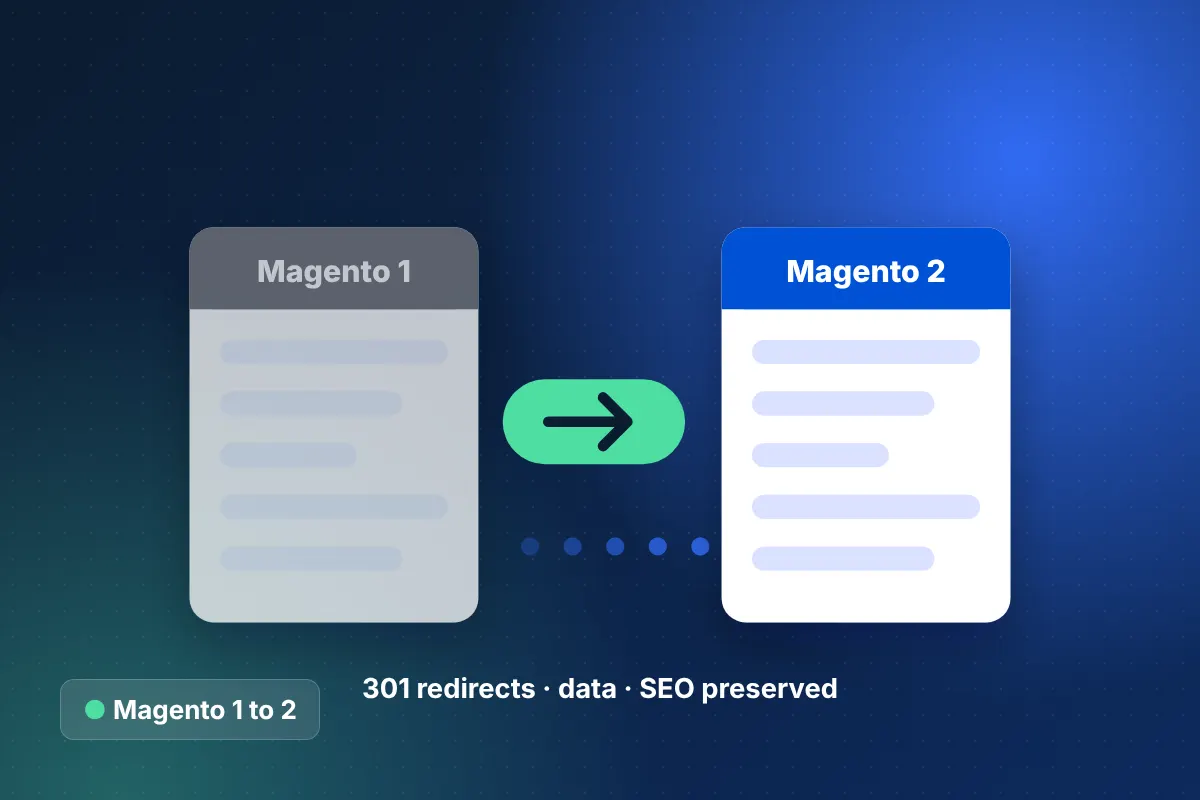
If you're still on Magento 1, it stopped receiving official security patches in June 2020, so moving off it is urgent. Our Magento 1 to Magento 2 migration service handles data, extensions, themes and URL redirects as a single project.
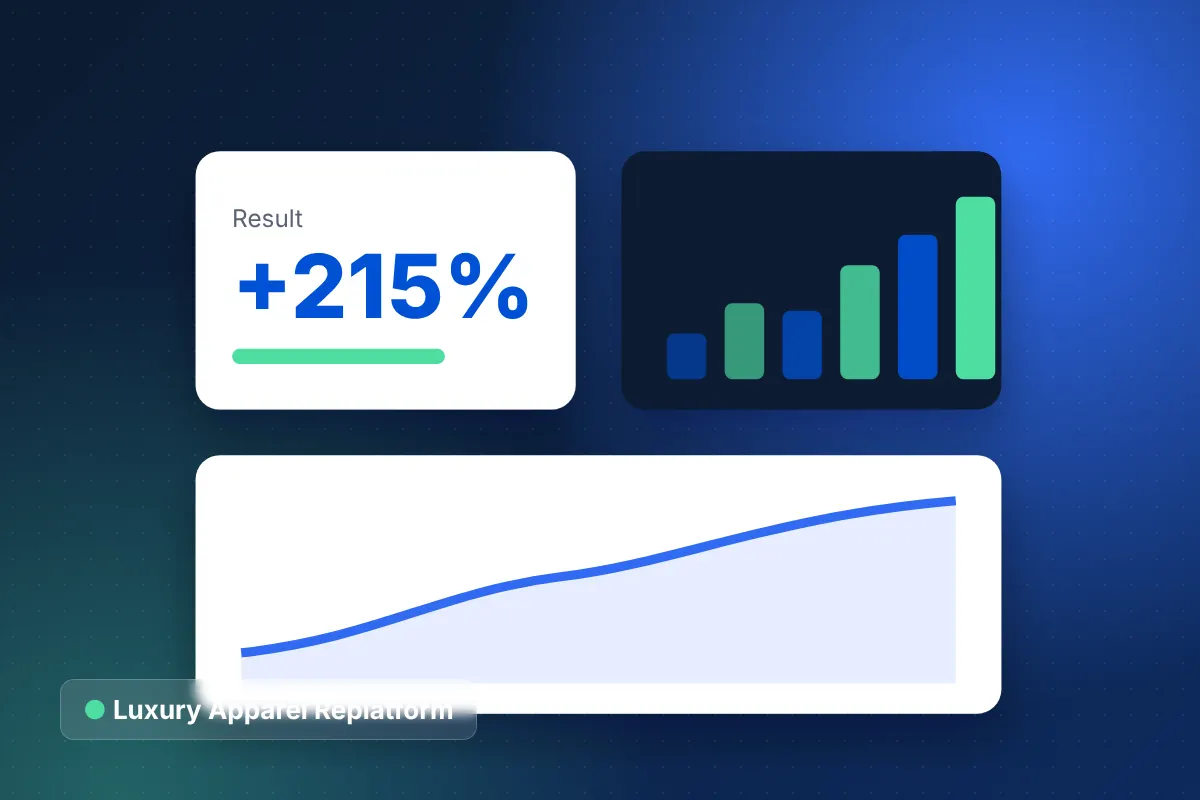
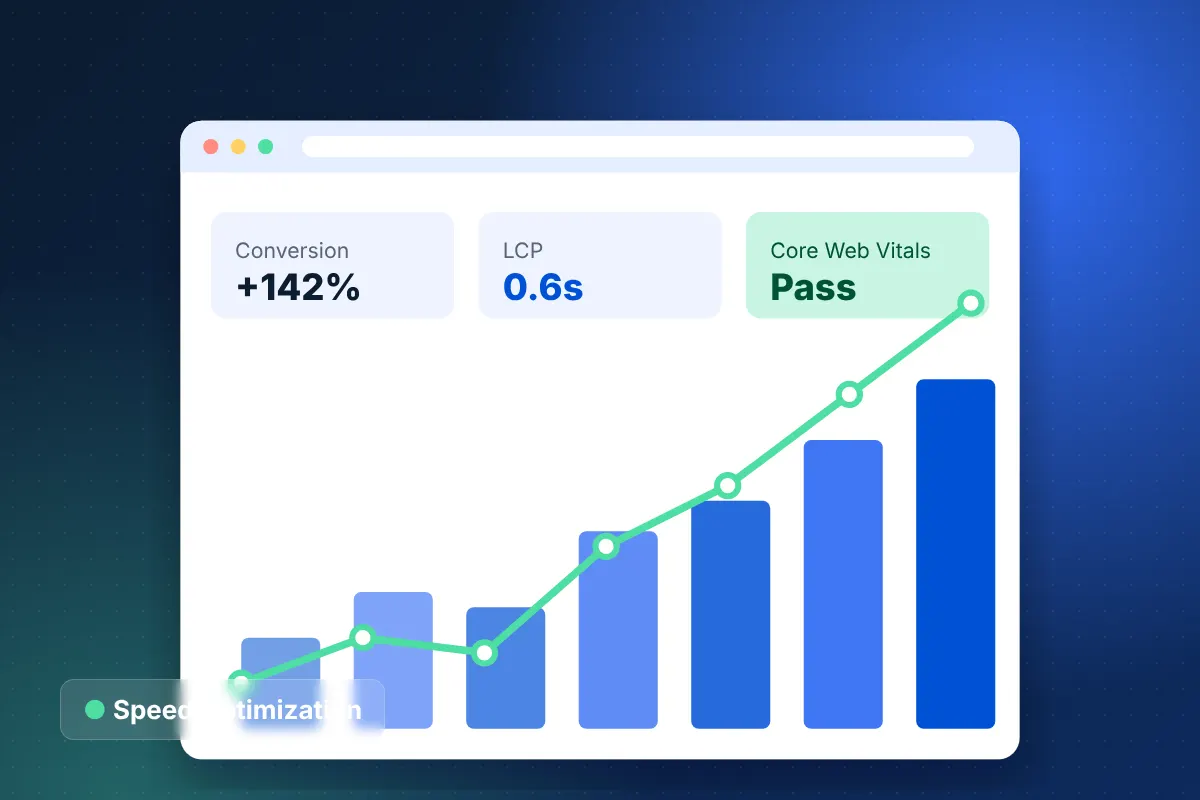
If you're weighing a move to SaaS, start with our comparison of Magento vs Shopify Plus. For one luxury apparel brand, leaving a Magento monolith was the right call: our Magento to Shopify Plus migration case study shows how eight regional stores were unified behind a headless Next.js front end, delivering a 142% lift in mobile conversion rate and 0.6-second average page loads.
How we build Magento 2 stores that stay fast and upgradeable
We keep Magento stores fast and upgradeable by following a strict engineering standard: no core edits, as few third-party extensions as possible, automated tests and a repeatable deployment pipeline. Our six-phase process applies to every build.
- Discovery and Strategy: audit current extensions, data and integrations, then lock scope.
- Conversion UX/UI Design: design category, product, cart and checkout flows around your buyers.
- Architecture and API Engineering: plan modules, store views, caching layers and integration contracts.
- Custom Development: build modules and themes in sprints with peer code review.
- Testing and Optimization: functional, load and Core Web Vitals testing against LCP of 2.5s or less, INP of 200ms or less and CLS of 0.1 or less.
- Zero-Downtime Launch: staged deployments with a tested rollback plan.
A typical build takes 8–16 weeks: discovery and UX in weeks 1–4, development in weeks 5–12, and QA and launch in weeks 13–16. After go-live we provide 24/7 monitoring with a 15-minute response time for critical incidents.
Why choose an Adobe Commerce Solution Partner for Magento?
You get a senior team that has delivered 350+ ecommerce projects over 15+ years, backed by Adobe Commerce partner status and ISO 27001 security practices. We're based at 11200 Richmond Ave in Houston, Texas, and work with brands across the US and internationally.
- You own 100% of the code and IP, including every custom module.
- A mutual NDA is available before you share system details.
- We reply within 24 hours and keep a 98% client retention rate.
- Our engineers have shipped stores across 24+ verticals, from apparel to industrial supply.
Just as important, we'll give you a straight answer if Magento is no longer the right platform for your business, even when that means recommending a different platform.
Get a free Magento development estimate
The fastest way to scope Magento development services is a conversation with an engineer who has worked inside codebases like yours. Book a free ecommerce strategy call for a 30-minute 1:1 review of your store, extensions and roadmap, and we'll follow up with a free project estimate. Prefer to start with numbers? Run your requirements through the cost calculator and bring the result to the call.