What is ecommerce hosting on AWS?
Ecommerce hosting on AWS means running your store's application, database, cache and search on Amazon Web Services infrastructure designed around your traffic, instead of on generic shared hosting. Done well, it gives self-hosted and headless stores elastic capacity, strong security controls and fast delivery to shoppers wherever they are.
We design, deploy and operate that infrastructure as code. Our team follows AWS Well-Architected principles and works under ISO 27001-certified processes, so reliability, security and cost are planned from the start rather than fixed after an outage.
Signs your store has outgrown its current hosting include:
- Slowdowns or errors during email campaigns, sales and launches.
- Product and category pages failing Core Web Vitals because of slow server response.
- Deployments that require maintenance windows or manual steps.
- No staging environment that truly matches production.
- Rising hosting bills with no clear view of what you're paying for.
Which ecommerce platforms need managed AWS hosting?
Self-hosted platforms such as Magento Open Source, Adobe Commerce on your own cloud and WooCommerce need full hosting. SaaS platforms such as Shopify Plus and BigCommerce host the core, but headless front ends, middleware and integration services still need somewhere reliable to run.
| Platform | What we host | Typical AWS components |
|---|---|---|
| Magento Open Source / Adobe Commerce | The full application stack | EC2 or containers, Aurora MySQL, ElastiCache Redis, OpenSearch, Varnish, CloudFront |
| WooCommerce | WordPress with WooCommerce | PHP application servers, RDS MySQL, object cache, CloudFront, S3 media |
| Headless storefronts (Next.js) | Front end and APIs | Server or edge rendering, CloudFront, image optimization, Lambda |
| Shopify Plus / BigCommerce | Custom apps, middleware and integrations | Lambda, SQS queues, API Gateway, ERP connectors |
| Custom ecommerce builds | Everything | ECS or EKS containers, managed databases, CI/CD pipelines |
What's included in our ecommerce hosting and DevOps services?
We cover architecture, environments, deployments, security and round-the-clock operations. You get production-grade infrastructure plus the team that runs it.
Architecture and setup
- Multi-availability-zone architecture with load balancing and autoscaling.
- Infrastructure as code with Terraform, so every environment is reproducible and reviewable.
- Separate production, staging and development environments that mirror each other.
- CDN, caching and image delivery tuned for product and category pages.
CI/CD and release management
Every change flows through automated pipelines that build, run automated tests, scan dependencies and deploy. Blue-green or rolling deployments mean new releases go live without taking the store offline, and a bad release can be rolled back in minutes.
Security hardening
We apply least-privilege IAM, web application firewall rules, encryption in transit and at rest, private networking for databases and automated patching. Logs are centralized so suspicious activity is visible quickly.
Monitoring and on-call
Infrastructure and application metrics are watched 24/7, with a 15-minute response for critical incidents such as checkout failures or capacity problems. Monthly reports cover uptime, performance, security findings and spend, so you always know how your ecommerce hosting on AWS is performing.
Magento hosting: why it needs specialist tuning
Magento is powerful but resource-hungry, and generic hosting rarely does it justice. Fast Magento hosting depends on how full-page cache, sessions, search, cron jobs and indexers are configured.
We tune Varnish for full-page caching, move sessions and cache to Redis, size OpenSearch for your catalog, and schedule indexers and queue consumers so they don't compete with shoppers. Our Magento development services team works alongside DevOps, so code and infrastructure issues are solved together rather than blamed on each other.
Adobe Commerce Cloud or self-managed Magento hosting on AWS?
Adobe Commerce customers can use Adobe's own cloud infrastructure, which runs on major public clouds and includes platform-level management. Magento Open Source stores, and some Adobe Commerce licensees, choose self-managed ecommerce hosting on AWS for more control over architecture and cost. We help you compare both and run whichever you choose.
Managed WooCommerce hosting that scales past shared plans
Managed WooCommerce hosting is one of the most common requests we get from growing stores. WooCommerce stores often outgrow shared or entry-level managed hosting long before they outgrow WooCommerce itself. Checkout and cart pages can't be fully cached, so database and PHP performance matter more than on a content site.
Our managed WooCommerce hosting isolates the database, adds persistent object caching, offloads media to S3 and CloudFront, and scales application servers during campaigns. When code is the bottleneck, our WooCommerce development services team cleans up slow queries and plugin overhead.
How does DevOps for ecommerce reduce downtime?
DevOps for ecommerce removes the manual, risky steps where most outages begin. Automated pipelines, tested infrastructure changes and rehearsed rollbacks turn deployments and traffic spikes into routine events. Your team ships more often, with less fear of breaking checkout.
- Zero-downtime deployments: new versions are started alongside the old before traffic switches over.
- Load testing before peaks: we simulate sale-day traffic ahead of Black Friday, launches and campaigns.
- Autoscaling policies: capacity grows with demand and shrinks afterward to control cost.
- Instant rollback: every release can be reversed quickly if monitoring detects a problem.
- Disaster recovery: automated backups and documented recovery procedures tested on a schedule.
Observability ties it together. Centralized logs, application performance monitoring and real-user metrics show not just that something is wrong, but which service, query or release caused it, which shortens incidents from hours to minutes.
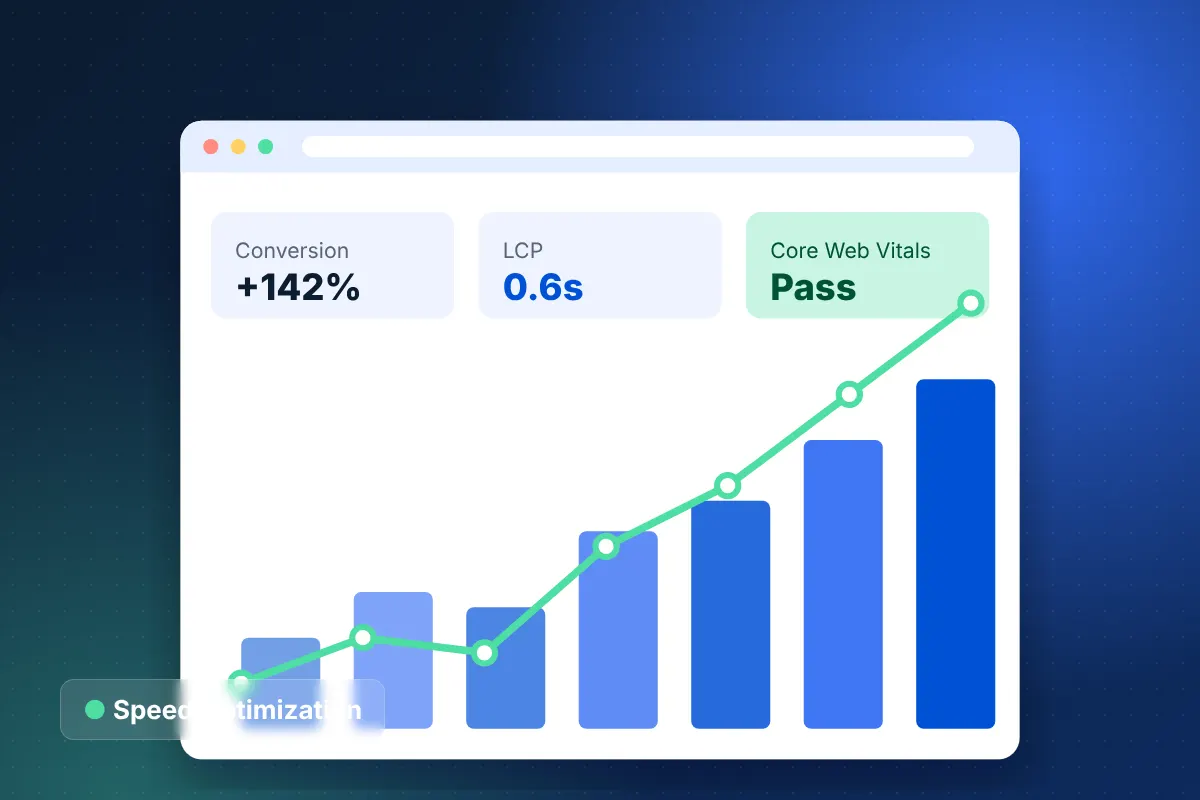
This is the same discipline behind the Zero-Downtime Launch phase of our build process. In our Magento to Shopify Plus migration case study, a headless architecture across 8 regional stores reached a 0.6s average page load.
How much does AWS ecommerce hosting cost?
AWS bills by usage, so costs depend on traffic, catalog size, architecture and how much redundancy you need. We scope both the infrastructure and our management after a free strategy call rather than quoting a generic monthly figure.
Cost control is part of the job. We right-size instances, use autoscaling so you aren't paying for peak capacity all year, apply savings plans where commitments make sense, and tag resources so you can see what each environment costs. The biggest cost drivers are usually database size, compute for uncached pages, search clusters and data transfer, so that is where we focus tuning first. Well-run ecommerce hosting on AWS should get more efficient over time, not more expensive. Our ecommerce website maintenance services can be combined with hosting so one team owns application and infrastructure.
Get a free ecommerce hosting estimate
Whether you're moving off shared hosting, preparing for peak season or building a headless stack, our Houston, Texas team can design ecommerce hosting on AWS that fits your traffic and budget. We'll review your current setup, traffic patterns and peak-season risks, then recommend an architecture. Book a free 30-minute strategy call for a free project estimate, or use the ecommerce website cost calculator if a rebuild is also on the table.