What is the best ecommerce platform for business?
There is no single best ecommerce platform for business; there is a best fit for your business model, catalog, integrations and team. A DTC skincare brand, a B2B valve distributor and a multi-region fashion retailer will each reach a different answer, and that is how it should be.
We build on every major platform. We are a Shopify Plus Certified Partner, Adobe Commerce Solution Partner and BigCommerce Elite Partner, and we also deliver WooCommerce, Salesforce Commerce Cloud, headless and fully custom builds. That breadth lets us recommend what fits rather than what we happen to sell.
Ecommerce platform comparison: Shopify vs Magento vs WooCommerce and more
The table summarizes where each option fits best. Use it as a starting shortlist, then validate against your own requirements.
| Platform | Best for | Strengths | Watch-outs |
|---|---|---|---|
| Shopify | Growing DTC and retail brands | Fast to launch, hosted, huge app ecosystem | App sprawl, limited deep customization |
| Shopify Plus | Scaling DTC, multi-store and B2B | Checkout extensibility, B2B, automation, expansion stores | Higher platform fee, still a hosted model |
| WooCommerce | Content-led stores wanting full ownership | Open source, flexible, WordPress content | You manage hosting, updates and security |
| Magento / Adobe Commerce | Complex catalogs and B2B | Multi-store, advanced pricing, deep customization | Needs strong engineering and hosting |
| BigCommerce | Mid-market and B2B sellers | Built-in features, B2B Edition, open APIs | Smaller theme and app ecosystem |
| Salesforce Commerce Cloud | Enterprise brands on Salesforce | CRM and marketing integration, global scale | Enterprise licensing and specialist skills |
| Headless / composable | Brands needing speed and content control | Any front end, edge performance, flexibility | More moving parts to build and maintain |
| Custom build | Unique models that platforms cannot fit | Exactly your logic, no platform limits | Highest build effort, needs long-term ownership |
Platform-by-platform: when each option is the right choice
Each platform has a clear sweet spot. Here is how we think about them in practice.
Shopify and Shopify Plus
Shopify is the default choice for most growing brands because it removes infrastructure work and launches quickly. Our shopify development services cover store setup and builds, with custom shopify theme development for brands that need a unique storefront and shopify app development for custom logic.
Shopify Plus adds B2B company accounts, checkout extensibility, automation and expansion stores for multiple regions or brands. Our shopify plus development agency team handles those builds. Unsure whether you need Plus? Read shopify vs shopify plus.
WooCommerce and WordPress
WooCommerce runs inside WordPress, so it suits businesses where content and commerce are equally important, or that want full ownership of data and code. See our woocommerce development services and wordpress website development services, and compare options in shopify vs woocommerce.
Magento and Adobe Commerce
Magento remains strong for large catalogs, complex pricing, multi-store setups and B2B. It rewards serious engineering investment. Our magento development services cover builds, upgrades and performance. For brands considering a move, magento vs shopify plus sets out the trade-offs.
BigCommerce
BigCommerce offers many features natively plus a B2B Edition and open APIs, making it a practical middle ground for mid-market and wholesale sellers. Learn more about our bigcommerce development services or read bigcommerce vs shopify.
Salesforce Commerce Cloud
For enterprise brands already invested in Salesforce CRM and marketing tools, Commerce Cloud keeps customer data in one ecosystem. Our salesforce commerce cloud development team builds and extends those storefronts.
Headless and custom builds
Headless architecture separates the storefront from the commerce engine, so you can use a fast Next.js front end with Shopify, BigCommerce or Magento behind it. Explore headless commerce development and our explainer on what is headless commerce. When no platform fits your model, custom ecommerce website development builds exactly the logic you need.
How to choose an ecommerce platform: 7 questions to answer
Choosing well starts with your requirements, not a feature list. Answer these questions before shortlisting platforms.
- Who are your buyers? Consumers, businesses or both determine whether B2B features are essential.
- How complex is your catalog? SKU count, variants, bundles and configurators all matter.
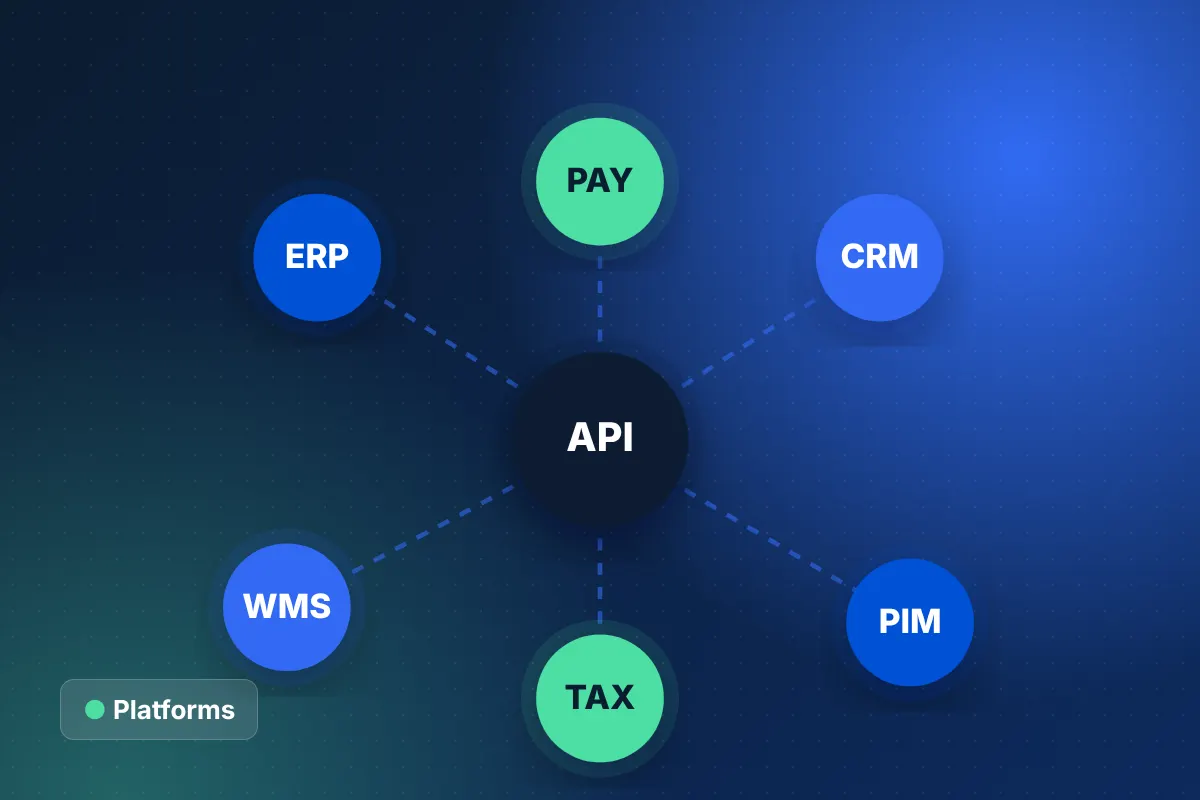
- What must it integrate with? ERP, CRM, PIM, 3PL and marketplaces narrow the field quickly.
- How many stores, regions or currencies? Multi-store needs favor certain platforms.
- Who will run it day to day? Your team's skills affect hosted versus self-managed choices.
- How important is content? Content-heavy brands may want WordPress or a headless CMS.
- What is your three-year plan? Choose for where you are going, not just where you are.
Best ecommerce platform for B2B and enterprise businesses
For B2B, the best platform is the one that handles your pricing rules, buyer accounts and ERP integration with the least custom work. Shopify Plus B2B, BigCommerce B2B Edition and Adobe Commerce are the most common choices, with custom builds for unusual punchout or pricing models.
Our SAP-integrated B2B portal case study shows why integration depth often matters more than platform brand. For a fuller comparison, see the best b2b ecommerce platform guide.
Total cost of ownership: looking beyond license fees
The cheapest platform to start is not always the cheapest to run. Compare total cost over three years, including:
- Platform subscription or license fees and transaction costs.
- Apps, extensions and third-party services.
- Hosting, security and maintenance effort.
- Custom development needed to fill feature gaps.
- Cost and risk of migrating again if you outgrow the platform.
Build budgets themselves typically fall between $25,000 and $60,000 for specialized custom stores, and $60,000–$150,000+ for complex headless enterprise or multi-region B2B projects. The ecommerce website cost calculator gives a quick estimate.
When to switch ecommerce platforms
Consider switching when platform limits, not team effort, are capping growth. Common signals include slow pages you cannot fix, costly workarounds for B2B, duplicated work across regional stores or an end-of-life version. Our replatforming work, such as the Magento to Shopify Plus migration case study, protects SEO with complete redirect mapping and a zero-downtime launch.
Get a free platform recommendation
Still deciding on the best ecommerce platform for business needs like yours? Book a free 30-minute 1:1 strategy call with a senior engineer. We will review your requirements, shortlist platforms and follow up with a free project estimate.
Book a free ecommerce strategy call and get an independent recommendation within 24 hours.