What Is Headless Commerce? A Practical Guide for Growing Brands
Headless commerce is an ecommerce architecture that separates the customer-facing storefront (the "head") from the commerce backend that manages products, carts, orders and checkout. The two communicate through APIs, so brands can build a fast, fully custom frontend in a framework like Next.js while keeping a proven platform such as Shopify Plus, BigCommerce or Adobe Commerce underneath.
 Custom Ecommerce Website Development
Published
Updated 9 min read
Custom Ecommerce Website Development
Published
Updated 9 min read
If you have asked what is headless commerce, here is the short answer: it is a way of building an online store where the storefront your customers see is decoupled from the commerce engine that runs products, pricing, carts and orders. The two layers talk to each other through APIs instead of sharing one codebase and one template system.
That separation sounds technical, but the business impact is simple. Your design and content teams can change the customer experience without waiting on backend releases, and your developers can pick the best tool for each job. This guide explains how headless works, where it pays off, where it does not, and what a realistic project looks like.
What is headless commerce, in plain terms?
Headless commerce is an architecture in which the frontend presentation layer and the backend commerce platform are independent applications connected by APIs. The "head" is whatever renders the shopping experience: a website, a mobile app, a kiosk or a voice assistant.
In a traditional (monolithic) platform, the storefront theme and the commerce engine ship together. Shopify themes written in Liquid, Magento's PHP and layout XML templates, and WooCommerce's WordPress templates are all examples of a tightly coupled head. You customize the store inside the rules of that template system.
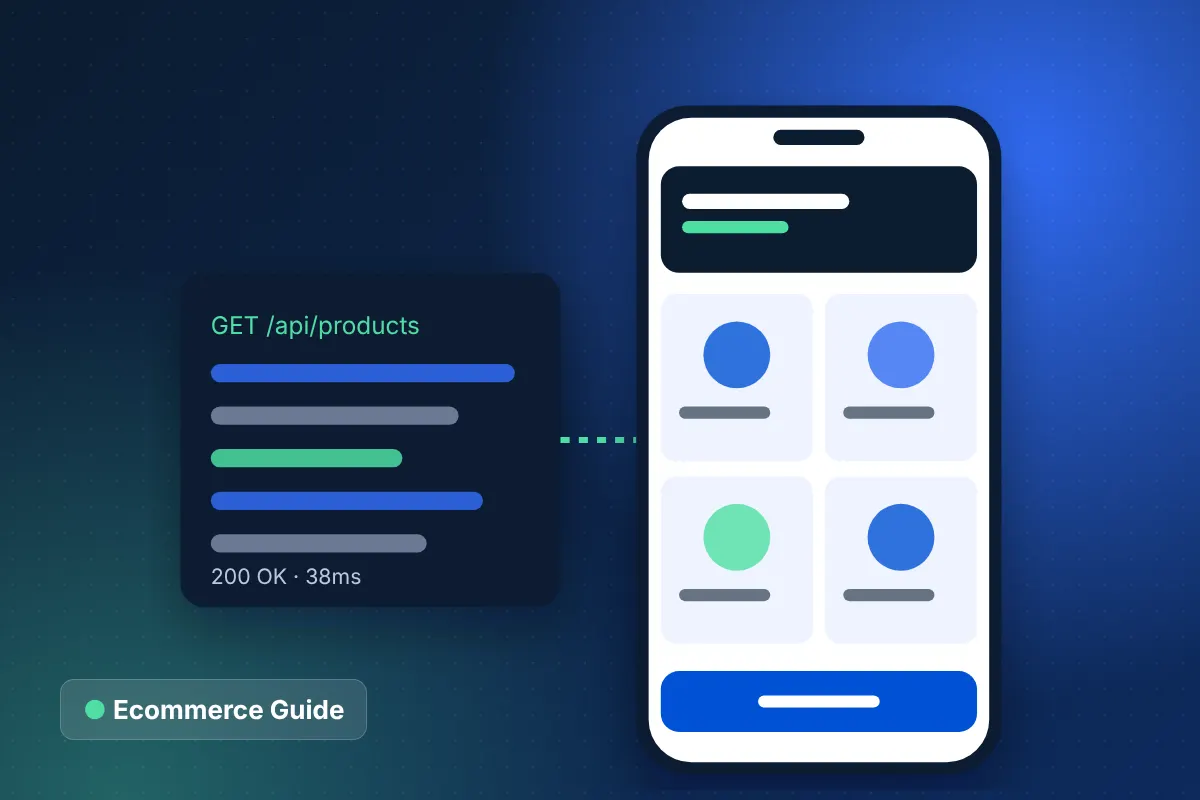
In a headless setup, the backend still does the heavy lifting: catalog, inventory, promotions, checkout, tax and order management. The frontend simply requests data through APIs such as the Shopify Storefront API, the BigCommerce GraphQL Storefront API or Adobe Commerce's GraphQL API, then renders it however the brand wants.
How does a headless storefront actually work?
- A shopper opens a product page served by a frontend framework such as Next.js, Hydrogen or Nuxt.
- The frontend fetches product, price and availability data from the commerce API, and editorial content from a headless CMS such as Contentful, Sanity or Storyblok.
- Pages are pre-rendered or server-rendered and cached at the edge on a CDN, so most requests never touch the backend.
- Cart and checkout calls go back to the commerce platform, which keeps payments, PCI scope and order data where they belong.
- Webhooks and middleware sync orders to your ERP, OMS, PIM and marketing tools.
How is headless different from traditional ecommerce?
The main difference is coupling: traditional platforms bundle frontend and backend, while headless lets each evolve on its own release cycle. That trade gives you flexibility and performance headroom in exchange for more engineering ownership.
| Factor | Traditional (monolithic) | Headless |
|---|---|---|
| Frontend | Platform theme and template language | Any framework (Next.js, Hydrogen, Nuxt, native apps) |
| Content management | Built-in pages and blog | Headless CMS with structured, reusable content |
| Performance ceiling | Limited by theme, apps and scripts | Static generation, edge caching, fine-grained control |
| Speed to launch | Faster for standard stores | Longer; more components to build and test |
| Ongoing ownership | Platform handles most of the stack | Your team or agency owns the frontend and hosting |
| Omnichannel | Mainly web, via the platform's theme | One backend feeding web, apps, kiosks and marketplaces |
| Best fit | Most small and mid-size stores | Content-rich, multi-region or high-traffic brands |
Neither model is "better" in the abstract. A well-built theme on Shopify or BigCommerce is the right answer for many brands, which is why we often recommend starting with Shopify Plus development on a theme before going headless.
What is composable commerce, and how does it relate to headless?
Composable commerce takes headless one step further: instead of decoupling only the frontend, you assemble the whole stack from best-of-breed, API-first services. Headless is a prerequisite for composable, but you can be headless without being fully composable.
The idea is often summarized by the MACH Alliance acronym:
- Microservices — independent services for search, pricing, promotions or checkout.
- API-first — every capability is exposed through documented APIs.
- Cloud-native SaaS — managed, elastically scaling infrastructure.
- Headless — presentation is decoupled from business logic.
In practice, most brands land on a pragmatic middle ground: a platform like Shopify Plus or BigCommerce for core commerce, a headless CMS for content, a dedicated search provider such as Algolia, and an ecommerce ERP integration layer for inventory and orders. That is composable enough to swap parts later without rebuilding everything.
What are the benefits of headless commerce?
The biggest benefits are performance, design freedom, omnichannel reuse and faster iteration on the customer experience. Each benefit depends on good engineering; headless does not deliver them automatically.
- Speed and Core Web Vitals. Pre-rendered pages served from the edge make it easier to hit Google's thresholds of LCP at or under 2.5s, INP at or under 200ms and CLS at or under 0.1. Our ecommerce speed optimization work on headless builds focuses on image pipelines, script budgets and caching rules.
- Unrestricted UX. Product configurators, shoppable editorial, bundles and complex filtering are no longer constrained by a theme's sections and blocks.
- One backend, many channels. The same APIs can power a website, a native app, in-store screens and a progressive web app ecommerce experience.
- Independent release cycles. Marketing can ship landing pages through the CMS while engineering upgrades the commerce backend separately.
- Multi-region flexibility. Several regional stores, currencies and languages can share one frontend codebase with localized content.
Our Magento to Shopify Plus migration case study shows these benefits together: a luxury apparel brand moved from a Magento monolith to headless Next.js on Shopify Plus, unified 8 regional stores and saw a 142% lift in mobile conversion rate with a 0.6s average page load.
What are the drawbacks and risks of going headless?
Headless adds cost, complexity and ownership. You are building and maintaining a custom application on top of your platform, so the total cost of ownership is higher than a theme-based store.
Headless is an architecture choice, not a feature. Choose it for a business reason you can measure.
Custom Ecommerce architecture team
- Higher upfront investment. You design and build every page template, component and integration rather than starting from a theme.
- Lost "plug and play" apps. Many platform apps inject scripts into the theme. In a headless storefront, reviews, loyalty, subscriptions and personalization often need API-level integration instead.
- More moving parts. Frontend hosting, CMS, search, the commerce API and middleware all need monitoring, versioning and on-call support.
- Merchandiser workflow. If the CMS and preview environment are not set up thoughtfully, non-technical teams can lose the visual editing they had in a theme editor.
- SEO responsibility. Rendering, canonical tags, sitemaps, structured data and redirects become your code's job, not the platform's defaults.
None of these are deal-breakers, but they should be priced into the decision. A good discovery phase identifies which apps need replacing and which content workflows must be preserved before a line of frontend code is written.
When should you choose headless commerce over a theme?
Choose headless when the customer experience or channel strategy is genuinely limited by your current theme, and you have the budget and team to own a custom frontend. If your store works well on a theme, optimizing it is usually the better investment.
Signals that headless is worth it
- You run multiple regional or brand storefronts that should share one codebase.
- Content and commerce are deeply mixed: lookbooks, guides, configurators or editorial-led shopping.
- Theme performance has hit a ceiling despite cleanup of apps and scripts.
- You need the same catalog and cart in a native app, kiosks or other custom touchpoints.
- You plan to swap backend components (search, PIM, OMS) over time without a full replatform.
Signals to stay on a theme for now
- A small team with no developer capacity for an ongoing frontend application.
- A catalog and UX that fit standard templates well.
- Heavy reliance on theme-based apps you are not ready to replace.
If you are unsure, an independent review through our ecommerce consulting services can compare a theme rebuild, a hybrid approach and a full headless build against your roadmap.
Which platforms and frameworks support headless commerce?
Every major enterprise platform now exposes the APIs needed for headless, and several ship their own headless frontend tooling. The right pairing depends on your catalog, team skills and integrations.
- Shopify / Shopify Plus — Storefront API, Hydrogen (Shopify's React framework) and Oxygen hosting, or any framework such as Next.js.
- BigCommerce — GraphQL Storefront API and Catalyst, its Next.js-based reference storefront.
- Adobe Commerce (Magento) — GraphQL API and PWA Studio, plus third-party frontends.
- Salesforce Commerce Cloud — SCAPI and the PWA Kit for composable storefronts.
- commercetools and other API-only engines — built for composable stacks from the start.
On the frontend, Next.js is the most common choice for headless builds because it supports static generation, server rendering and incremental revalidation in one framework. Hydrogen is a strong fit when you are committed to Shopify long term.
How much does headless commerce cost and how long does it take?
Headless projects sit at the upper end of ecommerce budgets. As a reference, specialized custom stores typically run $25,000–$60,000, while complex headless enterprise or multi-region builds typically run $60,000–$150,000+, delivered on fixed-price milestones.
Timelines usually fall in the 8–16 week range for a typical build, with discovery and UX in weeks 1–4, development in weeks 5–12 and QA and launch in weeks 13–16. Headless projects with many integrations or regions trend toward the longer end. For a fuller breakdown, see our guide on how much does an ecommerce website cost, or get a ballpark range for your scope with the ecommerce website cost calculator.
The biggest cost drivers are:
- Number of unique page templates and custom components.
- Integrations with ERP, PIM, OMS, search and reviews.
- Number of regions, languages and currencies.
- Data migration from the current platform, including SEO redirects.
- CMS modeling and editor experience requirements.
If you are also moving platforms, read our ecommerce migration SEO checklist so the new architecture does not cost you organic traffic.
How do you plan a successful headless commerce project?
Successful headless projects start with business goals and content workflows, not with a framework choice. Architecture decisions should follow from what your customers and merchandisers need to do.
- Audit the current stack. List every app, script, integration and content type, and decide what is kept, replaced or retired.
- Define the content model. Map products, collections, editorial and landing pages into structured CMS types with preview.
- Design the component system. Build a reusable design system rather than one-off pages.
- Engineer the API layer. Plan caching, rate limits, webhooks and middleware for ERP and OMS sync.
- Protect SEO. Ship server-rendered HTML, canonical tags, structured data, sitemaps and a complete 301 redirect map.
- Test under load and launch with zero downtime. Validate checkout, analytics and Core Web Vitals before cutting DNS over.
Is headless commerce right for your brand? Get a free estimate
Understanding what is headless commerce is the first step; deciding whether it fits your roadmap is the next. For brands with multi-region, content-led or omnichannel ambitions, a headless architecture can deliver speed and flexibility that themes cannot. For others, a well-optimized theme is the smarter spend.
Our team delivers headless commerce development on Shopify Plus, BigCommerce and Adobe Commerce, and you own 100% of the code. Book a free 30-minute strategy call to get an honest recommendation and a free project estimate.
Frequently asked questions
Is headless commerce good for SEO?
What is the difference between headless and composable commerce?
Can you go headless with Shopify?
Is headless commerce worth it for small businesses?
Do I need to replatform to go headless?
About the author
Custom Ecommerce Website Development is the editorial team at Custom Ecommerce Website Development, a Houston ecommerce development agency with 350+ enterprise projects across Shopify, WooCommerce, Magento, BigCommerce and headless commerce.
Services related to this article
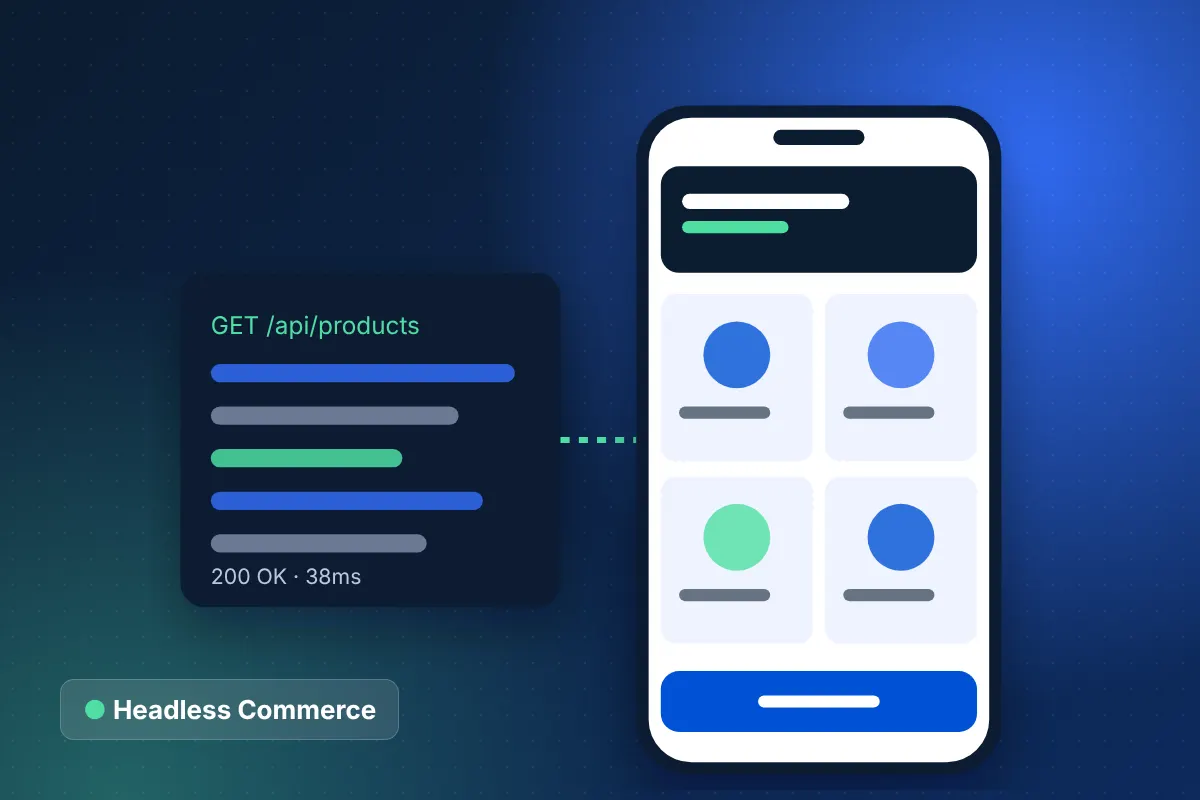
Headless Commerce Development for Fast, Flexible Storefronts
API-first storefronts in Next.js or Hydrogen on Shopify Plus, BigCommerce or Adobe Commerce, built for speed and design freedom.
Learn more
Fashion Ecommerce Website Development for Apparel Brands
Apparel stores with fit tools, shoppable lookbooks, drop-ready checkout and returns that turn into exchanges.
Learn more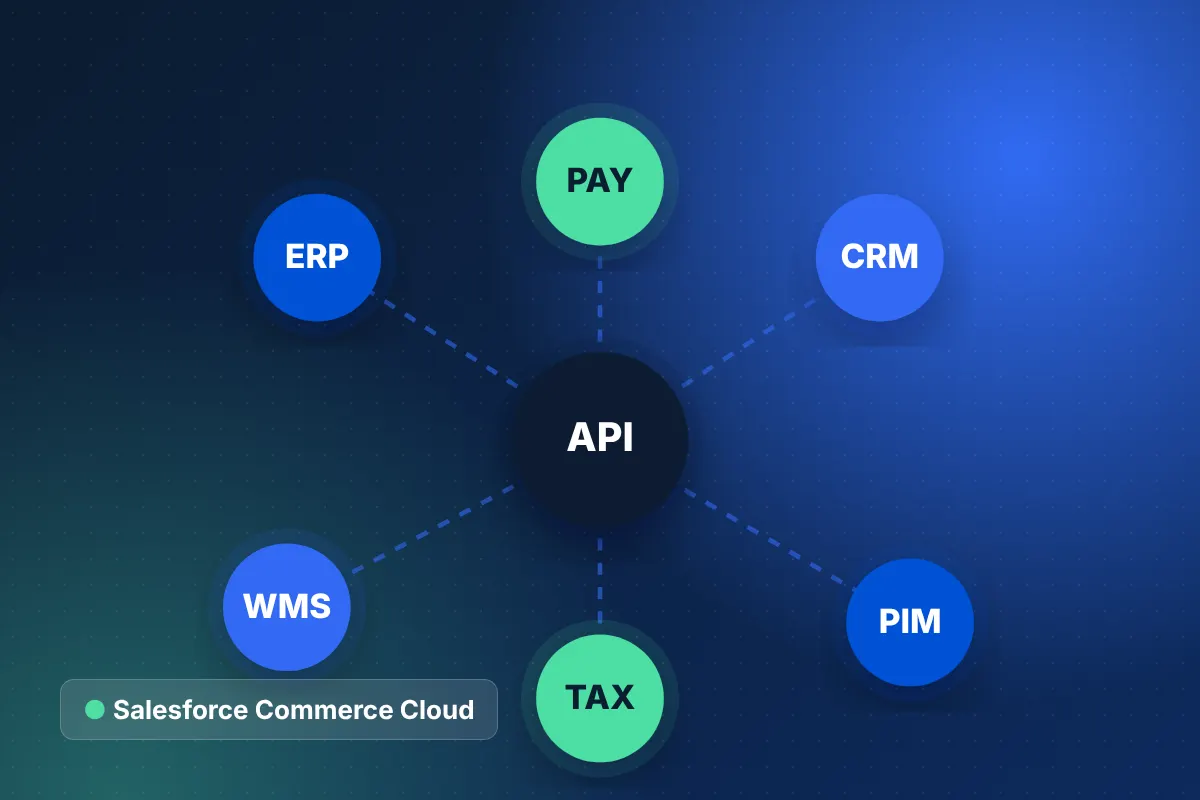
Salesforce Commerce Cloud Development for Enterprise B2C and B2B
SFRA and headless SFCC storefronts, Salesforce B2B Commerce, custom cartridges and ERP integrations for enterprises.
Learn more