What is oil and gas equipment ecommerce?
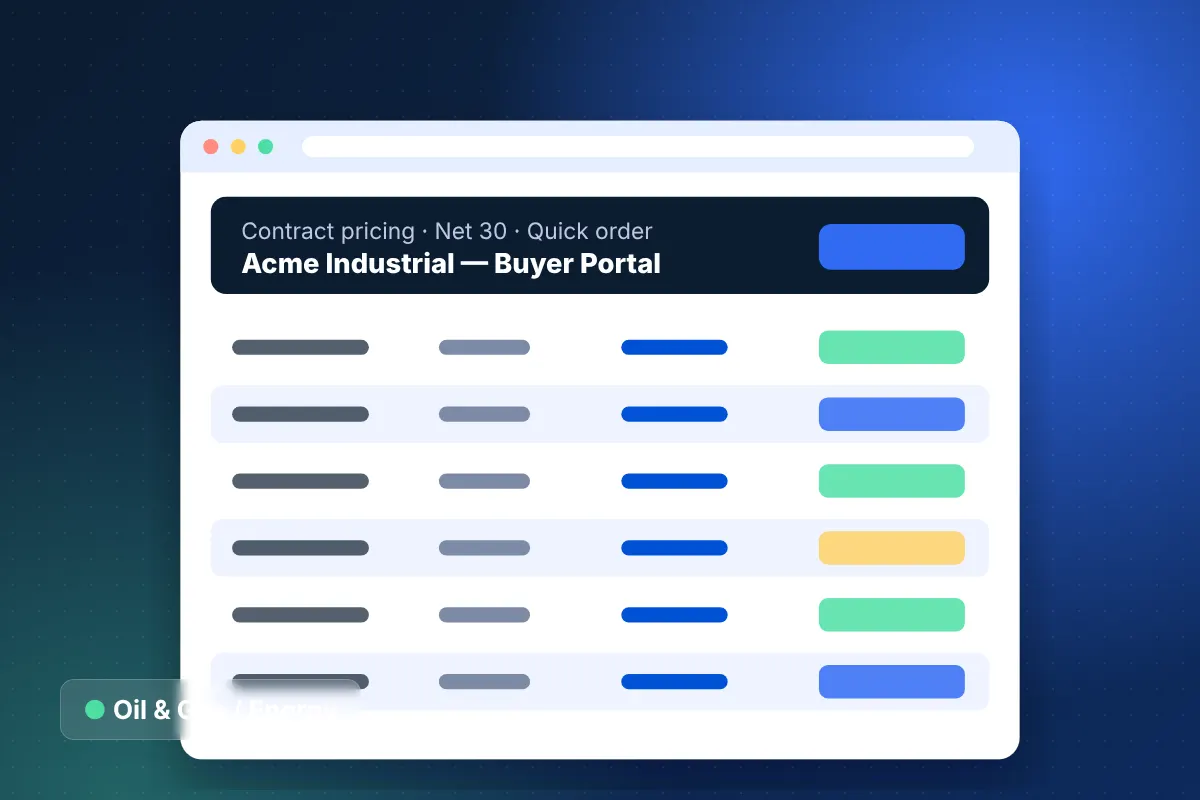
Oil and gas equipment ecommerce is a digital ordering channel built for how energy buyers actually purchase: by specification, under negotiated contracts and often from the field. It replaces phone, email and PDF price lists with a searchable, account-based portal.
Energy procurement is technical and high-stakes. A buyer may need a 3-inch ANSI Class 600 ball valve in a specific trim, with NACE compliance and traceable paperwork, delivered to a wellsite by Thursday. A generic online store cannot handle that. A purpose-built energy supplier B2B portal can.
Who buys oil and gas equipment online?
- Operators and producers: procurement teams buying against master service agreements.
- Drilling and service contractors: field supervisors reordering consumables and spares on mobile.
- EPC firms: project buyers requesting quotes on large bills of material.
- Midstream and refining: maintenance teams sourcing MRO parts with strict documentation.
Must-have features for an energy supplier B2B portal
The features that matter most reduce ordering errors and shorten the quote cycle. Pricing accuracy and technical search come first.
- Parametric search: filter by size, pressure rating, material, end connection, API or ANSI standard.
- Account-specific pricing: contract and tiered prices shown only to the right company.
- RFQ and quote-to-order: upload a bill of material, receive a quote, convert it to an order.
- Document library: data sheets, MTRs, certificates and SDS files tied to each SKU.
- Multi-site ordering: ship-to addresses for yards, rigs and plants with approval rules.
- Punchout and PO support: cXML or OCI punchout plus net terms and purchase orders.
- Quick order: SKU paste and reorder lists for field crews.
Which platform fits oil and gas equipment ecommerce?
Most energy distributors succeed on a B2B-capable SaaS platform or Adobe Commerce, with headless front ends for very large catalogs. The right answer depends on SKU count, pricing complexity and ERP.
| Platform | Best fit for energy suppliers |
|---|---|
| BigCommerce B2B Edition | Mid-size distributors needing price lists, quotes and buyer roles fast |
| Adobe Commerce | Large catalogs with complex company hierarchies and custom pricing |
| Shopify Plus B2B | Simpler catalogs, aftermarket parts and branded equipment sales |
| Headless / custom | 100,000+ SKUs, punchout and deep SAP or Oracle integration |
Our B2B ecommerce development team recommends a platform after reviewing your catalog and ERP data, not before.
ERP and system integrations for energy equipment sellers
An energy portal is only as good as its data. Real-time inventory, pricing and order status must come from your system of record.
- ERP: SAP S/4HANA, Oracle, NetSuite, Epicor or Dynamics 365 for pricing, stock and orders.
- PIM: structured attributes for thousands of valve, flange and fitting variants.
- Procurement networks: Ariba or Coupa punchout for operator buyers.
- CPQ: configured equipment such as pump packages or skids.
- Shipping: LTL freight, hotshot and will-call options by location.
See how we approach this in our ecommerce ERP integration services.
Common challenges in oil and gas equipment ecommerce
The hardest parts of oil and gas equipment ecommerce are messy product data, complex pricing and buyers who expect their rep to stay involved. Each needs a deliberate plan before design starts.
- Inconsistent product data: the same valve may be described five ways across ERP, catalogs and spreadsheets. We normalize attributes into a structured PIM model so parametric search actually works.
- Pricing complexity: contract, list, project and spot pricing can all apply to one customer. Pricing logic stays in the ERP, and the portal reads it rather than duplicating rules.
- Sales channel conflict: outside reps worry about losing accounts. Rep-assisted ordering, commission attribution and shared quotes keep them part of the process.
- Volatile demand: activity rises and falls with commodity prices, so the platform must scale without fixed infrastructure cost.
- Security: buyers expect role-based access, SSO and audit trails, aligned with ISO 27001 practices.
Why Houston matters for oil and gas equipment ecommerce
Our office sits on Richmond Avenue in west Houston, close to the Energy Corridor where many operators, service companies and suppliers are based, from upstream services to midstream and equipment distribution. That proximity helps when discovery means sitting with sales, inside sales and warehouse teams.
We understand the realities of the sector: cyclical demand, consolidation, long-tenured customer relationships and buyers who still pick up the phone. A good portal supports those relationships instead of replacing them, giving reps better tools and customers 24/7 access.
Our process and proof for industrial B2B builds
We deliver projects in 8–16 weeks through six phases: Discovery & Strategy, Conversion UX/UI Design, Architecture & API Engineering, Custom Development, Testing & Optimization and Zero-Downtime Launch.
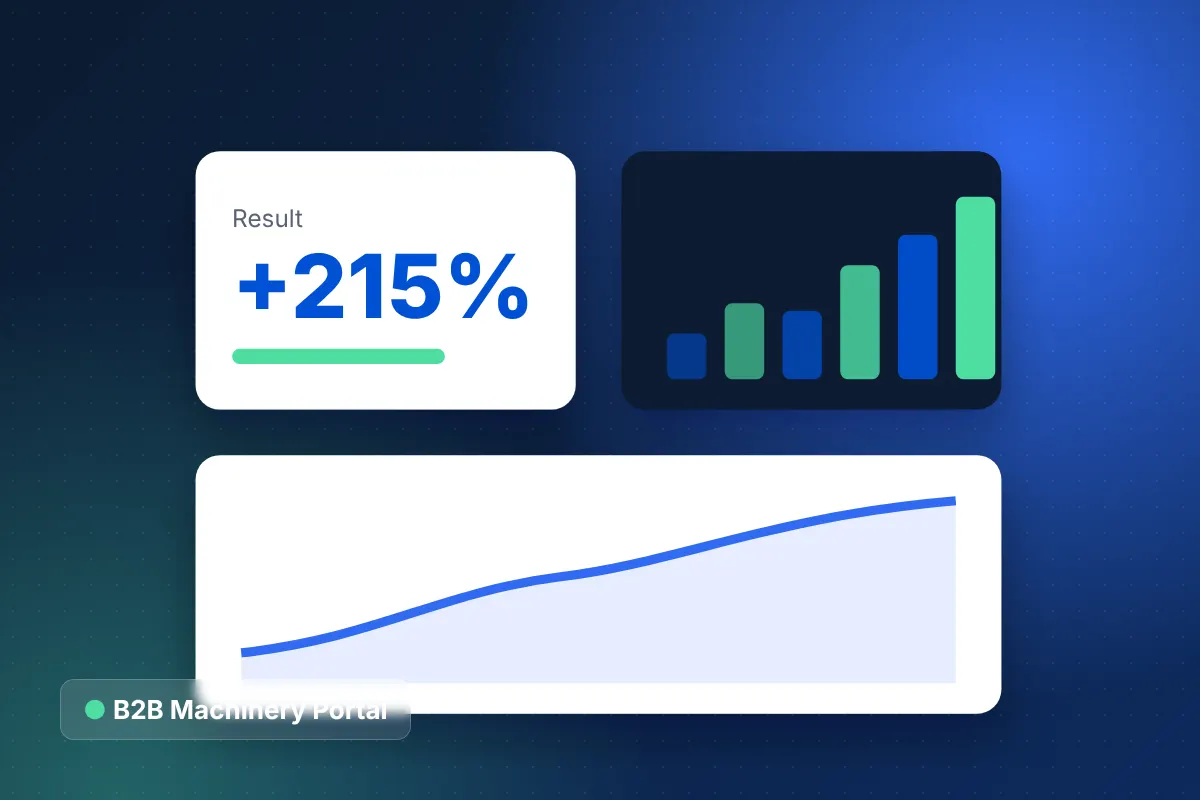
For an industrial OEM, we built a punchout store with 120,000+ SKUs integrated with SAP S/4HANA. It delivered a 215% increase in digital order volume and saved 40 admin hours per week. Read the B2B ecommerce case study.
What does an energy B2B portal cost?
Specialized builds typically run $25,000–$60,000. Multi-region or headless enterprise portals with deep ERP and punchout integration generally fall between $60,000 and $150,000+, delivered under fixed-price milestones.
Get a free oil and gas equipment ecommerce estimate
If quotes still live in inboxes and spreadsheets, a structured portal can speed them up. Book a free 30-minute strategy call or run the ecommerce website cost calculator, and we will outline an oil and gas equipment ecommerce plan for your catalog and ERP within 24 hours.