
What is beauty ecommerce website development?
Beauty ecommerce website development is the process of building a store that helps shoppers choose the right shade, formula and routine without testing products in person. Done well, it turns first-time buyers into subscribers who reorder every month or two.
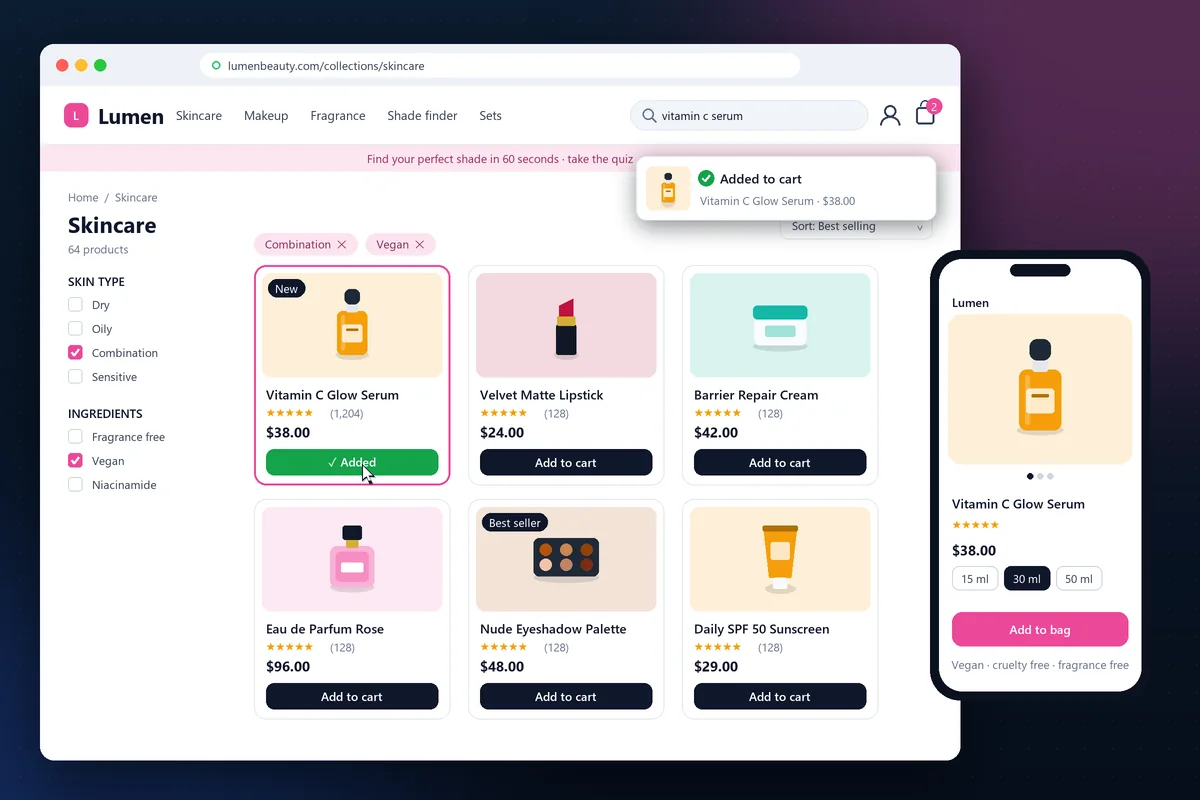
A cosmetics online store has a different job than most retail sites. Shoppers cannot swatch a foundation or smell a serum, so the site has to replace the counter consultant with shade matching, ingredient detail, before-and-after content and honest reviews from people with similar skin.
How beauty and skincare shoppers buy
- Research-heavy first purchase: shoppers read ingredient lists, check reviews by skin type and watch creator videos before committing.
- Shade sensitivity: a wrong foundation shade means a return and often a lost customer.
- Routine-based buying: customers buy cleanser, serum and moisturizer together when a regimen is presented clearly.
- Predictable replenishment: products run out on a cycle, which makes subscriptions and reminders natural.
Must-have features for a cosmetics online store
The must-have features are the ones that replace in-store testing and make reordering effortless. Here is what we build into most beauty projects.
- Shade finders and quizzes: guided questions on undertone, coverage and skin type that recommend specific products.
- Virtual try-on hooks: integration points for AR try-on tools on lipstick, brow and color products.
- Ingredient and claims pages: searchable ingredient glossaries and "free from" filters.
- Regimen builders: step-by-step routines with bundle pricing and one-tap add-to-cart.
- Subscribe and save: flexible replenishment with skip, swap and delay controls.
- Reviews by skin type: filterable reviews with user photos, age range and skin concerns.
- Loyalty and samples: points, tier perks and sample selection at checkout.
- Gift sets and seasonal kits: holiday bundles with gift messaging and wrap options.
Which is the best platform for a skincare Shopify store?
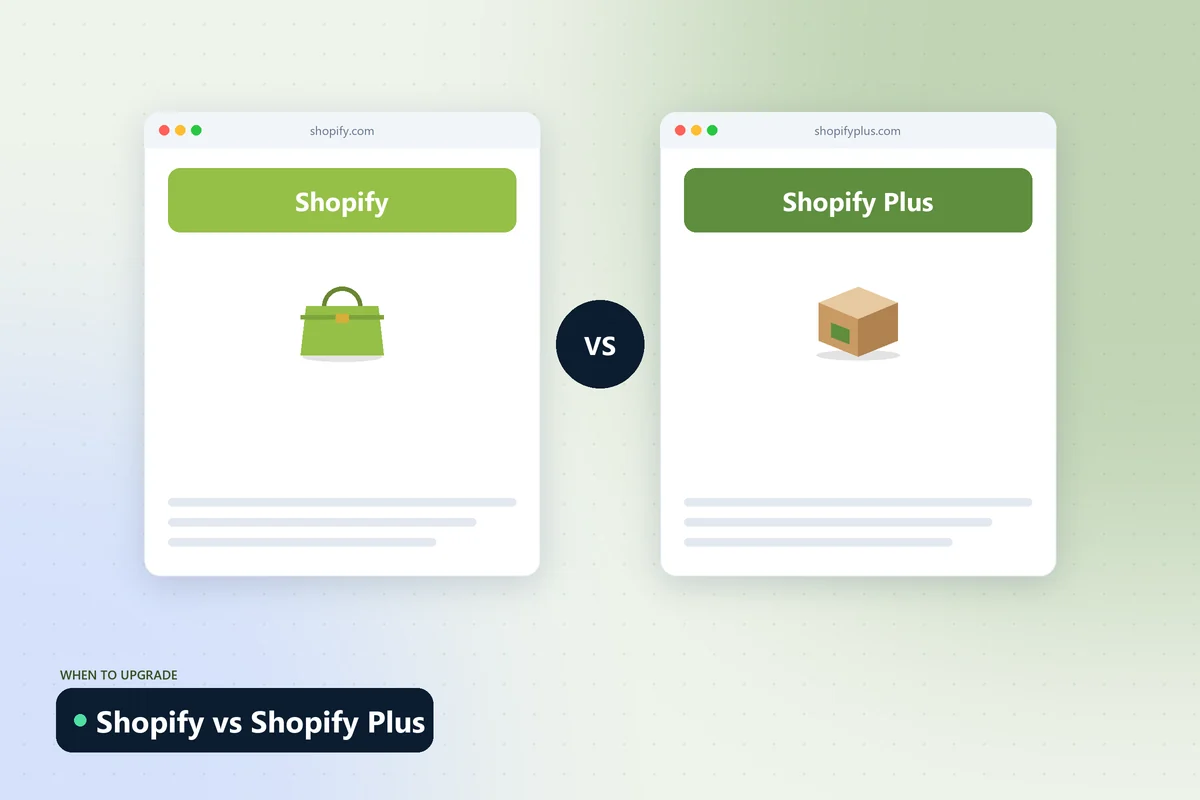
Shopify and Shopify Plus are the best fit for most beauty brands because the subscription, reviews and loyalty app ecosystem is mature. Larger brands with retail, salon or professional channels may need more customization.
| Platform | Best for |
|---|---|
| Shopify | Indie skincare Shopify brands launching a focused line |
| Shopify Plus | Growing brands with subscriptions, loyalty and international sales |
| Headless (Next.js + Shopify) | Content-led brands publishing tutorials, routines and editorial |
| BigCommerce | Brands selling to both consumers and salons or spas |
| Adobe Commerce | Multi-brand beauty groups with complex catalogs |
Our Shopify development services cover most beauty builds, and we extend them with custom apps when quizzes or bundles need logic off-the-shelf tools cannot handle.
How do subscriptions and personalization work in beauty ecommerce?
Subscriptions turn replenishable products into predictable revenue, and personalization makes sure each shopper sees the products that fit their skin. Together they drive most of the lifetime value in beauty.
We design subscription ecommerce platform development around real usage cycles, so a 30 ml serum ships on a different cadence than a cleanser. Customers can skip, swap shades or change frequency from their account without calling support.
For personalization, our AI product recommendations use quiz answers, purchase history and browsing to suggest regimens and complementary products. A specialty DTC subscription brand we worked with grew ARR by $1.2M and kept 88% of subscribers; see the subscription ecommerce case study.
Key beauty integrations
- Subscription engines such as Recharge, Skio or Shopify Subscriptions
- Reviews and UGC platforms such as Okendo, Yotpo or Bazaarvoice
- Loyalty programs such as Smile.io or LoyaltyLion
- Klaviyo or Attentive for replenishment reminders
- 3PL and ERP connections for lot tracking
Compliance considerations for cosmetics and skincare stores
Beauty brands need careful handling of product claims, ingredient disclosure, batch traceability and accessibility. The site should make your compliance team's work easy to publish and hard to break.
- Claims control: structured fields so marketing copy and regulated claims are reviewed separately.
- Full ingredient lists: INCI-style ingredient data displayed consistently on every product.
- Lot and expiry tracking: batch data passed from your 3PL so recalls can be traced to orders.
- Cross-border restrictions: rules that block shipping products to markets where an ingredient is restricted.
- Accessibility: WCAG 2.2 AA quizzes and shade selectors that work with screen readers.
How our beauty ecommerce website development process works
We build beauty stores in 8–16 weeks through our six-phase process, with the quiz, regimen and subscription logic designed before a line of code is written.
- Discovery & Strategy: map your catalog, shade ranges, replenishment cycles and channels.
- Conversion UX/UI Design: product pages, shade selectors and routine flows tested on mobile.
- Architecture & API Engineering: subscription, reviews, loyalty and 3PL data flows.
- Custom Development: quizzes, regimen builders and custom bundle logic.
- Testing & Optimization: subscription edge cases, accessibility and Core Web Vitals.
- Zero-Downtime Launch: subscriber migration with no missed renewals.
Launch planning matters in beauty because subscribers are already paying. We migrate active subscriptions, saved payment methods where the provider allows it, loyalty balances and review history so customers notice only the improvements.
Specialized beauty stores typically fall in the $25,000–$60,000 range, and we offer fixed-price milestones once scope is set. If you also sell wholesale to salons or retailers, we plan that channel alongside your DTC ecommerce website development from day one.
How much does a beauty ecommerce website cost?
A beauty ecommerce website typically costs $25,000–$60,000 for a custom build with shade finders, subscriptions and rich product pages. A focused theme-based launch starts around $15,000, while multi-brand or headless beauty platforms run $60,000–$150,000+.
| Build level | What is usually included |
|---|---|
| Launch $15,000–$30,000 | Premium theme, ingredient and how-to-use sections, reviews with photos, sample add-ons |
| Growth $25,000–$60,000 | Shade finder or skin quiz, refill subscriptions, bundles and gift sets, loyalty and referral program |
| Enterprise $60,000–$150,000+ | Headless storefront, virtual try-on, multiple brands or regions, PIM and ERP integration, retailer locator |
Costs rise with the depth of the shade or skin-type quiz, subscription rules for refills, the number of markets with different labeling requirements, and integrations with PIM, ERP and retail partners. For a quick range, try the ecommerce cost calculator.
Beauty ecommerce website launch checklist
Projects move fastest when these items are ready before design starts:
- Full ingredient lists (INCI) for every product, supplied by your compliance team.
- Swatch photos for every shade on at least three skin tones, shot in consistent light.
- Quiz logic written down: which answers lead to which products and why.
- Refill and subscription rules: intervals, discounts and what happens when a shade is discontinued.
- Review import from your current platform, so social proof is there on launch day.
- Sample and gift-with-purchase rules that the cart can apply automatically.
Common beauty ecommerce mistakes to avoid
- Showing a shade name with no swatch, which drives returns and color mismatch complaints.
- Burying ingredients and allergen information that shoppers actively search for.
- Building a quiz that recommends a product but never adds it to the cart.
- Launching subscriptions without a pause or skip option, which pushes subscribers to cancel.
Start your beauty ecommerce project
Whether you are launching a first skincare line or rebuilding a cosmetics online store that has outgrown its theme, we can help. Get a ballpark with the ecommerce website cost calculator and book your free 30-minute strategy call to get a free beauty ecommerce website development estimate.