
What is jewelry ecommerce website development?
Jewelry ecommerce website development is the design and engineering of a store that sells high-value pieces online with the trust and service of a private showroom. It combines product configuration, certified stone data, rich media, personal service and secure fulfillment.
A luxury ecommerce website has a harder job than most stores. Shoppers are often buying an engagement ring, an anniversary gift or a signature watch, and they want reassurance at every step. Photography, detail and responsiveness carry as much weight as price.
How fine jewelry and luxury buyers behave
- Long, emotional research: engagement ring buyers may browse for weeks, comparing stones, settings and brands.
- High need for proof: certificates, close-up video and clear return policies matter more than promotions.
- Human contact before purchase: many buyers want to talk to a specialist, online or in store.
- Gifting and occasions: holidays, Valentine's Day and proposal seasons drive sharp peaks.
Must-have features for a luxury ecommerce website
The must-have features replace the showroom experience online and protect high-value transactions.
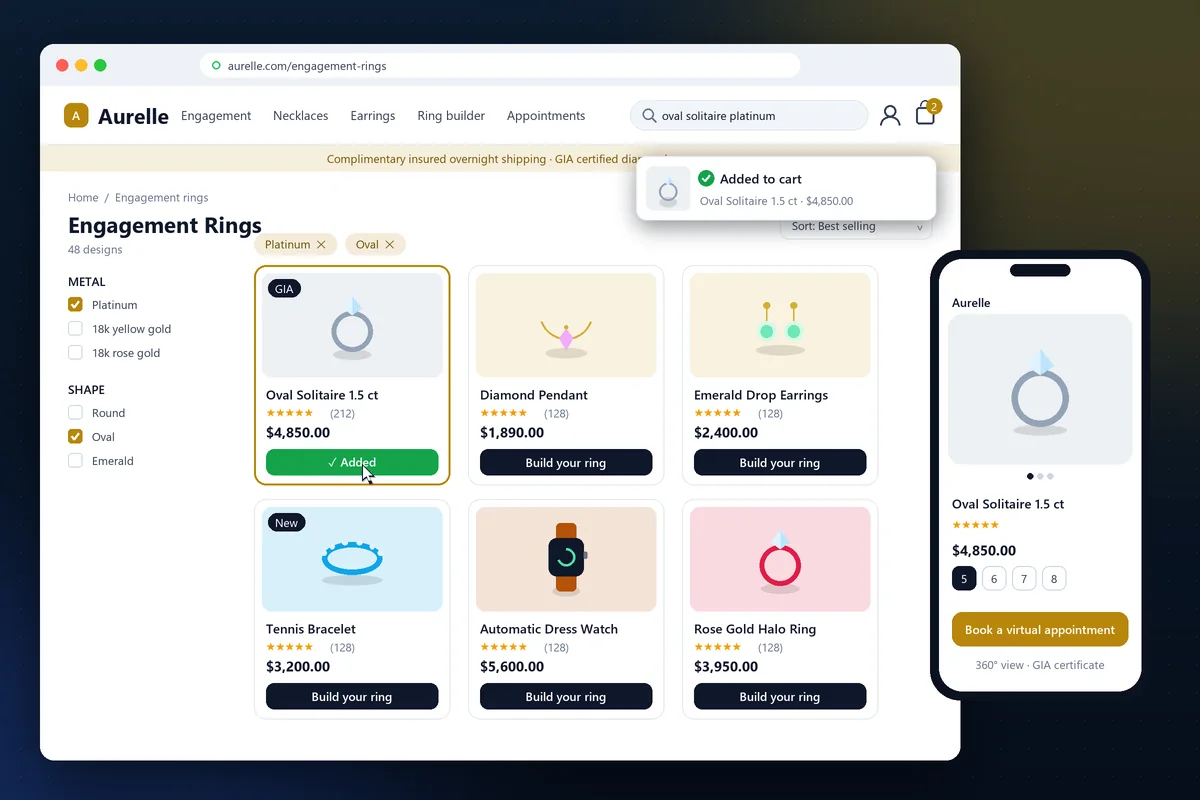
- Ring and setting builder: choose a setting, metal and stone, with live previews and pricing.
- Certified diamond and gemstone search: filters for carat, cut, color, clarity, shape and lab report.
- 360-degree video and zoom: high-resolution media that loads quickly on mobile.
- Virtual and in-store appointments: booking for video consultations or showroom visits.
- Engraving and personalization: text, fonts and placement previews.
- Ring sizing tools: printable sizers, size guides and resizing policies.
- Wishlists and sharing: drop-a-hint and shareable lists for gift buyers.
- Clienteling: specialist dashboards with client preferences, purchase history and saved items.
Which platform is best for jewelry ecommerce website development?
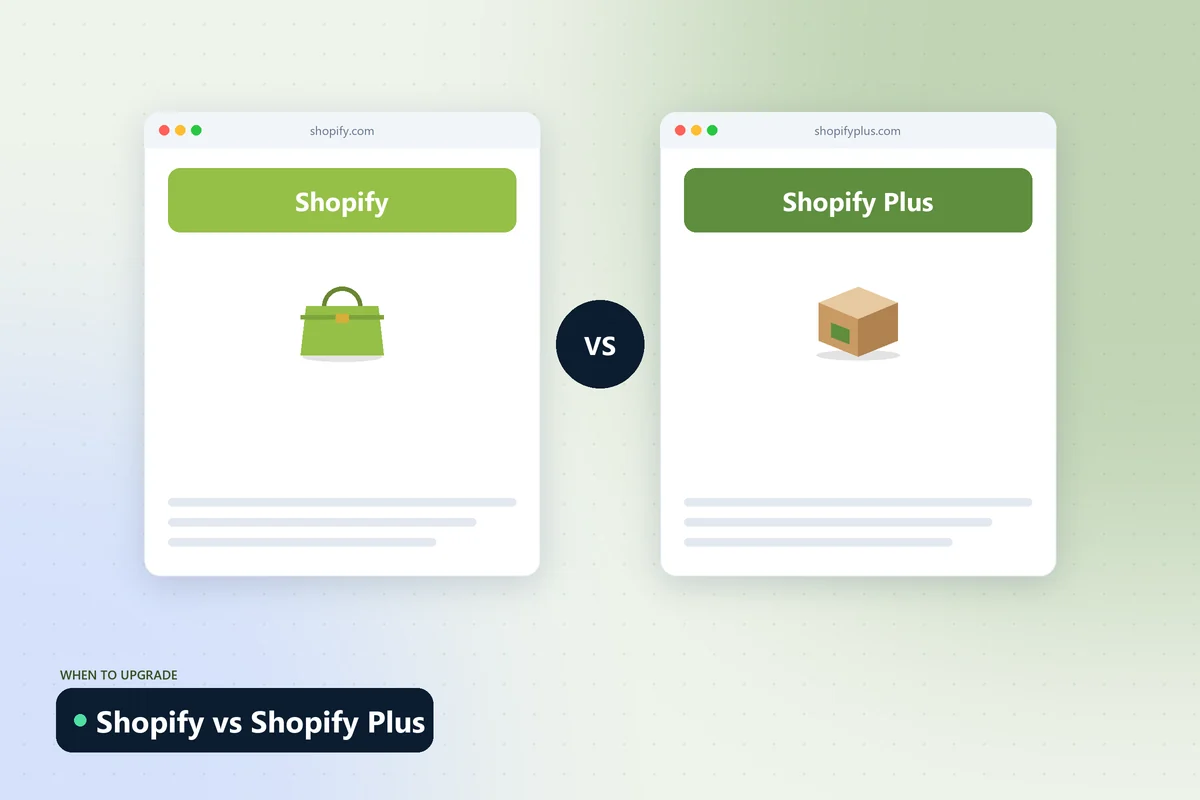
Shopify Plus with a headless front end is the most common fit for luxury brands, while multi-store jewelers with complex inventory sometimes use Adobe Commerce. The diamond search engine and design freedom usually decide the stack.
| Platform | Best for |
|---|---|
| Shopify Plus | Fine jewelry brands with curated collections and strong DTC focus |
| Headless (Next.js + Shopify Plus) | Luxury houses needing editorial design and very fast media-rich pages |
| Adobe Commerce | Multi-store jewelers with large loose-stone inventories and regional pricing |
| BigCommerce | Independent jewelers selling online and through marketplaces |
| Custom build | Bespoke design-your-own experiences and unique consignment models |
Our headless commerce development lets luxury brands keep full creative control while the commerce engine handles checkout and inventory. We pair it with ecommerce website design services focused on restraint, typography and product photography.
Which integrations does a jewelry store need?
A jewelry store needs integrations for stone inventory, appointments, payments, fraud and secure shipping. These keep a large virtual inventory accurate and every high-value order protected.
- Diamond and gemstone feeds: supplier feeds and lab report data refreshed automatically.
- Jewelry POS and inventory: sync with store systems so online and showroom stock match.
- Appointment scheduling and video: booking linked to specialists' calendars.
- Payments and financing: wire, card and financing options via payment gateway integration services.
- Fraud screening: high-value order review, address verification and chargeback protection.
- Insured shipping: signature-required, insured services with discreet packaging.
Selling internationally adds duties, currencies and local payment methods; our cross border ecommerce solutions handle landed cost and regional storefronts.
Compliance and security considerations for jewelers
Jewelers need accurate product descriptions, anti-fraud controls, secure payments and, for some businesses, anti-money laundering procedures. The store should support your compliance program without slowing honest buyers.
- Accurate descriptions: structured fields for metal purity, gemstone treatments and lab-grown versus natural, following the guidance your compliance team uses.
- AML procedures: order thresholds and review steps that support the anti-money laundering obligations your counsel identifies.
- Payment security: PCI DSS-scoped checkout with 3-D Secure on high-value cards.
- Privacy: discreet handling of gift and proposal orders.
- Accessibility: WCAG 2.2 AA builders and galleries.
How our jewelry ecommerce website development process works
We deliver jewelry stores in 8–16 weeks through our six-phase process, with art direction and media performance treated as engineering problems from the start.
- Discovery & Strategy: collections, stone sourcing, appointment model and markets.
- Conversion UX/UI Design: builder flows, product galleries and editorial templates.
- Architecture & API Engineering: stone feeds, POS, payments and fraud tools.
- Custom Development: ring builder, diamond search and clienteling tools.
- Testing & Optimization: media performance, fraud rules and device testing.
- Zero-Downtime Launch: redirect mapping and monitoring before peak gifting.
For a luxury apparel brand, our move from Magento to headless Next.js and Shopify Plus unified 8 regional stores, lifted mobile conversion 142% and reached a 0.6-second average page load. See the Magento to Shopify Plus migration case study. Luxury builds typically range from $25,000–$60,000, and headless multi-region projects run $60,000–$150,000+.
How much does a jewelry ecommerce website cost?
Jewelry ecommerce website development usually costs $25,000–$60,000 for a custom store with ring builders, certificates and high-detail media. A theme-based boutique store starts around $15,000, and diamond-feed, multi-location or headless luxury builds run $60,000–$150,000+.
| Build level | What is usually included |
|---|---|
| Launch $15,000–$30,000 | Premium theme, zoomable photography and video, certificate display, insured shipping options |
| Growth $25,000–$60,000 | Ring builder, metal and size options with live pricing, appointment booking, financing |
| Enterprise $60,000–$150,000+ | Diamond feed integration with filters, virtual try-on, multiple showrooms, ERP and POS sync |
Costs rise with ring-builder logic, diamond or gemstone feed integrations, media volume, appointment and showroom features, and POS or ERP sync. For a quick range, try the ecommerce cost calculator.
Jewelry ecommerce website launch checklist
Projects move fastest when these items are ready before design starts:
- Grading certificates (such as GIA or IGI) attached to each stone.
- Photography and video for every piece, shot consistently.
- Ring builder rules: which settings accept which stone shapes and sizes.
- Insured shipping and signature requirements by order value.
- Appointment types for showroom or virtual consultations.
- Financing provider and minimum order values.
Common jewelry ecommerce mistakes to avoid
- Small images on pieces that buyers need to inspect closely.
- Ring builders that let shoppers combine stones and settings that do not fit.
- Hiding certificates that build trust for high-value purchases.
- No option to book a consultation before buying online.
Get a free jewelry ecommerce estimate
Your online store should feel as considered as your showroom. Use the ecommerce website cost calculator to frame a budget, then book a free 30-minute strategy call to plan your jewelry ecommerce website development project with our team.